 Dost Pakistan Journeys Tours and safaris in the North & South Pakistsn
Related Articles


JAAC Strike: AJK’s Muzaffarabad Deserted Amidst Proscription and Calls for Dialogue
What Happened: A Silent Stand in AJK
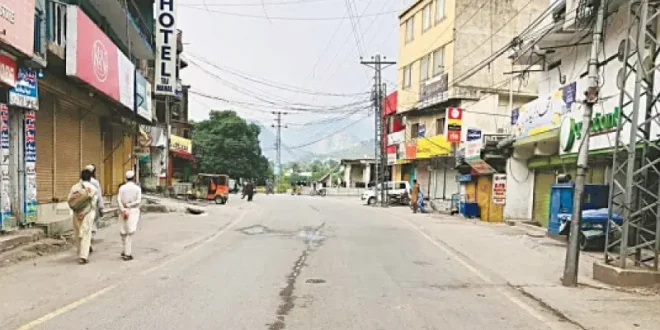
Azad Jammu and Kashmir (AJK), a self-governing territory under Pakistan’s administrative control, witnessed a significant shutdown in its capital, Muzaffarabad, on Tuesday. Shops remained closed, and vehicular traffic was minimal, painting a picture of deserted streets. This widespread compliance was in response to a strike call by the Joint Awami Action Committee (JAAC), an organization recently declared proscribed by the AJK government.
While the capital remained quiet with a noticeable absence of public demonstrations, riot police and paramilitary forces maintained a visible presence across the city. The situation in Mirpur, another significant town in AJK, presented a slightly different scene, with hundreds gathering at Quaid-i-Azam stadium, signaling robust support for the strike, alongside shuttered shops and empty roads. Adding to the pressure, the AJK legal fraternity boycotted judicial proceedings, protesting the arrest of senior lawyer Amjad Ali Khan, a core JAAC member. Amidst this tense backdrop, AJK Prime Minister Faisal Mumtaz Rathore appealed for a return to the negotiating table, emphasizing the need to resolve the prevailing regional tensions through dialogue.
Background: The Deep Roots of Discontent
The current unrest in AJK, particularly the widespread support for JAAC’s call, stems from a confluence of long-standing grievances. At the heart of JAAC’s protest is a contentious demand for the abolition of 12 reserved seats in the AJK Legislative Assembly. These seats are traditionally allocated for refugees from Indian-occupied Jammu and Kashmir (IoJK) who settled in mainland Pakistan after 1947.
JAAC alleges that these reserved seats have become a conduit for mainstream Pakistani political parties to exert undue influence on the formation of governments in Muzaffarabad, thereby undermining local autonomy and the democratic process within AJK. The AJK government, however, maintains that the matter of these seats is a constitutional issue, beyond the purview of any single group to decide. This fundamental disagreement highlights the delicate balance of AJK’s self-governing status vis-à-vis its relationship with Islamabad.
The situation escalated significantly after the AJK government declared JAAC a “proscribed” organization, accusing it of “terrorism” and actions “prejudicial to peace and security.” This proscription was swiftly followed by a crackdown, leading to the arrest of numerous JAAC leaders and activists. The regional tensions further flared following a violent protest in Rawalakot, which tragically resulted in the deaths of multiple law enforcement personnel and civilians, underscoring the volatile nature of the ongoing dispute.
Why It Matters: Autonomy, Influence, and Stability
The JAAC strike and the underlying dispute over reserved seats carry significant implications for AJK’s political landscape and its aspirations for greater autonomy. The existence of 12 reserved seats in a legislative assembly of relatively modest size means they can be a decisive factor in government formation, potentially allowing external political forces to shape AJK’s governance against local popular will. This challenges the very notion of self-governance that AJK nominally enjoys.
Furthermore, the proscription of JAAC and the subsequent arrests raise critical questions about freedom of assembly and expression in AJK. When a movement with apparent widespread public support, evidenced by the success of the strike, is branded as “terrorist,” it risks alienating a significant segment of the population and could fuel deeper resentment. The violent clashes in Rawalakot serve as a stark reminder of how quickly political grievances can escalate into deadly confrontations if not managed through inclusive dialogue and political solutions.
Impact on Pakistan: A Delicate Balance
The situation in AJK is not merely a local affair; it has broader implications for Pakistan, particularly concerning its long-held stance on the Kashmir dispute. Pakistan has consistently advocated for the right to self-determination for the people of Kashmir. Internal instability, allegations of political interference, and heavy-handed responses to popular movements within AJK can potentially undermine this principled international narrative.
Moreover, AJK shares a sensitive border with Indian-occupied Jammu and Kashmir. Any sustained unrest or political instability in this region could have wider security implications, potentially impacting the broader regional geopolitical balance. For Pakistan, navigating this crisis requires a delicate approach that respects AJK’s self-governing framework while addressing genuine local grievances, thereby reinforcing its commitment to democratic principles and stability in the region.
Analysis: Navigating a Volatile Path
The deserted streets of Muzaffarabad, despite the absence of overt demonstrations, speak volumes about the depth of public support for the Joint Awami Action Committee. This form of civil disobedience, even in the face of proscription and arrests, highlights the potency of popular sentiment and the significant challenge it poses to the AJK government.
The AJK government is walking a tightrope. While it must uphold law and order and adhere to constitutional frameworks, it also needs to acknowledge and address the legitimate grievances that have galvanized a substantial portion of the population. A heavy-handed approach, without a parallel track for genuine dialogue, risks further radicalizing the movement and deepening the chasm between the populace and the administration.
Prime Minister Rathore’s call for negotiations offers a glimmer of hope. A sustainable resolution will likely require a nuanced approach that potentially re-evaluates the role and purpose of the contested reserved seats, perhaps exploring alternative mechanisms for representation that do not compromise local autonomy. For Pakistan, ensuring peace and stability in AJK is paramount, requiring a strategic vision that fosters local self-governance and addresses core issues of influence and representation. The current crisis is a critical test for AJK’s political maturity and its ability to manage diverse demands, shaping its future trajectory within the larger Kashmir narrative.