Dost Pakistan Journeys Tours and safaris in the North & South Pakistsn
Related Articles
“`html
KP Leaders Unite: Grievances Against Centre Intensify Federal-Provincial Tensions
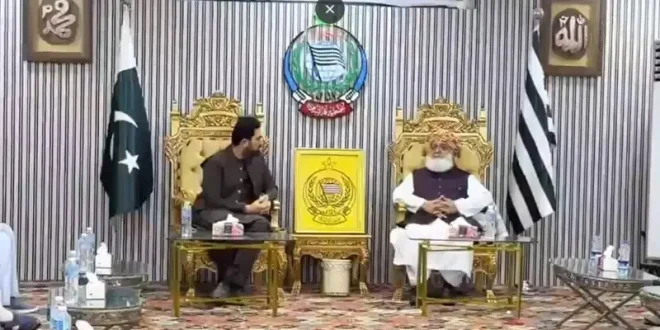
A significant political development unfolded in Peshawar as Khyber Pakhtunkhwa Chief Minister Sohail Afridi, leading the PTI-backed provincial government, and JUI-F chief Maulana Fazlur Rehman, a seasoned political figure, held a joint press conference. This unusual alliance saw both leaders present a united and scathing critique of the federal government, accusing Islamabad of treating KP “like a stepchild” and systematically neglecting its constitutional and economic rights.
What Happened: A United Front Against Islamabad
In a rare display of political convergence, KP Chief Minister Sohail Afridi and JUI-F leader Maulana Fazlur Rehman convened in Peshawar to voice their collective indignation against the federal government. Their joint address highlighted a litany of grievances perceived as longstanding neglect of Khyber Pakhtunkhwa. CM Afridi lambasted the National Finance Commission (NFC) award distribution, labeling it “unconstitutional” and asserting that the province had been marginalized for eight years. A critical point of contention was the rightful share for the merged tribal districts (formerly FATA), home to over six million people, which Afridi claimed was being diverted to other provinces.
Other pressing issues raised included the abrupt suspension of wheat supply to KP, deemed a constitutional violation, and the paradox of the province producing gas for the entire country yet facing its own supply shortages. Maulana Fazlur Rehman echoed these concerns, emphasizing the imperative of guaranteeing provincial autonomy for all federating units. He painted a grim picture of the deteriorating law and order situation in KP’s southern districts, where, according to him, government writ had effectively collapsed, leaving citizens vulnerable to armed groups. Both leaders also agreed on the need for provincial legislation concerning religious seminaries, aligning with federal law.
Background: Decades of Disparity and Political Flux
The grievances articulated by the KP leadership are not new; they tap into deeper historical issues of resource distribution and federal-provincial power dynamics in Pakistan. The **National Finance Commission (NFC) Award** is a constitutional mechanism designed to distribute federal revenues among the provinces. The last consensus-based award, the 7th NFC Award in 2010, significantly increased the provincial share, but subsequent awards have faced political hurdles and delays, leading to accusations of unfair resource allocation. For KP, a key contention point revolves around the **FATA merger** of 2018. This historic integration of the Federally Administered Tribal Areas into KP was accompanied by promises of substantial development funds – particularly a 1% share of the federal divisible pool – to uplift the long-neglected region. However, these funds have often been delayed or inconsistently disbursed, fueling resentment.
Khyber Pakhtunkhwa, strategically vital and rich in natural resources like gas, has historically felt shortchanged despite its contributions. The province’s role as a frontline state in the war against terror has also come with significant economic and social costs, often without adequate compensation or support. Politically, this joint appearance is particularly notable. The PTI-backed provincial government is naturally at odds with the PML-N led federal coalition. Maulana Fazlur Rehman, a long-standing political player and former ally in the PDM against PTI, now appears to be charting his own course, finding common ground with his traditional rivals on issues of provincial rights and federal overreach. This signals a potential shift in the political landscape, where shared grievances against the centre can supersede entrenched party rivalries.
Why It Matters: Strained Federation and Public Trust
This unprecedented joint denunciation carries significant weight for several reasons. Firstly, it spotlights the increasingly strained **federal-provincial relations** in Pakistan. When a provincial chief minister and a major political-religious leader unite on such critical issues, it signals a deep-seated provincial discontent that cannot be easily dismissed. Such public criticism not only undermines federal authority but also erodes public trust in Islamabad’s commitment to equitable governance.
Secondly, the focus on resource distribution, particularly the NFC award and FATA’s share, directly impacts **economic development and social justice** in Khyber Pakhtunkhwa. If provinces feel deprived of their rightful share, it exacerbates regional disparities, hinders vital development projects, and fuels a sense of alienation among the populace. The economic well-being of millions, especially those in the merged tribal districts, hangs in the balance.
Thirdly, the stark warnings about the deteriorating **law and order situation** in KP, especially from a leader like Maulana Fazlur Rehman who has deep roots in the region, are alarming. A breakdown of government writ and the rise of armed groups directly threaten peace, stability, and human security, not just within the province but potentially cascading across the nation. This also highlights a critical challenge for the security apparatus and governance efficacy.
Finally, the meeting itself represents a significant **political realignment**. The coming together of the PTI-backed government and the JUI-F chief, despite their past and current ideological differences, underscores the potency of provincial grievances in shaping political alliances. It could empower other provinces to voice similar concerns, potentially leading to a broader movement for greater provincial autonomy and a more equitable distribution of national resources.
Impact on Pakistan: Towards Greater Instability or Reform?
The unified criticism emanating from Peshawar could have profound implications for Pakistan’s fragile political and economic stability. At a fundamental level, it could lead to an **escalation of federal-provincial tensions**, making consensus-building on critical national policies, including economic reforms and security strategies, far more challenging. A fractured federation struggles to present a unified front on both domestic and international stages.
Economically, if these resource distribution issues remain unresolved, it could deepen **economic instability**. Discontented provinces might resist federal directives, impacting tax collection, development project implementation, and overall resource mobilization for the national exchequer. The continued neglect of FATA’s promised funds, for instance, jeopardizes a region crucial for security and development, potentially leading to renewed unrest and radicalization.
The dire security assessment from Maulana Fazlur Rehman, if accurate, points to a potential **resurgence of militancy** or lawlessness in parts of KP. This not only threatens local populations but also has broader implications for Pakistan’s national security, potentially straining military and law enforcement resources already stretched thin. A secure, stable border province is vital for the nation’s integrity.
Politically, this emerging alliance could catalyze a **significant political realignment**. It might embolden other provincial parties and governments to form similar tactical alliances, putting immense pressure on the federal government to address long-standing constitutional and fiscal imbalances. This could either force Islamabad into long-overdue reforms, strengthening true fiscal federalism and provincial autonomy, or, if mishandled, lead to deeper political polarization and gridlock, further destabilizing the country.
Analysis: Strategic Convergence Amidst Shared Grievances
The joint press conference signals a strategic convergence of interests rather than a fundamental ideological alignment between the KP government and the JUI-F. For the PTI-backed provincial administration, raising these issues against the federal government, led by its rivals, serves a dual purpose: it demonstrates their commitment to provincial rights and deflects blame for any provincial shortcomings onto Islamabad. It also aligns with the PTI’s broader narrative of challenging the established political order and fighting for what it perceives as its constitutional rights.
Maulana Fazlur Rehman, a veteran who commands significant influence, particularly in parts of KP and Balochistan, leverages this platform to reassert his political relevance and champion issues dear to his constituents. His strong stance on provincial autonomy, the plight of FATA, gas supply, and the worsening security situation resonates deeply within his support base. Despite having been part of an alliance against PTI previously, his current criticisms of the federal government, which he views as illegitimate, align with the KP government’s position. His call for provincial legislation on religious seminaries also caters to his party’s core agenda and influence.
The “stepchild” rhetoric employed by CM Afridi is a powerful emotional appeal designed to galvanize public support in KP. It frames the federal-provincial relationship as one of neglect and injustice, a narrative that often resonates strongly in provinces feeling marginalized by the central authority. The issues of NFC distribution, FATA’s share, and basic necessities like wheat and gas are not abstract; they directly impact the daily lives and economic well-being of the people of KP.
Furthermore, the concerns about the rapidly deteriorating law and order situation, particularly in southern districts, cannot be overstated. This assessment from a local leader like Fazlur Rehman provides a stark reality check on the security environment, hinting at the limitations of current federal and provincial strategies. His call for inclusive dialogue among all parties on security matters is a crucial suggestion, recognizing that a unified provincial front is essential to counter the rising threat of armed groups.
In conclusion, this unprecedented collaboration reflects a growing frustration within Khyber Pakhtunkhwa over perceived federal neglect and constitutional infringements. While the immediate outcome remains to be seen, it undoubtedly intensifies pressure on the federal government to address these long-standing issues. Failure to respond constructively risks further alienating a critical province, potentially leading to heightened political instability and calls for greater fiscal and administrative autonomy, with significant repercussions for Pakistan’s federal structure and national cohesion.
“`