Dost Pakistan Journeys Tours and safaris in the North & South Pakistsn
Related Articles
“`html
May 9 Verdicts: Unpacking Political Justice and its Ramifications in Pakistan
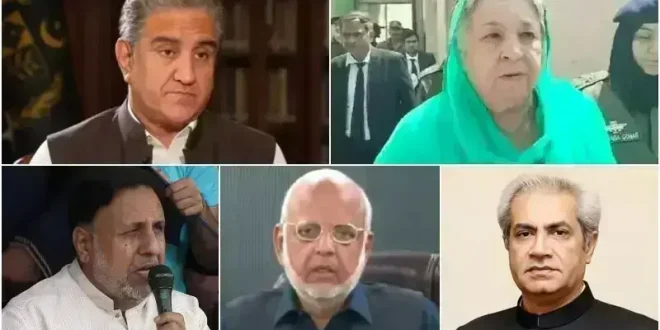
The legal landscape surrounding the tumultuous May 9, 2023, riots in Pakistan continues to unfold, with recent verdicts from a Lahore Anti-Terrorism Court (ATC) sending ripple effects across the nation’s political spectrum. While former foreign minister Shah Mahmood Qureshi secured an acquittal in one of the key cases, several other prominent leaders of the Pakistan Tehreek-e-Insaf (PTI), including Dr. Yasmin Rashid, Omar Sarfraz Cheema, Mian Mehmoodur Rasheed, and Ejaz Chaudhry, have been handed down 10-year imprisonment sentences. These judgments, delivered in a makeshift court within Kot Lakhpat Jail, highlight the complexities and contentious nature of the ongoing legal battle in Pakistan.
The Latest Judicial Developments
An ATC-I Judge Manzer Ali Gill on Saturday acquitted Shah Mahmood Qureshi and eleven party workers in a case registered at Mughalpura Police Station, where they were accused of attacking and burning police vehicles during the May 9, 2023, unrest. This specific acquittal marks a significant, albeit isolated, legal victory for Qureshi, who has been entangled in numerous cases since the events of last year. However, the same court simultaneously sentenced senior PTI figures Dr. Yasmin Rashid, Omar Sarfraz Cheema, Mian Mehmoodur Rasheed, and former senator Ejaz Chaudhry to 10 years in prison each for their alleged involvement in the same incident. Two accused in the case have been declared proclaimed offenders, evading arrest.
This verdict is not an isolated incident. The prosecution has consistently alleged that PTI leaders orchestrated the May 9 incidents, inciting workers to engage in violence. These latest sentences add to a growing list of convictions for several PTI leaders, some of whom, like Rashid, Cheema, Rasheed, and Chaudhry, have already received multiple 10-year sentences in other May 9-related cases. Previous verdicts have addressed incidents ranging from attacks on police stations and vehicles to violence at Sherpao Bridge and the torching of a Supreme Court judge’s squad vehicle.
Background to the May 9 Unrest
The events of May 9, 2023, represent a watershed moment in Pakistan’s tumultuous political history. They erupted following the dramatic arrest of PTI founder Imran Khan by the National Accountability Bureau (NAB) from the Islamabad High Court premises in connection with the Al-Qadir Trust case. Khan’s arrest, viewed by his millions of supporters as politically motivated, ignited widespread and unprecedented protests across the country.
What began as demonstrations quickly escalated into violent confrontations. PTI workers and supporters engaged in acts of vandalism, attacking various state and military installations. The most egregious of these incidents involved the ransacking and attack on the Lahore Corps Commander’s residence, famously known as Jinnah House – a symbolic act that crossed a red line for Pakistan’s powerful military establishment. Police vehicles were set ablaze, public property was damaged, and a sense of chaos gripped several urban centers. In response, authorities launched a massive crackdown, leading to the arrest of thousands of protesters, including a significant portion of PTI’s top leadership.
The May 9 incidents have since been framed by the state as an assault on its institutions, particularly the military, leading to calls for stringent accountability. The legal proceedings, predominantly held in Anti-Terrorism Courts, underscore the government’s resolve to prosecute those deemed responsible, amidst widespread allegations from PTI of political victimization and a targeted suppression campaign.
Impact on Pakistan’s Political Landscape
These recent verdicts carry profound implications for Pakistan’s already fragile political environment:
- Weakening of PTI’s Leadership: The systematic conviction and imprisonment of key PTI leaders, especially figures like Dr. Yasmin Rashid who hold significant organizational weight, severely cripples the party’s ability to mobilize, strategize, and contest future elections effectively. It removes experienced voices and potential successors from the political arena.
- Erosion of Opposition Space: With its top brass either incarcerated or facing a myriad of legal challenges, the PTI, once a formidable political force, finds its capacity to act as a robust opposition significantly diminished. This vacuum could lead to a less vibrant democratic discourse and potentially consolidate power in the hands of the ruling establishment.
- Perception of Justice: The selective nature of the verdicts – particularly the acquittal of a high-profile figure like Shah Mahmood Qureshi in contrast to the simultaneous sentencing of others – fuels ongoing debates about the fairness and impartiality of the judicial process. Critics argue that such outcomes, especially within ATCs which are designed for speedy trials of terrorism-related offenses, raise questions about due process and political maneuvering rather than pure legal merit.
- Civil-Military Relations: The severity of the sentences for attacks on military installations sends a clear and unambiguous message about the boundaries of political protest in Pakistan. It reinforces the military’s institutional resolve against any perceived direct challenge to its authority and deters future attempts to target its symbols or personnel.
- Future of Dissent: The crackdown following May 9, coupled with these verdicts, is likely to have a chilling effect on political dissent and protest movements. Parties and activists may become more cautious in their tactics, potentially leading to a more subdued political environment, but also risking a build-up of unaddressed grievances.
Analysis: A Complex Web of Justice and Politics
The latest ATC verdicts present a complex tableau, where legal pronouncements intertwine with deep-seated political narratives. Shah Mahmood Qureshi’s acquittal, while certainly a personal relief, stands in stark contrast to the continued incarceration and repeat convictions of his party colleagues. This disparity invites scrutiny and raises several analytical points:
- Case-Specific Evidence vs. Broader Narrative: Qureshi’s acquittal in this particular case might genuinely stem from a lack of direct evidence linking him to the specific act of burning police vehicles in Mughalpura. The prosecution’s reliance on 37 witnesses did not, in this instance, prove his direct involvement to the court’s satisfaction for this charge. However, the broader narrative of collective responsibility for the May 9 events continues to hang over the entire PTI leadership. The prosecution’s claim of “planning and incitement” is harder to prove with direct evidence for every individual in every specific incident.
- Strategic Political Messaging: Some analysts might interpret Qureshi’s acquittal as a calculated move. While the state aims to dismantle the PTI’s core leadership, a complete sweep could be perceived as overly punitive or create a larger martyr complex. Selective acquittals could also be seen as an attempt to show the judiciary’s independence, or perhaps to create divisions within the party or offer a subtle pathway for some leaders to re-enter mainstream politics under certain conditions.
- The Fate of PTI’s Second Tier: The repeated sentencing of leaders like Dr. Yasmin Rashid and Ejaz Chaudhry highlights the systematic targeting of PTI’s active, second-tier leadership who were prominently visible during the protests. These individuals, seen as instrumental in mobilizing support on the ground, are bearing the brunt of the legal fallout, effectively sidelining them from political activity for the foreseeable future.
- Role of Anti-Terrorism Courts: The swift progression and verdicts in ATCs, often dealing with sensitive cases, continue to be a point of contention. While designed for efficiency in terrorism-related matters, their application to political cases raises concerns about their capacity to ensure comprehensive due process, especially when a large number of accused are involved and the political climate is highly charged. The question of whether these actions truly constitute “terrorism” in a conventional sense remains debated by legal experts and human rights advocates.
- Long-Term Stability: Pakistan’s history is replete with cycles of political crackdowns and opposition suppression. While the current verdicts might bring a temporary calm, they do not necessarily address the underlying grievances or foster long-term political stability. A strong, functioning opposition is crucial for a healthy democracy, and its systematic dismantling through legal means risks exacerbating political polarization and pushing dissent into less constructive avenues.
In conclusion, the Lahore ATC’s verdicts represent another significant chapter in the May 9 saga. They underscore the state’s determination to hold individuals accountable for the unprecedented violence of that day, particularly those who targeted military installations. However, the differentiated outcomes and the broader context of ongoing political challenges mean these verdicts will continue to be debated, analyzed, and will undoubtedly shape the contours of Pakistan’s political future for years to come. The delicate balance between ensuring justice, maintaining institutional authority, and preserving democratic freedoms remains a critical challenge for the nation.
“`