Dost Pakistan Journeys Tours and safaris in the North & South Pakistsn
Related Articles
“`html
Pakistan’s Diplomatic Triumph: Navigating US-Iran Talks Amidst Middle East Volatility
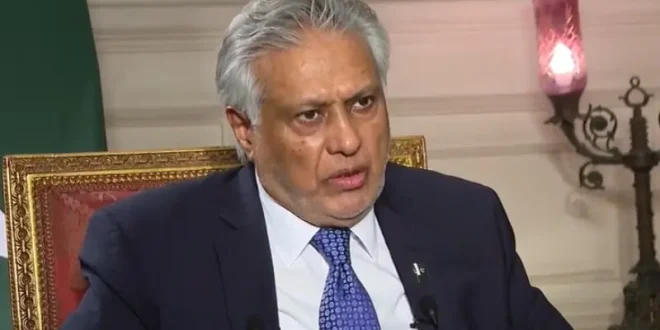
In a period marked by escalating tensions across the Middle East, Pakistan has emerged as a crucial bridge-builder, facilitating an unprecedented dialogue between the United States and Iran. Deputy Prime Minister and Foreign Minister Ishaq Dar’s recent statements shed light on the intricate challenges and significant breakthroughs in this delicate diplomatic dance, particularly the disruptive impact of Israeli actions in Lebanon.
The News: A Glimpse into High-Stakes Diplomacy
According to DPM Dar, the recent US-Iran talks in Switzerland, hailed as “phase two” of a complex negotiation process, narrowly avoided derailment due to Israel’s sustained attacks on Lebanon. Speaking to Al Arabiya, Dar revealed that these crucial discussions could have commenced earlier, emphasizing how regional instability directly impedes broader diplomatic efforts.
Pakistan’s active mediation began with a ceasefire on February 28, followed by historic direct talks in Islamabad in April — the first between the US and Iran in 47 years, with Pakistan acting as a vital witness. These efforts culminated in the signing of the Islamabad Memorandum of Understanding (MoU) on June 18.
The current Swiss summit is structured around three technical groups addressing critical issues: the nuclear program, sanctions and frozen assets, and the volatile situation in Lebanon. While specific items have a 30-day timeline for conclusion, the comprehensive final deal aims for completion within 60 days, with potential for mutual extension.
A significant outcome highlighted by Dar is the progress on ensuring free movement in the Strait of Hormuz, a vital energy chokepoint. With reduced energy prices and resumed traffic flow already observed, Pakistan and China have jointly advocated for restoring its pre-conflict status of “no fee and no toll at all.”
Despite the optimism, Dar acknowledged the presence of “spoilers” and emphasized the need for international pressure on Israel to halt attacks in Lebanon. He also noted Iran’s flexibility regarding its uranium stockpile, suggesting possibilities for “downblending” from the current 60% enrichment.
Beyond the US-Iran axis, Pakistan has also fostered a new regional forum comprising Pakistan, Egypt, Saudi Arabia, and Turkiye, indicating a broader consultative mechanism for regional stability.
Background: A Region in Flux
The context for these diplomatic overtures is a Middle East perpetually teetering on the brink of wider conflict. The February 28 conflict, while not explicitly detailed in the summary, likely refers to an escalation that necessitated immediate mediation, pushing the region closer to a precipice. The long-standing animosity and lack of direct communication between the US and Iran, rooted in the 1979 Iranian Revolution and subsequent geopolitical shifts, have created a volatile environment where proxy conflicts and mutual distrust have festered for decades.
Iran’s nuclear program has been a central point of contention, particularly since the US withdrawal from the Joint Comprehensive Plan of Action (JCPOA) in 2018. The international community, led by the IAEA, has consistently sought to limit Iran’s enrichment capabilities to prevent nuclear proliferation, while Iran maintains its program is for peaceful purposes. Sanctions imposed by the US have crippled Iran’s economy, leading to a humanitarian crisis and further deepening the mistrust.
The situation in Lebanon, with its entrenched political divisions and the powerful presence of Hezbollah, an Iranian-backed group, frequently becomes a flashpoint. Israeli military actions in Lebanon are often framed as responses to Hezbollah’s activities, but they invariably escalate regional tensions, directly impacting the fragile peace efforts, as highlighted by Dar.
Furthermore, the Strait of Hormuz, through which a significant portion of the world’s oil supply passes, is a strategic choke point. Its closure or disruption carries severe global economic consequences, making its security and freedom of navigation a priority for international powers.
Pakistan, with its unique geopolitical position bordering Iran and Afghanistan, and its strong historical ties with Gulf nations and China, has often played a role as a diplomatic conduit. Its neutrality in certain regional disputes, coupled with its aspiration for regional stability, positions it uniquely to mediate such high-stakes dialogues.
Impact on Pakistan: Enhanced Diplomatic Clout and Economic Dividends
Pakistan’s proactive engagement in facilitating the US-Iran talks carries significant implications for its foreign policy objectives and domestic interests:
- Elevated Diplomatic Standing: Successfully mediating talks between two adversaries after nearly five decades significantly enhances Pakistan’s international image as a responsible and influential diplomatic player. This bolsters its credibility on the global stage, positioning it as a voice for peace and stability, rather than merely a recipient of aid or a party to regional conflicts.
- Regional Stability and Security: A reduction in US-Iran tensions directly contributes to a more stable Middle East. For Pakistan, this means a more predictable security environment, especially given its proximity to the region and its vested interest in preventing wider conflicts that could spill over into its borders or disrupt vital trade routes.
- Economic Benefits: The restoration of free movement in the Strait of Hormuz, as championed by Pakistan, is a direct boon. Reduced energy prices globally translate into lower import bills for Pakistan, easing inflationary pressures and benefiting its struggling economy. Furthermore, regional trade opportunities could expand, potentially benefiting projects like the China-Pakistan Economic Corridor (CPEC) through increased connectivity.
- Strengthened Alliances: Pakistan’s mediation efforts reinforce its relationships with key partners. Its role is appreciated by the US, potentially leading to improved bilateral ties. Concurrently, it strengthens bonds with Iran and its new regional forum partners (Egypt, Saudi Arabia, Turkiye), fostering a more robust regional diplomatic network.
- Geopolitical Leverage: By demonstrating its capacity to bring rivals to the negotiating table, Pakistan gains greater leverage in its foreign relations. This can be used to advance its national interests in various international forums and bilateral discussions.
Analysis: Navigating the Labyrinth of Peace
DPM Dar’s candid remarks offer a compelling insight into the intricate nature of Middle East diplomacy and underscore several critical analytical points:
Pakistan’s Sophisticated Diplomatic Strategy
Pakistan’s approach extends beyond mere mediation; it is a calculated and active facilitation. By hosting the first direct talks and serving as a witness to the MoU, Islamabad has positioned itself as an indispensable party in a conversation that has evaded the international community for decades. The formation of the Pakistan-Egypt-Saudi Arabia-Turkiye forum suggests a deliberate strategy to build a collective regional voice and influence, potentially reshaping traditional power dynamics in the Islamic world.
The Fragility of Peace Amidst Interconnected Conflicts
The revelation that Israeli attacks on Lebanon nearly “derailed” the US-Iran talks highlights the profound interconnectedness of regional conflicts. Progress on one front can be instantly undermined by flare-ups elsewhere, making sustained peace incredibly challenging. This underscores the need for a comprehensive regional peace architecture that addresses multiple conflict theaters concurrently, rather than in isolation.
“The parlays starting in Switzerland could have started a few days earlier, but Israel’s attacks on Lebanon derailed and stopped everything.”
— DPM Ishaq Dar
Addressing the “Spoilers”
Dar’s mention of “spoilers who never wanted this deal to happen” is particularly significant. While not explicitly named, the context strongly implicates parties whose interests might be threatened by a US-Iran rapprochement or a reduction in regional tensions. This highlights the internal and external resistance any peace initiative faces. The international community’s role, as urged by Dar, to “convince, persuade, and influence” such actors is critical for the success of these negotiations.
The Intricacies of a Phased Agreement
The division of the agreement into phases, with specific timelines for technical groups on nuclear issues, sanctions, and Lebanon, demonstrates a pragmatic approach to tackling deeply entrenched problems. However, the success hinges on the sincerity of all parties and their ability to navigate complex technical details and political sensitivities. The “downblending” of uranium, for instance, requires significant trust and verification mechanisms. Similarly, easing sanctions will involve substantial economic and political calculations from the US side.
Strait of Hormuz: A Global Economic Lifeline
Pakistan’s insistent advocacy for the pre-conflict status of the Strait of Hormuz – “no fee and no toll” – is not just about regional stability but global economic welfare. The Strait’s free passage is vital for energy security worldwide. Pakistan’s alignment with China on this five-point plan indicates a unified stance from key Asian economies on safeguarding this critical trade artery, emphasizing its role in the global energy market.
Optimism Tempered by Realism
While DPM Dar expressed optimism, calling himself a “born optimist” with “full faith,” his remarks are also tempered with realism. The call for wisdom, sincerity, and the prevention of “negative play” by any party underscores the inherent fragility of the process. The success of the 60-day phase, particularly concerning sensitive issues like sanctions and nuclear stockpiles, will be the true test of this diplomatic endeavor.
In conclusion, Pakistan’s determined push for dialogue between the US and Iran represents a significant diplomatic achievement in a region desperate for stability. However, the path ahead is fraught with challenges, demonstrating that geopolitical tensions, external disruptions, and the divergent interests of various actors will continuously test the resilience and sincerity of this hard-won peace process. The world watches, hoping that wisdom and foresight will indeed prevail.
“`