 Dost Pakistan Journeys Tours and safaris in the North & South Pakistsn
Related Articles



“`html
Europe’s Searing Summer: A Harbinger of Global Climate Crises
The News: A Continent Under Siege by Unprecedented Heat
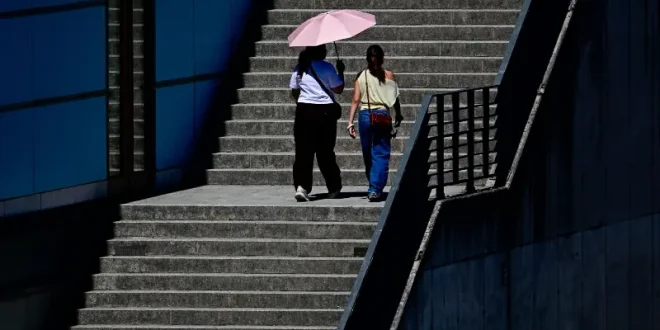
Europe is grappling with an extraordinary and perilous heatwave, described by scientists as the most severe ever recorded for the continent. From Britain and France to Germany, Italy, and the Netherlands, nations are experiencing record-shattering temperatures, with Paris hitting 40.9°C and several regions expecting to breach 40°C. This extreme heat has triggered widespread alerts, including “code red” warnings in the UK and Netherlands, and amber alerts in Serbia, compelling authorities to issue urgent health advisories.
The immediate repercussions are stark and disruptive: at least 55 heat-related deaths have been reported in France alone, while in Germany, a motorway surface buckled, damaging vehicles. Cultural landmarks have been forced to close, major public events like festivals have been cancelled or postponed, and French authorities even resorted to a public alcohol ban to mitigate risks. The strain on public services is immense, with French emergency room doctors describing the situation as “apocalyptic” due to unprepared hospitals and overwhelming call volumes. Meanwhile, industries respond: air conditioning sales are booming, and public utilities are investing millions in cooling solutions for vulnerable community spaces, highlighting Europe’s traditionally lower reliance on domestic AC compared to other regions.
Behind the Blistering Heat: Climate Change and Atmospheric Dynamics
This relentless heatwave is not a mere summer anomaly; it is fundamentally linked to a phenomenon known as an “Omega block.” This specific atmospheric pattern, characterized by a high-pressure system sandwiched between two low-pressure systems, creates a stable, ‘stuck’ air mass that traps hot air over a particular region for extended periods. In this instance, it has allowed a “bulging ball of hot air” to linger over Europe, pushing temperatures up to 18°C above seasonal averages.
Crucially, climate scientists from the World Weather Attribution group have declared that such a severe heatwave would have been “virtually impossible” without human-caused climate change. They assert that global warming has made stifling night-time temperatures, which offer little respite and exacerbate health risks, 100 times more likely than they were just two decades ago. Europe is warming faster than any other continent, accelerating the frequency, intensity, and duration of heatwaves. This current crisis serves as a potent reminder that our planet’s climate is not merely shifting; it is entering a new, dangerous era where extreme weather events are becoming the new normal, demanding urgent attention to both mitigation of greenhouse gas emissions and robust adaptation strategies.
Echoes in the East: Lessons for Pakistan
While Europe grapples with its unprecedented summer, the challenges it faces resonate deeply with countries like Pakistan, which routinely endures severe and often deadlier heatwaves. Pakistan’s geographical location and burgeoning urban centers make it particularly vulnerable to rising temperatures. Cities like Karachi, Lahore, and Multan frequently become “urban heat islands,” where dense concrete structures, limited green spaces, and high pollution trap heat, pushing daytime temperatures well past 45°C and offering little relief at night. The infamous 2015 Karachi heatwave, which claimed over 1,200 lives, stands as a stark testament to the devastating human cost.
Pakistan can draw critical lessons from Europe’s current ordeal. The stress on public health infrastructure, the need for effective early warning systems, the importance of public awareness campaigns for heat safety, and the vulnerability of outdoor workers are all shared concerns. Furthermore, the buckling of German motorways under extreme heat highlights the necessity of climate-resilient infrastructure planning – from road materials to power grids – to withstand escalating temperatures. For Pakistan, already contending with water scarcity exacerbated by changing weather patterns and glacial melt, the European experience underscores the urgency of integrated climate action: investing in green infrastructure, developing comprehensive heat action plans, protecting vulnerable populations, and building adaptive capacity across all sectors of society. Failing to learn from these global harbingers could lead to even more severe consequences in a region already at the forefront of climate vulnerability.
A Call to Action: Adapting to a New Climate Reality
Europe’s unprecedented heatwave is more than just a news story; it’s a critical stress test for societies worldwide and a stark warning about the accelerating impacts of climate change. The immediate response, from emergency medical services to infrastructure damage control, reveals the urgent need for enhanced preparedness. Public health systems, often designed for cooler climates, are ill-equipped for sustained extreme heat, leading to tragic loss of life and immense pressure on healthcare workers. This underscores the necessity of proactive heat action plans, including establishing accessible cooling centers, targeted public health campaigns, and better training for medical professionals to handle heat-related illnesses.
Beyond immediate crisis management, the long-term implications demand a fundamental rethinking of urban planning, infrastructure development, and energy policy. Cities need to embrace green infrastructure – parks, tree cover, and reflective surfaces – to combat the urban heat island effect. Building codes must evolve to ensure structures are more resilient to extreme temperatures, reducing energy consumption for cooling. The surge in air conditioning sales, while offering short-term relief, also highlights a potential paradox: increased energy demand for cooling, often met by fossil fuels, further exacerbates the very climate change driving the heat. This necessitates a rapid transition to renewable energy sources and the development of energy-efficient cooling solutions.
Ultimately, this European heatwave serves as a powerful reminder that climate change is not a distant threat but a present danger, impacting developed nations just as severely, if not more, than developing ones. The scientific consensus is clear: human actions are making these events more frequent and intense. While adaptation strategies are crucial for resilience, they are not a substitute for aggressive global efforts to mitigate greenhouse gas emissions. The choices made today, from individual consumption patterns to international climate policies, will dictate the severity of future heatwaves and the habitability of our planet for generations to come. The time for decisive and collective climate action is not tomorrow, but now.
“`
