 Dost Pakistan Journeys Tours and safaris in the North & South Pakistsn
Pakistan’s Fuel Fury: Analyzing Jamaat-i-Islami’s Nationwide Petroleum Levy Protests and Their Wider Implications
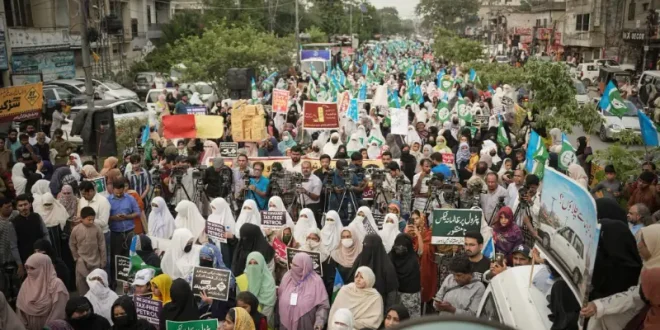
Across Pakistan, particularly in its economic heartland Karachi, recent days saw widespread disruption as Jamaat-i-Islami (JI) orchestrated a series of nationwide sit-ins. These demonstrations, primarily targeting the government’s petroleum levy, brought major urban arteries to a standstill, igniting a crucial debate about economic policy, political strategy, and the right to protest.
The Immediate News: Gridlock in the Name of Dissent
On a recent Friday, Karachi, a sprawling metropolis, experienced significant traffic paralysis. Key routes and intersections, from the busy Mazar-i-Quaid to the critical Sharea Faisal and the Super Highway, became choke points as JI activists converged. This disruption was a calculated move, part of a broader call by the religio-political party for countrywide protests at over 500 locations to voice strong opposition to the federal government’s imposition of a petroleum levy.
The Karachi traffic police had preemptively issued advisories, cautioning citizens about potential blockages and urging them to seek alternative routes. Despite these warnings, the scale of the sit-ins, confirmed by updates from JI’s social media channels, led to considerable public inconvenience. This pattern of disruption wasn’t confined to Karachi; major cities like Lahore, Quetta, Peshawar, and the federal capital, Islamabad, also witnessed similar gatherings, with reports of minor confrontations between protesters and law enforcement in some areas.
Unsurprisingly, the Sindh government was quick to condemn the tactics. Sindh government spokesperson Sadia Javed critically questioned why Karachi’s millions were being “punished” for a federal issue, accusing JI of prioritizing political point-scoring over public welfare. She emphasized the disruption to essential services and daily life, urging the party to utilize parliamentary and other relevant forums for addressing their concerns, rather than holding citizens “hostage.”
Background: The Fuel of Discontent
To understand the intensity of these protests, one must delve into the broader economic and political context of Pakistan. The ‘petroleum levy’ is essentially a government tax imposed on petroleum products. It serves as a significant non-tax revenue stream for the federal government, often viewed as a mechanism to meet fiscal targets and sometimes, to comply with conditionalities set by international lenders like the International Monetary Fund (IMF) for crucial bailout packages. For the average Pakistani, however, this levy directly translates into higher fuel prices at the pump, which then cascade through the economy, driving up transportation costs, food prices, and overall inflation.
Pakistan has been grappling with persistent economic challenges, including a weakening currency, high inflation, and dwindling foreign exchange reserves. In such an environment, fuel prices become an extremely sensitive issue. Any hike, whether due to international oil prices or domestic taxation like the petroleum levy, directly impacts the pockets of citizens already struggling with the rising cost of living. This economic distress often serves as fertile ground for political mobilization.
Jamaat-i-Islami (JI), a significant religio-political force, has a history of leveraging public sentiment on issues of governance and economic hardship. While often perceived as a party with a strong conservative base, JI has consistently positioned itself as a champion of the common man, particularly against what it views as exploitative government policies or corruption. Their decision to lead nationwide protests against the petroleum levy aligns with this strategy, aiming to resonate with a populace weary of economic burdens. Furthermore, their strong performance in recent local government elections in Karachi may have emboldened them to escalate their public activism, seeking to consolidate their political presence and influence.
Ripple Effect: Impact on Pakistan
Economic Strain
The immediate economic cost of such protests is multifaceted. Traffic gridlock in major urban centers like Karachi translates into lost productivity for businesses and individuals. Goods movement is hampered, disrupting supply chains for industries and retail. Commuters miss work, students miss classes, and economic activity grinds to a halt. While difficult to quantify precisely, the cumulative effect of a nationwide disruption, even for a single day, can run into millions, impacting an already fragile economy. Moreover, recurring instances of political instability and disrupted public order can deter potential foreign investors, who seek predictable and stable operational environments.
Social Disruption
Beyond economic losses, the social fabric experiences significant stress. The blockades cause immense inconvenience and frustration for ordinary citizens trying to navigate their daily lives. Patients requiring urgent medical attention, ambulances, fire services, and individuals attending to family emergencies face critical delays. This often leads to a polarization of public opinion: while some sympathize with the cause of the protesters, many others resent the disruption to their lives, viewing it as an infringement on their rights. The government’s strong reaction, accusing JI of “punishing” citizens, reflects this public sentiment.
Political Chessboard
From a political standpoint, these protests are a strategic play by Jamaat-i-Islami. They serve multiple objectives:
- Reaffirming Relevance: In a dynamic political landscape, leading large-scale protests helps JI maintain its visibility and assert its position as a vocal opposition force, particularly on issues affecting the masses.
- Building Momentum: By mobilizing its cadres and drawing public support, JI aims to build momentum for future political endeavors, positioning itself as a credible alternative voice to the ruling parties.
- Pressuring the Government: The protests exert pressure on the federal government to reconsider its economic policies, particularly those related to taxation and fuel prices, demonstrating public discontent.
- Local vs. Federal Dynamics: The Sindh government’s response highlights the often-strained relationship between provincial and federal administrations, with each seeking to deflect blame or score points in the public eye.
The ability of a political party to orchestrate such widespread disruptions also tests the capacity and resolve of law enforcement agencies to maintain public order without resorting to excessive force, striking a delicate balance between fundamental rights and civic responsibilities.
Analysis: Balancing Dissent and Daily Life
The JI-led protests against the petroleum levy bring to the forefront the perennial dilemma in democratic societies: how to balance the fundamental right to protest and express dissent with the imperative to maintain public order and ensure the uninterrupted daily lives of citizens.
From JI’s perspective, blocking major roads is an effective, albeit controversial, method to grab national attention and amplify their message. It creates undeniable pressure on the government and forces a public discussion on the issue. In a media-saturated world, such visible acts of defiance often cut through the noise. However, this strategy carries significant risks. The public inconvenience generated can alienate a crucial segment of the population whose sympathy JI needs. The government’s immediate counter-narrative, painting JI as irresponsible and disruptive, capitalizes on this public frustration.
The Sindh government’s criticism that the petroleum levy is a “federal matter” while Karachi’s citizens bear the brunt raises a valid point about the forum for protest. While parliamentary debate and formal representations are indeed avenues, history shows that street power often supplements or even drives political change in Pakistan. However, the line between legitimate protest and holding a city “hostage” is a fine one, and public perception plays a critical role in determining its effectiveness.
Ultimately, these protests are a symptom of deeper economic anxieties plaguing Pakistan. As long as citizens face severe economic hardships and feel unheard by their elected representatives through conventional channels, such forms of public mobilization are likely to persist. The challenge for both the government and opposition parties lies in finding mechanisms for expressing grievances and implementing policies that address public concerns without severely disrupting the fabric of daily life. The JI protests serve as a potent reminder that economic policy choices have profound social and political ramifications, capable of sparking nationwide dissent and challenging the delicate balance of governance.
