Dost Pakistan Journeys Tours and safaris in the North & South Pakistsn
Related Articles



“`html
Pakistan’s Nuclear Talent Shines: Gold and Silver at INSO and the Road Ahead
The News: A Triumphant Showing at INSO-2026
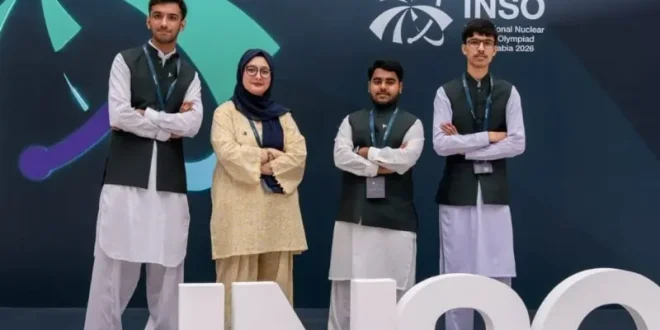
Pakistan has once again underscored its commitment to scientific excellence by securing an impressive haul of medals at the 3rd International Nuclear Science Olympiad (INSO-2026). Held in Jeddah, Saudi Arabia, from August 2nd to 8th, the prestigious event saw Pakistani students clinch one gold and two silver medals, demonstrating their formidable grasp of complex nuclear science concepts.
The gold medal was awarded to Muhammad Ali from Govt College University, Lahore, while silver medals were secured by Muhammad Usman of F.G. Sir Syed College, Rawalpindi, and Seerat Fatima from Nixor College, Karachi. Another promising talent, Syed Shuja Haider from Sundar STEM School, Lahore, also proudly represented the nation. The competition, supported by the International Atomic Energy Agency (IAEA), brought together approximately 120 bright students and experts from 19 countries, including established scientific powerhouses like China, Japan, and Russia, alongside regional peers such as Turkiye, Malaysia, Indonesia, and Saudi Arabia.
This success is a direct result of meticulous preparation by the Pakistan Institute of Engineering and Applied Sciences (PIEAS) under the oversight of the Pakistan Atomic Energy Commission (PAEC), which identifies and nurtures young talent through its national-level Pakistan Nuclear Science Olympiad. Adding to the celebratory news, Pakistan has also been announced as the host for the 4th International Nuclear Science Olympiad in 2027, a significant testament to its growing international standing in scientific endeavors.
Background: Nurturing Nuclear Expertise
The International Nuclear Science Olympiad (INSO) serves as a vital global platform for inspiring and educating the next generation of scientists and engineers in the field of nuclear science and technology. It aims to foster international collaboration, share knowledge, and promote the peaceful applications of nuclear energy among young minds.
The support of the International Atomic Energy Agency (IAEA) is crucial to INSO’s credibility and reach. As the world’s central intergovernmental forum for scientific and technical cooperation in the nuclear field, the IAEA promotes the safe, secure, and peaceful use of nuclear technologies. Its endorsement highlights the global significance and high standards of the Olympiad, reinforcing the idea that nuclear science is not just about power, but also about peace, development, and innovation.
Domestically, Pakistan’s success is rooted in a well-established institutional framework. The Pakistan Atomic Energy Commission (PAEC) has a long history of spearheading nuclear research and development in the country. Beyond its strategic applications, PAEC has significantly contributed to various socio-economic sectors, including power generation, agriculture, medicine, and industry. A key aspect of PAEC’s long-term vision is human resource development, which it accomplishes through institutions like PIEAS.
PIEAS (Pakistan Institute of Engineering and Applied Sciences) is consistently ranked among the top engineering universities in Pakistan, particularly for its specialized programs in nuclear engineering and related sciences. It plays a pivotal role in selecting, training, and preparing Pakistani students for international competitions like INSO, ensuring they are equipped with cutting-edge knowledge and problem-solving skills. The national-level Pakistan Nuclear Science Olympiad, initiated by PAEC, acts as a crucial feeder program, identifying nascent scientific talent across the country and providing them with a pathway to excel on the global stage.
Impact on Pakistan: Beyond Medals, Towards Global Recognition
Pakistan’s stellar performance at INSO-2026 carries profound implications, far beyond the immediate glory of medals:
- Enhanced International Image: This achievement significantly boosts Pakistan’s reputation on the global scientific map. It showcases the nation’s capacity to produce world-class scientific talent, challenging preconceived notions and highlighting its contributions to peaceful scientific endeavors.
- Inspiration for Youth: The success of Muhammad Ali, Muhammad Usman, and Seerat Fatima will undoubtedly serve as a powerful inspiration for countless young Pakistani students to pursue careers in Science, Technology, Engineering, and Mathematics (STEM). It demonstrates that dedication and hard work in scientific fields can lead to international recognition.
- Validation of Educational Frameworks: The medals are a strong validation of the robust educational and training mechanisms put in place by PAEC and PIEAS. It affirms the effectiveness of the national Pakistan Nuclear Science Olympiad in identifying and honing exceptional scientific minds from an early age.
- Building Human Capital: A skilled workforce in advanced sciences, particularly nuclear technology, is crucial for any nation’s sustainable development. This success reaffirms Pakistan’s commitment to developing its human capital in critical technological domains, essential for future innovation and economic growth.
- Diplomatic and Scientific Leverage: The announcement of Pakistan hosting INSO-2027 is a major diplomatic and scientific triumph. It signifies international trust and confidence in Pakistan’s organizational capabilities and its role as a responsible stakeholder in the global nuclear community. Hosting the event will:
- Facilitate greater scientific exchange and collaboration.
- Showcase Pakistan’s educational and research infrastructure.
- Further elevate the profile of nuclear science and STEM education within the country.
- Potentially open doors for new international partnerships and investments in scientific research.
Analysis: A Strategic Investment in Future Leadership
The consistent success of Pakistani students in international science olympiads, particularly in specialized fields like nuclear science, is not merely coincidental; it is a direct outcome of a strategic, long-term investment in science education and talent development. The PAEC, through institutions like PIEAS and the systematic approach of the national Nuclear Science Olympiad, has established a powerful pipeline for nurturing scientific excellence.
This achievement highlights Pakistan’s dual commitment: to advancing nuclear technology for peaceful applications and to fostering a new generation of scientists capable of leading these advancements. In a world increasingly reliant on cutting-edge technology and sustainable energy solutions, a strong foundation in nuclear science offers immense potential for national development, whether in power generation, healthcare innovations, or agricultural advancements.
Moreover, hosting INSO-2027 represents a significant opportunity for Pakistan to wield its scientific soft power. By bringing together students and experts from diverse nations, Pakistan can strengthen its diplomatic ties, project an image of a nation dedicated to peace and scientific progress, and contribute actively to global scientific discourse. This is particularly important in the context of nuclear technology, where international cooperation and trust are paramount.
However, sustaining this momentum requires continuous effort. Challenges such as ensuring adequate funding for research and development, retaining top talent in the face of global competition (brain drain), and continually updating educational curricula to meet evolving scientific demands remain pertinent. The success at INSO-2026 and the upcoming hosting opportunity for INSO-2027 should serve as catalysts for further investment in STEM education, infrastructure development, and creating an environment where scientific curiosity can flourish.
In conclusion, Pakistan’s recent triumph at the International Nuclear Science Olympiad is more than just a medal count; it is a reaffirmation of the nation’s scientific potential and a testament to the strategic vision of its leading scientific institutions. By nurturing its youth and embracing international collaboration, Pakistan is positioning itself to be a significant contributor to the global scientific community, especially in the critical field of nuclear science.
“`