Dost Pakistan Journeys Tours and safaris in the North & South Pakistsn
Related Articles


PSG Victory Sparks Paris Clashes: A Deep Dive into France’s Celebration Chaos
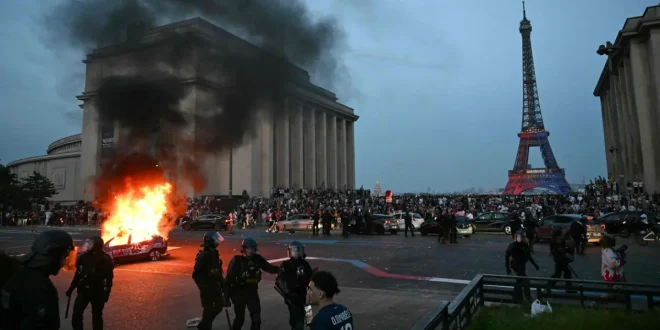
A night that should have been purely about sporting glory for Paris Saint-Germain fans descended into widespread unrest across the French capital. While thousands celebrated their team’s Champions League final victory, the jubilation was marred by violent clashes with police, resulting in hundreds of arrests and significant damage. This recurring pattern raises critical questions about public order, urban management, and the complex dynamics at play during large-scale public gatherings in France.
A Night of Jubilation and Discord: What Happened in Paris
As news filtered in of PSG’s dramatic penalty shootout triumph in Budapest, an estimated 20,000 ecstatic fans converged on the iconic Champs-Élysées, a scene typically reserved for national triumphs and celebratory parades. Simultaneously, tens of thousands more gathered inside and outside the Parc des Princes stadium. However, the celebratory atmosphere quickly soured for many, transforming into scenes of significant disorder. Reports indicate 416 arrests nationwide, with 283 in Paris alone, as groups engaged in destructive behavior. Vehicles were vandalized, local businesses like a bakery and a restaurant suffered damage, and a bus shelter was destroyed near the Champs-Élysées. Seven police officers were reportedly injured amidst projectiles, flares, and fireworks being hurled at them, prompting police to respond with tear gas.
In anticipation of potential disturbances, French authorities had deployed an unprecedented 22,000 police officers across France, with 8,000 specifically in Paris. Public transport lines were halted, and shops along key celebratory routes were proactively boarded up, a stark testament to previous experiences. Despite these extensive preventative measures, attempts were made to breach stadium gates, barricades were erected using rental bikes, and even the Paris ring road was temporarily blocked by revelers, illustrating the formidable challenge of containing large, volatile crowds.
A Recurring Pattern: The Background to Parisian Unrest
The violent aftermath of PSG’s Champions League victory is not an isolated incident but rather a troubling echo of past events. Similar unrest accompanied the club’s success last year, signaling a deeper, perhaps systemic, issue beyond mere football hooliganism. Paris Saint-Germain, a club with immense resources and a passionate global fanbase, often finds its moments of triumph intersecting with broader societal undercurrents. These celebrations, particularly those involving large public gatherings, can unfortunately become conduits for opportunistic criminality and expressions of frustration by elements seeking to exploit the chaos.
The situation was further complicated by Paris hosting several other major events concurrently, including high-profile concerts at the Stade de France and La Défense Arena, and the French Open tennis tournament in full swing. This placed an immense strain on security forces and public services, creating a challenging environment for maintaining peace. The proactive boarding up of shops underscores the authorities’ and businesses’ grim anticipation of disorder, indicating a pattern of behavior from certain elements of the crowd.
Beyond the Beautiful Game: Why This Matters
The events in Paris extend far beyond a football match. They highlight critical issues for French society and governance:
- Public Safety and Order: Despite massive police deployments and preventative measures, authorities struggled to prevent widespread disorder. This raises questions about the effectiveness of current strategies for managing large public gatherings, especially in urban centers prone to unrest, and the distinction between genuine celebration and opportunist vandalism.
- Economic and Social Costs: The damage to property, disruption to public transport, and injury to officers impose tangible economic costs and erode public trust in the ability to maintain peace during celebratory events. Such incidents can deter tourism and impact local businesses significantly.
- Political Implications: The swift condemnation from figures like far-right presidential candidate Marine Le Pen, who used the events to critique France’s perceived inability to maintain order, demonstrates how such incidents quickly become politicized. They feed into wider national debates about law enforcement, social cohesion, and the challenges of integrating diverse urban populations.
- National Image and Future Events: With Paris set to host major international events like the 2024 Olympic Games, recurring instances of urban violence during celebrations pose a significant challenge to the city’s image as a safe, organized, and capable global host.
Global Echoes: A Challenge Beyond Borders, Including Pakistan
While the specific context is Parisian, the phenomenon of celebratory gatherings spiraling into violence is a challenge faced by major cities worldwide. From football riots in Europe and Latin America to political rallies and spontaneous festivities in various nations, the dynamics of crowd psychology, the presence of opportunistic elements, and underlying societal tensions can often converge to create volatile situations. In Pakistan, for instance, large public gatherings – be it during political campaigns, religious processions, or even spontaneous celebrations following a major cricket victory – have, at times, faced similar challenges related to maintaining law and order, managing crowds, and preventing vandalism or clashes. The lessons from Paris, therefore, resonate globally: effective crowd management, clear communication, swift and proportionate law enforcement, and addressing socio-economic grievances are universal necessities for ensuring public safety during moments of collective euphoria or dissent. The recurring nature of such incidents suggests that a purely reactive policing strategy often falls short.
Analysis: Navigating the Paradox of Celebration
The aftermath of PSG’s Champions League victory presents a stark paradox: a moment of national pride and sporting triumph overshadowed by urban chaos. It suggests that these incidents are not merely random acts of hooliganism but often symptomatic of a complex interplay between genuine fan passion, underlying social frustrations, and elements ready to exploit large crowds for destructive purposes. The immense police presence, while significant, couldn’t entirely curb the disorder, indicating that a purely security-focused approach might be insufficient without deeper community engagement and strategies to de-escalate potential flashpoints.
Moving forward, French authorities face the arduous task of balancing the public’s right to celebrate freely with the imperative of ensuring safety and preventing anarchy. This requires a nuanced approach that addresses both immediate security concerns and the deeper societal issues that may contribute to such recurring unrest. As Paris prepares for the global spotlight of the Olympics, understanding and mitigating these celebratory disturbances will be crucial for protecting both its citizens and its international reputation, ensuring that future moments of triumph truly remain joyful.