 Dost Pakistan Journeys Tours and safaris in the North & South Pakistsn
“`html
Balochistan’s Crisis: Farmer’s Disappearance Renews Calls for Accountability
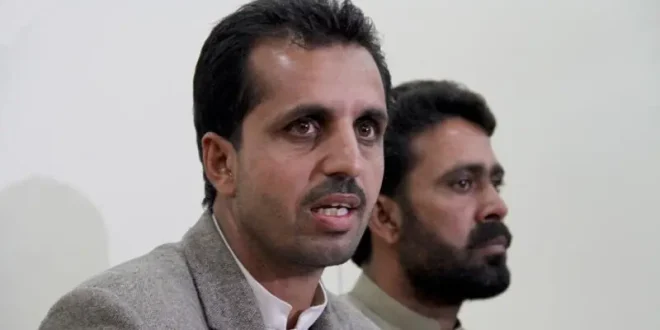
QUETTA, Pakistan – The recent alleged enforced disappearance of Abdul Rauf, a 38-year-old farmer from Balochistan’s Chagai district, has reignited urgent calls for transparency and accountability regarding human rights in Pakistan’s largest province. This incident, brought to light by the Voice for Baloch Missing Persons (VBMP) Chairman Nasrullah Baloch, underscores a deeply entrenched issue that continues to plague the region and challenge the nation’s commitment to the rule of law.
What Happened: Another Voice Silenced?
According to reports from the VBMP, Abdul Rauf, belonging to the Yousafzai tribe, was allegedly taken into custody by personnel identified as belonging to the Frontier Corps (FC) and intelligence agencies during the early hours of May 29, 2026. The farmer was reportedly seized from his home in Aminabad, Chagai district, and subsequently moved to an undisclosed location. His family has since received no information regarding his whereabouts or status, prompting the VBMP to demand his immediate and safe recovery.
Adding a poignant layer to this already concerning incident is the revelation that this is not Abdul Rauf’s first encounter with such an fate. He was previously detained by security forces in September 2018 and remained missing for approximately two and a half years before his release. This pattern of recurring disappearances for individuals raises profound questions about systematic issues and persistent vulnerabilities within the region.
Background: A Region Under Siege
The alleged enforced disappearance of Abdul Rauf is not an isolated event but rather a stark illustration of a long-standing human rights crisis in Balochistan. The province, rich in natural resources but historically underdeveloped, has been the epicenter of a protracted insurgency by Baloch separatist groups. In response, Pakistani security forces have conducted extensive counter-insurgency operations.
Human rights organizations, both local and international, have consistently accused state security forces and intelligence agencies of engaging in enforced disappearances – a practice where individuals are arrested or detained by state agents or those acting with state authorization, followed by a refusal to acknowledge the detention or to reveal the person’s fate or whereabouts. Groups like the VBMP have tirelessly documented thousands of such cases over the years, often alleging that these actions target political activists, students, journalists, and ordinary citizens suspected of sympathetic views towards separatist movements. The state, conversely, often justifies such actions as necessary for national security, combating terrorism, or countering sedition, though rarely provides legal proof or adheres to due process for those detained.
Why It Matters: Eroding Trust and Rights
The continued practice of enforced disappearances carries profound implications. First and foremost, it constitutes a grave violation of fundamental human rights, including the right to liberty and security of person, the right not to be subjected to torture or other cruel, inhuman or degrading treatment or punishment, and the right to a fair trial. When state actors operate outside the bounds of law, it systematically erodes public trust in institutions meant to protect citizens.
For the families of the missing, it means living in perpetual anguish, uncertainty, and fear, often without legal recourse. This climate of fear permeates society, stifling dissent, free speech, and political participation, thereby undermining the very fabric of a democratic society. Internationally, these incidents consistently draw criticism, damaging Pakistan’s human rights record and its standing on the global stage.
Impact on Pakistan: A Looming Internal Challenge
The persistent issue of enforced disappearances in Balochistan poses a significant challenge to Pakistan’s internal stability and its aspirations for robust governance:
- Fueled Grievances: Far from quelling unrest, these actions often exacerbate existing grievances, deepening alienation among the Baloch populace and potentially pushing more individuals towards radicalization or support for separatist movements, creating a vicious cycle of violence and repression.
- Undermining Rule of Law: When security forces operate with perceived impunity, it critically undermines the authority of the judiciary and the concept of rule of law. It suggests a parallel system of justice that bypasses constitutional safeguards, which is detrimental to any state striving for democratic principles.
- International Scrutiny: Pakistan consistently faces scrutiny from global human rights bodies, the United Nations, and various international governments regarding its handling of enforced disappearances. This can impact diplomatic relations, foreign investment, and international aid, presenting a significant reputational and geopolitical cost.
- Economic Stagnation: Instability and human rights concerns deter investment and hinder developmental projects in Balochistan, a province vital for Pakistan’s economic future, especially with the China-Pakistan Economic Corridor (CPEC) passing through it. Without peace and justice, sustainable development remains elusive.
Analysis: The Imperative for Change
The case of Abdul Rauf is a chilling reminder that despite periodic acknowledgments by Pakistani officials and some legal efforts, the issue of enforced disappearances in Balochistan remains stubbornly unresolved. The recurring nature of Rauf’s disappearance highlights a systemic problem where individuals can seemingly be picked up and held without due process, outside the purview of the law.
From a strategic perspective, while security forces may perceive these tactics as effective in intelligence gathering or disrupting insurgent networks, the long-term consequences are overwhelmingly negative. Such actions breed profound resentment and mistrust, not just towards the security apparatus but towards the entire state. They alienate local populations who might otherwise cooperate in efforts to restore peace and order.
To truly address the Balochistan crisis, Pakistan must move beyond ad hoc responses and embrace comprehensive reforms. This includes:
- Transparent Investigations: Launching independent, credible, and swift investigations into all alleged enforced disappearances, holding perpetrators accountable regardless of their affiliation.
- Legislative Reforms: Enacting and rigorously enforcing legislation that criminalizes enforced disappearances and ensures due process for all detainees.
- Empowering Judiciary: Strengthening judicial oversight over security agencies and ensuring that habeas corpus rights are universally respected.
- Addressing Root Causes: Committing to genuine political dialogue, economic development, and addressing the socio-economic grievances that fuel the conflict in Balochistan.
The recovery of Abdul Rauf, and indeed all missing persons, is not merely a humanitarian demand; it is an imperative for Pakistan to uphold its constitutional obligations, restore public faith in its institutions, and pave the way for lasting peace and stability in Balochistan. Ignoring these calls will only deepen the crisis, with enduring and detrimental impacts on the nation’s future.
“`
