 Dost Pakistan Journeys Tours and safaris in the North & South Pakistsn
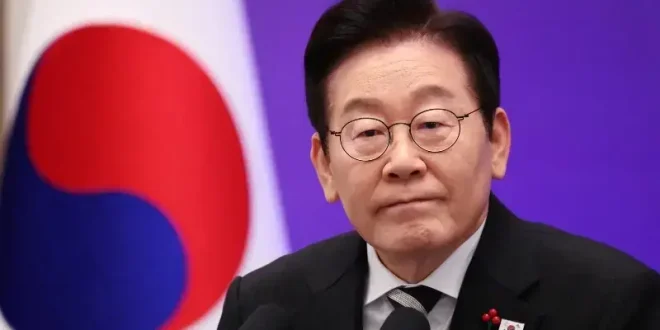
Seoul’s Bold Overture: A New Path for Korean Peace Amidst Geopolitical Shifts
The News: A Fresh Bid for Peace on the Korean Peninsula
In a significant diplomatic move, South Korean President Lee Jae Myung has extended an offer to North Korea for direct discussions aimed at formally concluding the Korean War. Speaking at a ceremony commemorating Korea’s liberation from Japanese colonial rule, President Lee urged both sides to cease mutual threats and engage as “directly involved parties” to replace the 1953 armistice with a definitive peace treaty. This proposal notably includes the possibility of discussing “effective measures to halt the advancement of North Korea’s nuclear capabilities,” signalling a pragmatic shift in Seoul’s approach to Pyongyang’s controversial nuclear arsenal.
This olive branch comes at a tense period, with North Korea recently condemning upcoming joint military exercises between the United States and South Korea, and conducting missile tests in response to Japan’s increased defense spending. Despite Pyongyang’s persistent declaration of itself as an “irreversible” nuclear state and its deepening military ties with Moscow, President Lee’s administration, adopting a notably dovish stance compared to its predecessor, continues to push for unconditional dialogue.
Background: Decades of Division and Shifting Strategies
The Korean Peninsula remains in a technical state of war, a legacy of the 1950-53 conflict that concluded not with a peace treaty, but with an armistice agreement. This unresolved status has fueled decades of tension, punctuated by periods of both intense hostility and cautious engagement. Previous attempts at denuclearization and peace, such as the high-profile summits between former U.S. President Donald Trump and North Korean leader Kim Jong Un, ultimately faltered, notably the 2019 Hanoi summit, which collapsed over disagreements on the scope of denuclearization versus sanctions relief.
North Korea’s subsequent declaration of its “irreversible” nuclear status has fundamentally altered the diplomatic landscape. It signals Pyongyang’s firm resolve to retain its nuclear deterrent, making traditional denuclearization-first approaches increasingly challenging. Against this backdrop, President Lee Jae Myung’s administration has pivoted from a strategy primarily focused on pressuring the North to dismantle its weapons. Instead, Seoul now prioritizes halting the expansion of Pyongyang’s nuclear activities, a nuanced shift reflecting a pragmatic acceptance of current realities.
Adding another layer of complexity, North Korea has been actively strengthening its strategic alliance with Russia, particularly in the wake of the conflict in Ukraine. Analysts suggest a burgeoning arms-for-aid arrangement, with Pyongyang potentially supplying munitions and troops to Moscow in exchange for financial support, food, energy, and crucial military technology. The anticipated visit of Kim Jong Un to Russia later this year underscores the growing alignment between these two nations, further complicating regional security dynamics and potentially offering North Korea new leverage against Seoul and Washington. The United States, a key security ally, maintains a substantial military presence of approximately 28,500 troops in South Korea, conducting regular joint exercises to bolster deterrence, which Pyongyang consistently views as provocative.
Impact on Pakistan: Observing Distant Echoes
While the immediate geographical and geopolitical impact of developments on the Korean Peninsula on Pakistan may seem indirect, the intricate web of global politics ensures that distant tremors can still resonate. As a nuclear-armed nation navigating its own complex regional security environment, Pakistan observes the evolving dynamics on the Korean Peninsula through several lenses.
Firstly, the persistent challenges to the global nuclear non-proliferation regime posed by North Korea’s nuclear program are a matter of international concern. Pakistan, while not a signatory to the Nuclear Non-Proliferation Treaty (NPT), is committed to responsible nuclear stewardship and observes how the international community attempts to manage, or mitigate, the proliferation of nuclear weapons. The success or failure of diplomatic efforts with North Korea could influence future discussions and precedents regarding nuclear-armed states and their integration (or isolation) within the global security framework.
Secondly, the deepening strategic alignment between North Korea and Russia, particularly in the context of the Ukraine war, highlights a broader recalibration of global power blocs. Pakistan, traditionally balancing its relationships with major global powers, watches these shifts carefully. The emergence of a more assertive, non-Western-aligned axis impacts the overall geopolitical stability that indirectly affects Pakistan’s economic and strategic interests, including global supply chains and energy security, areas to which Pakistan is highly sensitive.
Finally, any escalation or de-escalation of tensions in East Asia can affect global markets and investor confidence, which has ripple effects on developing economies like Pakistan. While not a direct trading partner with either Korea to a significant extent, a stable global environment is always more conducive to Pakistan’s economic growth and development aspirations.
Analysis: A High-Stakes Gambit Amidst Rising Tensions
President Lee Jae Myung’s renewed call for formal peace talks represents a calculated gamble, reflecting both opportunity and profound challenges. His “dovish” pivot from his predecessor’s more confrontational stance signals a pragmatic recognition that an indefinite state of war only perpetuates instability. By proposing discussions that include “halting the advancement of North Korea’s nuclear capabilities” rather than immediate dismantlement, Seoul acknowledges the reality of Pyongyang’s declared “irreversible” nuclear status, seeking a more achievable interim goal for de-escalation.
The timing of Lee’s proposal is critical. It comes amidst heightened military exercises by both sides and North Korea’s bolstered ties with Russia. From Seoul’s perspective, this overture could be an attempt to arrest the dangerous trajectory of escalating tensions, prevent North Korea from becoming further entrenched in its isolation and military alliances, and re-establish a channel for dialogue before the situation becomes unmanageable. It could also be a strategic move to demonstrate Seoul’s commitment to peace, potentially placing the onus on Pyongyang to respond constructively.
However, the obstacles are formidable. North Korea’s leadership, emboldened by its nuclear arsenal and newfound strategic leverage with Russia, may view unconditional talks as a sign of weakness or an opportunity to extract concessions without genuine commitment to peace. Their consistent denouncement of joint US-South Korean military drills underscores a deep-seated distrust, which will undoubtedly remain a significant barrier. The upcoming US-South Korean exercises, which a US spokesman noted would account for “lessons learned” by North Korea in the Ukraine war, are likely to be met with further condemnation and potentially new missile tests, further complicating any nascent peace efforts.
The “irreversible nuclear state” dilemma remains central. For North Korea, its nuclear program is seen as a vital deterrent, especially given historical U.S. “hostile policies.” Convincing Pyongyang to even freeze, let alone roll back, its nuclear ambitions will require unprecedented diplomatic ingenuity and security guarantees that extend far beyond a formal peace treaty. The engagement of external powers—the United States, China, and Russia—will be crucial. Each holds significant sway and possesses divergent interests that could either facilitate or derail a lasting peace.
Ultimately, while President Lee’s proposal offers a glimmer of hope for breaking the cycle of confrontation, the path to a formal peace on the Korean Peninsula remains fraught with historical animosities, profound distrust, and shifting geopolitical alignments. Its success hinges not only on Seoul’s perseverance but, more critically, on Pyongyang’s willingness to engage, and the international community’s ability to forge a unified, pragmatic approach to one of the world’s most enduring conflicts.
