Dost Pakistan Journeys Tours and safaris in the North & South Pakistsn
Related Articles


Celestial Spectacle: What the US Meteor Explosion Tells Us About Earth’s Cosmic Dance
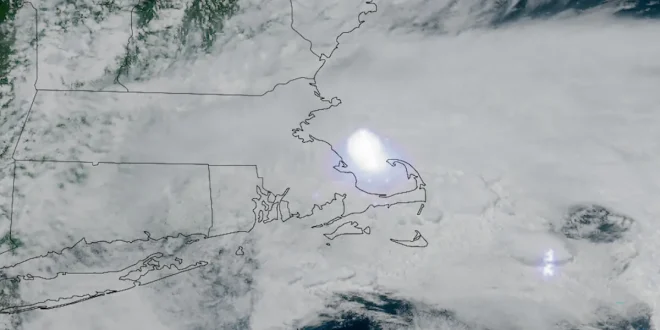
A recent celestial event sent ripples of sound and curiosity across the northeastern United States. On Saturday, a meteor dramatically concluded its journey by exploding over Massachusetts and New Hampshire, releasing energy equivalent to 300 tonnes of TNT. This unexpected atmospheric detonation, confirmed by NASA, serves as a vivid reminder of our planet’s constant interaction with the vastness of space.
The Fiery Descent: What Happened Over the US
At precisely 2:06 PM (local time), residents in parts of northeastern Massachusetts and southeastern New Hampshire were startled by loud booms and shaking homes. The cause was not an earthquake or terrestrial explosion, but a powerful atmospheric breakup of a meteor traveling at a staggering 75,000 mph (over 120,000 kph) at an altitude of 40 miles. NASA swiftly clarified that this was a natural object, not human-made space debris or a satellite re-entry, and was not associated with any known meteor shower. Its explosive demise, while alarming for those on the ground, underscored the raw power of natural phenomena occurring daily in our upper atmosphere.
Background: Earth’s Constant Cosmic Visitors
Our planet is continuously bombarded by cosmic material, from microscopic dust grains to larger space rocks. These are broadly categorized:
- Meteoroids: Space rocks ranging in size from dust grains to small asteroids orbiting the Sun.
- Meteors: When a meteoroid enters Earth’s atmosphere, it heats up due to friction with air molecules, creating a bright streak of light – what we commonly call a “shooting star” or a “fireball” if particularly bright.
- Meteorites: Any part of a meteoroid that survives its fiery atmospheric journey and lands on Earth’s surface.
The recent US event was a particularly large meteoroid that became a brilliant fireball. The loud booms and energy release happen when the object, under immense pressure and thermal stress from its rapid deceleration, fragments violently. This rapid breakup can create a powerful shockwave, analogous to a sonic boom but on a much larger scale, causing the ground-level tremors and sounds experienced by residents.
While many meteors burn up harmlessly, and small ones are frequent, objects of this size (releasing 300 tonnes of TNT equivalent) are less common but not exceedingly rare. They provide valuable data for scientists studying atmospheric entry physics and the composition of interplanetary material.
Why It Matters: Planetary Defense and Public Awareness
The US meteor explosion, though localized in its immediate effects, highlights several critical aspects of our relationship with space:
- Planetary Defense Imperative: This event, occurring without prior warning, reinforces the ongoing need for robust planetary defense systems. Scientists globally monitor Near-Earth Objects (NEOs) – asteroids and comets whose orbits bring them close to Earth. While the US meteor was too small to be detected far in advance with current technology, larger, potentially hazardous objects are tracked diligently.
- Public Reaction and Education: The surprise and alarm among residents underline the importance of public education regarding such natural phenomena. Understanding the science behind these events can help mitigate panic and foster appreciation for the dynamic nature of our cosmos.
- Scientific Data Collection: Each such event provides crucial data for refining models of atmospheric entry, understanding the physical properties of meteoroids, and improving our ability to predict potential impacts.
Comparing this incident to the Chelyabinsk event of 2013 further contextualizes its significance. The Chelyabinsk meteor, which exploded over Russia, released an estimated 440,000 tonnes of TNT equivalent – vastly more powerful than the recent US event. That blast caused widespread damage, shattering windows over 200 square miles and injuring over 1,600 people, primarily from flying glass. The US meteor, while significant, was a far smaller fraction of Chelyabinsk’s destructive power, resulting in no reported injuries or widespread damage, thankfully.
Global Implications: No Direct Impact on Pakistan, But Lessons for All
For Pakistan, this specific meteor event over the United States has no direct impact. The geographical distance ensures that neither its atmospheric effects nor any potential debris could reach the region. However, the broader implications of such cosmic occurrences are universal:
- Global Awareness and Preparedness: The US event serves as a global reminder that Earth is a dynamic target in space. While large, devastating impacts are extremely rare on human timescales, smaller impacts are regular. Every nation, including Pakistan, benefits from the ongoing international efforts to catalogue and track NEOs.
- Scientific Collaboration: Space phenomena transcend national borders. Research and data sharing from events like this contribute to a collective understanding that benefits all of humanity. Pakistan’s own space and upper atmosphere research commission (SUPARCO) contributes to global scientific knowledge, and remains aware of international developments in space science.
- Perspective on Risk: While the possibility of a large impact is a genuine concern for humanity, events like the US meteor explosion, thankfully harmless, help to ground our understanding of cosmic risks – a potent natural force, but one largely mitigated by Earth’s atmosphere for smaller objects, and by global vigilance for larger ones.
Analysis: A Gentle Cosmic Wake-Up Call
The recent meteor explosion over the US was a dramatic, albeit harmless, display of Earth’s ongoing interaction with its cosmic environment. It wasn’t an unprecedented event, but its visibility and auditory impact on a populated region made it particularly striking. Rather than a cause for alarm, it should be viewed as a cosmic wake-up call, reinforcing the critical work being done in planetary defense.
Since the Chelyabinsk event, global efforts in meteoroid detection and tracking have intensified. Agencies like NASA continue to invest in telescopes and algorithms to identify and characterize objects that pose a potential threat. The fact that the US meteor was not associated with a known meteor shower or previously tracked highlights the challenge: many smaller objects are simply too dim or fast to be catalogued until their final fiery moments.
Ultimately, these events serve as powerful reminders of the dynamic universe we inhabit. They fuel scientific inquiry, drive technological advancement in space observation, and underscore the importance of international cooperation in understanding and mitigating potential extraterrestrial threats. The sky above us is not static; it is a bustling highway of cosmic debris, and Earth is constantly dancing through it, occasionally graced by spectacular, or even powerful, visitors.