Dost Pakistan Journeys Tours and safaris in the North & South Pakistsn
Related Articles



“`html
French Consulate Closure in Karachi: A Diplomatic Shift for Pakistan?
The recent announcement by French Ambassador Nicolas Galey regarding the permanent closure of the Consulate General of France in Karachi marks a significant moment in France-Pakistan bilateral relations. After serving the bustling economic hub of Pakistan for 50 years, the departure of Consul General Alexis Chahtahtinsky will coincide with the consulate’s final shuttering, leaving many to ponder the implications for diplomatic ties, trade, and cultural exchange.
The News
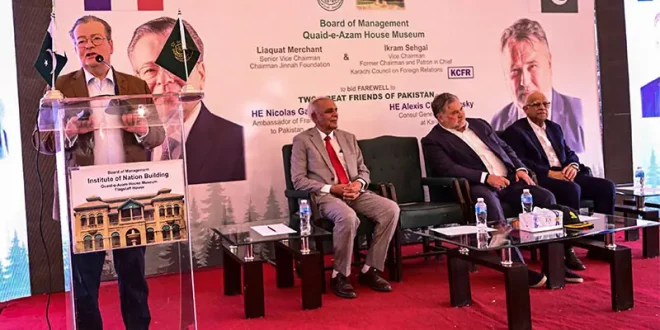
In a farewell event organized by the Quaid-i-Azam House Museum and the Karachi Council of Foreign Relations, Ambassador Galey confirmed the permanent closure of the French Consulate General in Karachi, which first opened its doors in 1976. This decision coincides with his own departure from Pakistan and that of Consul General Alexis Chahtahtinsky. While a new ambassador will be appointed to Islamabad, the physical consular presence in Karachi will cease. Ambassador Galey acknowledged Karachi’s vitality and improvements, highlighting the continued role of Alliance Française and the Pakistan France Business Alliance as flagships of French presence in the city. Both diplomats expressed sadness at leaving Pakistan, with Consul General Chahtahtinsky fondly recalling his long-standing connection to the country since 1983 and praising Karachi as its economic gateway.
Notably, both French officials commended Pakistan’s recent diplomatic efforts, particularly in mediating a “kind of ceasefire in the Gulf,” repositioning itself as a “solution provider” on the global stage, a stark contrast to its previous reputation for crime and terrorism.
Background: A Legacy of Strategic Partnership
The relationship between France and Pakistan, though formally established in 1951, has a richer history of cooperation, with France being among the early non-Muslim nations to recognize Pakistan. For decades, France has been a crucial strategic partner, particularly in defense. Pakistan’s armed forces have historically relied on French technology, acquiring Daphne-class and Agosta-class submarines, and iconic Mirage III and Mirage 5 fighter jets. The Project Retrofit of Strike Element (ROSE) further underscored this collaboration, modernizing Pakistan’s aging Mirage fleet at the Pakistan Aeronautical Complex in Kamra.
A consulate general, such as the one in Karachi, typically serves as a vital extension of a nation’s diplomatic mission. Beyond offering essential consular services like visa processing for local citizens and assistance to its own nationals abroad, it plays a pivotal role in fostering trade relations, promoting cultural exchange, and deepening bilateral ties at a regional level. Karachi, as Pakistan’s largest city, economic capital, and primary port, has historically been a nexus for such activities, making the French Consulate’s half-century presence a cornerstone of Franco-Pakistani engagement in the region.
Moreover, the current geopolitical landscape sees Pakistan actively seeking to project an image of stability and influence, particularly through its mediation efforts in regional conflicts. This coincides with a renewed focus on leveraging its strategic location and economic potential, with Karachi at the heart of these ambitions.
Impact on Pakistan: A Mixed Signal?
The closure of a foreign consulate in its economic capital is rarely a neutral event for any nation, and for Pakistan, it carries several significant implications:
- Diplomatic Perception: While Ambassador Galey emphasized continuity through other channels, the closure could be perceived by some in Pakistan as a downgrading of French diplomatic presence and engagement in its most economically vital city. This comes at a time when Pakistan is actively working to improve its international standing and attract foreign investment.
- Consular Services & Convenience: Pakistani citizens seeking French visas or other consular assistance will now likely have to travel to Islamabad, which could be an inconvenience, especially for residents of Karachi and southern Pakistan. Similarly, French nationals in the region will lose direct local support.
- Trade and Economic Links: While the Pakistan France Business Alliance (PFBA) will continue its work, a consulate often provides robust institutional support, networking opportunities, and a point of contact for businesses. Its physical absence in Karachi, the nation’s commercial heart, might hinder direct business facilitation and dampen trade promotion efforts, particularly for small and medium-sized enterprises.
- Cultural and Educational Outreach: The Alliance Française is indeed a strong cultural institution, but a consulate often supplements its efforts with broader diplomatic programs, scholarships, and cultural events, enriching the overall bilateral cultural landscape.
- Geopolitical Messaging: The timing of the closure, juxtaposed with the French diplomats’ praise for Pakistan’s emerging role as a “solution provider” and its growing geopolitical significance, creates a somewhat conflicting message. As Ikram Sehgal of the Karachi Council of Foreign Relations pointed out, this is precisely when France could “have taken advantage of the opportunities coming up here in the name of trade and new alliances.”
Analysis: Strategic Re-evaluation or Missed Opportunity?
The permanent closure of the French Consulate General in Karachi invites analysis from several perspectives. On the one hand, such decisions by diplomatic missions often stem from broader strategic reviews, resource optimization, or a centralization of services. Operating a consulate is costly, and nations frequently re-evaluate their global footprint to ensure maximum efficiency. It’s possible France views Islamabad as a sufficient diplomatic hub for the entire country, especially if the volume of direct consular services or region-specific trade promotion did not justify a full-fledged consulate in Karachi.
Furthermore, while the diplomats lauded Pakistan’s improved security situation and regional influence, historical security concerns might have played a role in long-term strategic planning leading to this decision. Even if current conditions are better, past assessments can influence future configurations.
However, from Pakistan’s vantage point, and particularly from Karachi, the decision appears to be a missed opportunity. As Consul General Chahtahtinsky himself noted, Karachi is “the gateway to Pakistan” and a “great place for doing business.” The city’s strategic importance is only set to grow with Pakistan’s increasing focus on maritime trade, regional connectivity, and its potential role in emerging geopolitical alliances. For France, a significant global player with historical ties and substantial defense interests in Pakistan, maintaining a direct diplomatic and commercial presence in its economic capital could have served long-term strategic and economic goals.
The reliance on Alliance Française for cultural ties and the Pakistan France Business Alliance for commercial links, while valuable, may not fully compensate for the comprehensive role of a consulate. These entities, by their nature, have specific mandates that may not cover the full spectrum of diplomatic engagement, particularly in crisis management, high-level business advocacy, or direct government-to-government interaction at a local level.
Ultimately, the closure prompts a critical question: Is this a calculated strategic streamlining by France, prioritizing efficiency and centralizing operations, or a misreading of Pakistan’s evolving geopolitical and economic landscape? For Pakistan, it underscores the ongoing challenge of projecting an image of growing stability and opportunity that translates into sustained foreign diplomatic and economic engagement, particularly in its vital commercial centers.
Published in Dawn, August 26th, 2026
“`