 Dost Pakistan Journeys Tours and safaris in the North & South Pakistsn
“`html
Karachi’s Section 144: Decoding Pakistan’s Pre-Emptive Crackdown on Public Gatherings
The recent imposition of Section 144 across multiple cities in Pakistan, most prominently Karachi, signals a critical juncture in the nation’s political landscape. With a ban on gatherings of more than five people, authorities aim to pre-empt potential civil unrest, particularly in light of anticipated political protests. This widespread measure raises significant questions about fundamental freedoms, governmental control, and the trajectory of democratic expression in Pakistan.
The News: A Nation Under Restriction
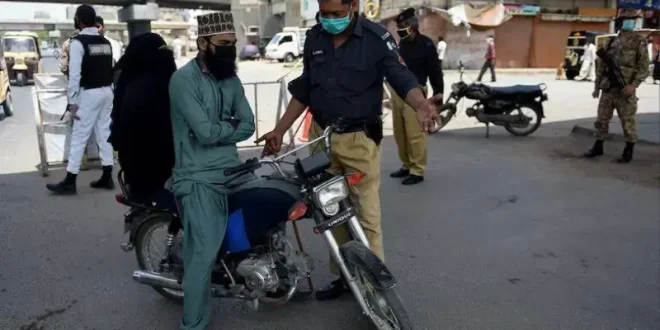
Effective September 24th, Karachi’s Commissioner Hassan Naqvi enacted Section 144, prohibiting public assemblies involving more than five individuals until September 30th. This directive was issued following reports from law enforcement citing concerns over severe traffic congestion, serious security threats, and disruptions to essential services caused by ongoing protests, demonstrations, and rallies on major thoroughfares. The notification specifically highlighted the impediment to emergency services and access to hospitals.
Karachi is not alone in facing these restrictions. Similar bans have been concurrently enforced in Sukkur and Hyderabad, and across the entire province of Punjab for a 13-day period. Islamabad, the federal capital, has gone further, implementing Section 144 for two months, a measure reinforced by the recently legislated “Peaceful Assembly and Public Order Act 2024,” a bill swiftly passed amidst significant opposition outcry. Balochistan has also followed suit, imposing Section 144 province-wide for 30 days, citing similar apprehensions about law and order and public safety. These synchronized actions across disparate regions point towards a concerted national strategy, widely understood to be a pre-emptive response to the Pakistan Tehreek-e-Insaf (PTI)’s planned protest on September 27th.
Background: Understanding Section 144 and Pakistan’s Political Climate
What is Section 144?
Section 144 of Pakistan’s Code of Criminal Procedure is a potent legal tool that grants district magistrates or commissioners the authority to issue orders prohibiting assemblies, speeches, or any actions deemed likely to disturb public peace. It serves as a preventive measure, typically enforced for a specified, temporary duration, and is invoked in situations where immediate intervention is considered necessary to avert potential threats to public safety and order. While its stated purpose is to maintain peace, its broad application frequently draws criticism regarding its impact on fundamental human rights, especially freedom of assembly and expression.
Why the Widespread Implementation Now?
The timing of these sweeping restrictions is crucial, set against a backdrop of heightened political tension. Pakistan is no stranger to political unrest and a vibrant protest culture, but the current wave of bans comes amidst a particularly charged political atmosphere. The Pakistan Tehreek-e-Insaf (PTI), led by former Prime Minister Imran Khan, has been a prominent force in organizing protests and rallies, frequently challenging the incumbent government. Their announced nationwide protest on September 27th is the immediate, widely perceived trigger for these extensive Section 144 impositions.
Beyond the immediate protest, this move can be understood within a broader context of political consolidation and control. The government, citing legitimate concerns over public safety and traffic disruption, views these measures as essential to maintaining stability. However, critics often interpret such actions as attempts to stifle political dissent and limit the opposition’s ability to mobilize its support base. The hurried passage of the “Peaceful Assembly and Public Order Act 2024” in Islamabad, specifically designed to regulate public gatherings and faced with strong opposition, further illustrates a legislative trend towards tighter control over public demonstrations. This pattern suggests a strategic effort to manage political opposition both through executive orders and legislative means.
Impact on Pakistan: Eroding Civic Freedoms and Heightened Tensions
The widespread imposition of Section 144 carries profound implications for various facets of Pakistani society and its democratic fabric:
- Erosion of Fundamental Rights: The most immediate impact is on the fundamental rights to freedom of assembly and freedom of expression, constitutionally guaranteed in Pakistan. While these rights are not absolute and can be subject to reasonable restrictions in the interest of public order, a blanket ban across multiple provinces, often extending to gatherings of merely five individuals, raises serious concerns about disproportionate measures and the curtailment of legitimate political activity.
- Heightened Political Tensions: Rather than de-escalating unrest, such widespread bans often exacerbate political tensions. The opposition views these restrictions as a direct attempt to silence them and curb their democratic right to protest, potentially leading to increased defiance and a hardening of political stances. This cycle of restriction and defiance can further polarize the political landscape, making constructive dialogue more difficult.
- Economic Disruption: While the official notifications cite economic disruption and traffic congestion as primary reasons for the ban, the restrictions themselves can also have negative economic repercussions. Businesses, especially in commercial hubs like Karachi, face uncertainty, and the overall perception of political instability can deter investment and hinder economic recovery.
- Public Trust and Governance: Repeated and widespread reliance on Section 144, particularly when perceived as a response to political dissent rather than solely for genuine security threats, can erode public trust in government institutions. It can foster a perception that the state is more concerned with controlling narratives and suppressing opposition than with fostering an open and democratic environment.
- Legitimacy of Protests: While authorities often frame protests as disruptive, they are also a vital mechanism for citizens to voice grievances, hold power accountable, and participate in a democracy. Curtailing this right forces dissent underground or makes it appear more radical, potentially creating more complex and unpredictable challenges for law enforcement in the long run.
Analysis: Balancing Order with Liberty in a Fragile Democracy
The current scenario in Pakistan presents a delicate and complex balancing act between maintaining law and order and safeguarding democratic freedoms. From the government’s perspective, the widespread use of Section 144 is framed as a necessary measure to prevent chaos, ensure public safety, and facilitate the smooth functioning of society, especially considering past incidents of violence or significant disruption during large-scale political gatherings.
However, a critical analysis reveals a pattern that frequently leans heavily towards state control over public expression. The synchronized nature of these bans across different administrative units, coupled with new legislation like the “Peaceful Assembly and Public Order Act 2024,” suggests a coordinated and comprehensive strategy to manage political opposition. While concerns about traffic and security are valid and must be addressed, the sweeping nature of these restrictions, applied to gatherings of more than five people, is often viewed as an overly broad and disproportionate response that impacts even peaceful assembly.
This approach risks setting a problematic precedent for future political activity in Pakistan. If every significant opposition gathering is met with blanket bans, it undermines the very essence of a multi-party democratic system where healthy dissent, public debate, and the right to peaceful protest are crucial. It can lead to a sense of disenfranchisement among citizens and opposition parties, potentially pushing political grievances into less visible, more radical, or ultimately more confrontational forms.
For Pakistan’s evolving democracy, the challenge lies in fostering an environment where legitimate concerns about public order can be addressed without unduly suppressing fundamental rights. Effective governance requires not just the ability to enforce order but also to facilitate dialogue, accommodate legitimate dissent, and uphold the constitutional rights of its citizens. The widespread use of Section 144, particularly when perceived as politically motivated, signals a weakening of these democratic principles and may contribute to long-term political instability rather than effectively preventing it.
Moving forward, a more nuanced and proportionate approach that differentiates between genuinely violent or destructive activities and peaceful assembly is essential. Relying solely on prohibitory orders risks alienating large segments of the population and could inadvertently fuel the very unrest it seeks to prevent, making true democratic progress more challenging and impacting Pakistan’s standing on international democratic indices.
“`
