 Dost Pakistan Journeys Tours and safaris in the North & South Pakistsn
“`html
Pakistan’s FIFA Asean Cup Debut: A Reality Check Against Regional Powerhouse Thailand
The Unforgiving Introduction: Pakistan’s Opening Defeat
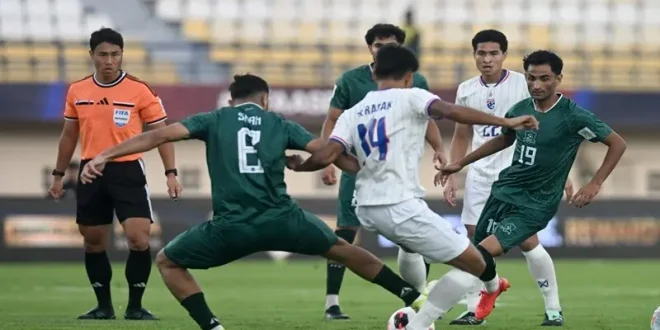
Pakistan’s much-anticipated foray into the FIFA Asean Cup commenced with a stern test, resulting in a comprehensive 4-0 defeat to hosts Thailand in Bandung, Indonesia. Facing a formidable opponent in their tournament opener, the “Green Shirts,” ranked 198th globally, found themselves overwhelmed by Thailand’s clinical finishing and tactical superiority.
The match saw Teerasak Poephimai emerge as Thailand’s star, netting a hat-trick, complemented by a goal from Jude Soonsup-Bell. Despite a resolute defensive stand for the initial half-hour, Pakistan conceded twice before halftime and twice more in the second half. Coach Nolberto Solano’s side, participating as a guest nation, will now look to regroup ahead of crucial group-stage fixtures against the Philippines and Vietnam, scheduled for September 29th and October 2nd, respectively.
Contextualizing the Challenge: Pakistan’s Football Journey and Thailand’s Prowess
To fully appreciate the significance of this result, it’s vital to understand the contrasting footballing landscapes of Pakistan and Thailand, and the unique opportunity presented by the FIFA Asean Cup.
The FIFA Asean Cup Opportunity
The FIFA Asean Cup, while primarily a regional tournament for Southeast Asian nations, often invites guest teams to enhance competition and foster development. For Pakistan, an invitation signifies a valuable chance for their national team to gain much-needed international exposure against stronger, more established opponents. Such tournaments are critical for teams striving to climb the global rankings and improve their competitive standard.
Pakistan Football: A Path of Resilience and Renewal
Pakistan’s journey in international football has been marked by significant challenges. Historically plagued by internal administrative disputes within the Pakistan Football Federation (PFF), the nation has faced multiple suspensions from FIFA, severely limiting their participation in qualifiers and international friendlies. This lack of consistent exposure has hindered player development, tactical evolution, and the establishment of a robust domestic league structure.
Against this backdrop, Pakistan’s current world ranking of 198th reflects these deep-seated issues. However, under the guidance of former Premier League star Nolberto Solano, there’s a renewed sense of purpose. Earlier this year, the team celebrated a rare triumph, winning the Diamond Jubilee International Football Tournament in the Maldives – their first title in 74 years. This victory, while against relatively lower-ranked opposition, injected a much-needed dose of confidence and hope, indicating a nascent phase of rebuilding.
Thailand: A Regional Juggernaut
In stark contrast, Thailand stands as a dominant force in Southeast Asian football. Boasting a professional league, substantial investment in youth academies, and regular participation in AFC Asian Cup and World Cup qualifiers, Thailand consistently produces technically skilled players. Their higher FIFA ranking, more advanced infrastructure, and consistent international fixtures mean they operate on a significantly different plane compared to Pakistan. Their style of play is typically characterized by quick passing, fluid movement, and clinical finishing – qualities that were on full display against the Green Shirts.
The Immediate and Long-Term Impact on Pakistan’s Footballing Ambitions
While a 4-0 defeat is undoubtedly a blow, its impact on Pakistan’s footballing future must be viewed through a pragmatic lens, considering both immediate challenges and long-term development goals.
A Necessary Reality Check
The comprehensive loss serves as a stark reminder of the significant gap that still exists between Pakistan and established regional powers. The confidence gained from the Maldives triumph was important, but this match underscores the higher echelons of international football require consistent excellence across all departments. It highlights areas where Pakistan must drastically improve, particularly in maintaining possession under pressure, transitioning from defense to attack, and decision-making in critical moments.
Invaluable Exposure for Player Development
Despite the scoreline, the experience of competing against a team of Thailand’s calibre is invaluable for Pakistan’s young squad. Players like goalkeeper Yousuf Butt, who made several crucial saves, and defenders Mohibullah and Ali Raza, who delivered key interceptions and tackles early on, gained vital experience under immense pressure. This exposure helps identify individual strengths and weaknesses, fostering mental resilience and tactical awareness that cannot be replicated in training or against lesser opponents.
Tactical Lessons for Coach Solano
For Nolberto Solano, the match provides crucial insights. Pakistan’s initial defensive solidity, keeping the score sheet clean for 30 minutes, demonstrated discipline. However, the ease with which Thailand exploited a misplaced pass for their second goal, and the defensive lapses leading to later goals, highlight the need for improved concentration and communication throughout the ninety minutes. Solano’s brave halftime substitutions to inject more attacking enterprise, even if ultimately unsuccessful, show a desire to evolve the team’s playing style beyond mere containment.
The Road Ahead: Philippines and Vietnam
The remaining group-stage matches against the Philippines and Vietnam will be equally challenging, as both nations also boast stronger footballing programs than Pakistan. The true test for Solano’s side will be their ability to learn from this defeat, adjust their strategies, and show improved performance. While winning might be a tall order, competitive performances, reducing the margin of defeat, and perhaps even scoring a goal would be significant markers of progress and provide much-needed momentum for their ongoing development.
Beyond the Score: An Analytical Look at Pakistan’s Performance and Future Trajectory
The 4-0 scoreline against Thailand tells one story, but a deeper analysis reveals both the challenges and the glimmer of hope for Pakistan’s footballing future.
Match Dynamics: A Tale of Two Halves (and a Turning Point)
Pakistan’s strategy in the opening half-hour was clear: defend deep, absorb pressure, and frustrate Thailand. This tactical approach yielded some success, with goalkeeper Yousuf Butt making crucial saves and the defensive line holding firm. The turning point, however, came with Thailand’s opening goal from a rebound – an instance of relentless pressure finally breaking through. This was swiftly followed by a second goal, capitalizing on a crucial error in Pakistan’s build-up, demonstrating how quickly individual mistakes are punished at a higher level of play. Solano’s halftime changes, introducing fresh legs and more attacking players, did momentarily shift the momentum, showing a commendable intent to play more expansively, but Thailand’s quality ultimately shone through with two more goals in the second half, one of which was a deflected strike, adding to Pakistan’s misfortune.
The Gulf in Class: Skill, Pace, and Decision-Making
The match starkly illustrated the difference in technical ability, pace, and tactical awareness between the two sides. Thailand’s players exhibited superior ball control, quicker decision-making in tight spaces, and a greater understanding of offensive movement. Pakistan, while showing flashes of individual brilliance, struggled to maintain possession for extended periods, execute precise passes under pressure, and create clear-cut scoring opportunities. The attempt from Abdul Samad Arshad and the eventual introduction of veteran Kaleemullah Khan were efforts to spark an attack, but the decisive final touch remained elusive.
Nolberto Solano’s Strategic Imperative
Solano’s role extends beyond immediate match results; he is tasked with building a foundation for Pakistan football. This involves not only instilling tactical discipline but also fostering a winning mentality and confidence within a team that has historically faced setbacks. The decision to make early substitutions and attempt to alter the game’s complexion at halftime speaks to his proactive approach. The focus now must be on ensuring that these defeats do not demoralize the squad but rather serve as crucial learning experiences. The “guest team” status in such tournaments is a privilege that must be maximized for development, even if the results are not immediately favorable.
Looking Forward: Patience and Persistent Investment
Pakistan’s journey to becoming a competitive footballing nation will be a long one, requiring patience, consistent investment in infrastructure, robust youth development programs, and sustained international exposure. The FIFA Asean Cup provides a vital platform, regardless of the scorelines. For the Green Shirts, the objective is not just to win matches but to narrow the performance gap, gain valuable experience, and build a cohesive unit for future challenges, including World Cup qualifiers. The defeat to Thailand is a significant hurdle, but it is also a vital step on a demanding, yet potentially rewarding, path towards greater footballing recognition.
“`
