 Dost Pakistan Journeys Tours and safaris in the North & South Pakistsn
“`html
Tarar Warns: India’s Unilateral IWT Action Threatens Global Water Governance
The News: A Dire Warning on Transboundary Water Rights
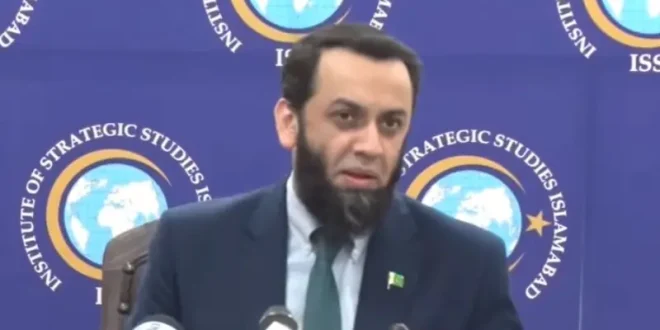
Pakistan’s Information Minister, Attaullah Tarar, has issued a stark warning regarding India’s unilateral decision to hold the Indus Waters Treaty (IWT) in abeyance. Speaking at a report launch by the Institute of Strategic Studies Islamabad, Tarar emphasized that this move by India, which occurred in April last year and was followed by a brief military conflict in May 2025, could establish a perilous precedent for transboundary water governance worldwide. He urged the international community to recognize the far-reaching implications.
For Pakistan, the IWT is not merely a legal document but a lifeline for its 240 million citizens. Following India’s action, Pakistan swiftly condemned it as an “act of war” and highlighted that the 1960 treaty contains no provision for unilateral suspension. Islamabad later cited the 1969 Vienna Convention on the Law of Treaties, arguing that New Delhi’s move constituted a clear violation of international law.
Tarar unequivocally stated, “We are a peaceful nation, but we cannot allow India to weaponise water because it is the basic right of the 240 million people of Pakistan.” He reiterated Pakistan’s commitment to engaging the global community to defend its vital national interests, pointing to Prime Minister Shehbaz Sharif’s recent address at the United Nations General Assembly where the IWT was described as the “lifeblood of our people and our region,” and any attempt to usurp this right would be considered an “act of war.”
The minister also referenced an August ruling by the Permanent Court of Arbitration (PCA) which unequivocally backed Pakistan’s position, affirming the full force of the IWT and rejecting any justification for its suspension. Tarar criticized India’s legal ignorance and moral bankruptcy, especially given the treaty’s explicit stipulations against unilateral revocation or alteration. He further highlighted Pakistan’s sacrifices in the fight against terrorism, directly contrasting them with India’s “alleged cross-border terrorism” claims used to justify its actions, which he termed “highly condemnable” and unjustifiable.
Contextualizing the Conflict: The Indus Waters Treaty and Its Historical Significance
The Indus Waters Treaty, signed in 1960 between India and Pakistan with the World Bank acting as a guarantor, is often hailed as one of the most successful international water-sharing agreements globally. Born out of the complexities of the 1947 partition of British India, which divided the Indus river system, the treaty was crucial for preventing water disputes from escalating into larger conflicts between the two newly formed, and often hostile, nations.
Under its provisions, the IWT allocated the waters of the Eastern Rivers—Ravi, Beas, and Sutlej—to India, while the Western Rivers—Indus, Jhelum, and Chenab—were largely reserved for Pakistan. Crucially, it established robust mechanisms for data-sharing, regular consultations through the Permanent Indus Commission, and a multi-tiered dispute resolution process involving neutral experts or a Court of Arbitration. This framework was designed to ensure that even amidst political strife, water cooperation would remain insulated.
For over six decades, the IWT has largely endured, acting as a testament to the power of international diplomacy and cooperation, even when bilateral relations were at their nadir. However, in recent years, mounting tensions, particularly over Kashmir and allegations of cross-border terrorism, have increasingly tested the treaty’s resilience. India’s latest move to unilaterally place the treaty in “abeyance” represents a significant departure from established norms and directly challenges the very spirit and letter of this foundational agreement, setting the stage for the current crisis.
The Stakes for Pakistan: Water, Life, and National Security
Pakistan, an arid to semi-arid country, is heavily reliant on the waters of the Indus River system, particularly the Western Rivers allocated under the IWT. These rivers are the lifeblood of its agrarian economy, supplying irrigation for over 80% of its cultivated land, providing drinking water to its rapidly growing population, and generating vital hydroelectric power. Any disruption to this water supply, therefore, has immediate and catastrophic implications for the nation.
- Food Security: Agriculture forms a significant portion of Pakistan’s GDP and employment. Reduced water flows would devastate crops, leading to severe food shortages, inflation, and a humanitarian crisis for its 240 million people.
- Economic Stability: Beyond agriculture, industrial output and energy production are also highly dependent on water. A water crisis would trigger widespread economic instability, job losses, and hinder development efforts.
- National Security: Pakistan views India’s unilateral action as an existential threat, directly linking water security to national security. The potential for resource scarcity to fuel internal unrest and external conflict is a grave concern, underscored by the brief military conflict that followed India’s initial move.
- Humanitarian Crisis: Pakistan is already considered a water-stressed nation, with projections indicating it could face absolute water scarcity in the coming decades. Restricting access to its allocated water would exacerbate this crisis, impacting public health and livelihoods on an unprecedented scale.
- Legal and Diplomatic Fallout: While Pakistan has a strong legal position, reinforced by the PCA’s ruling, the necessity of constantly defending its water rights diverts diplomatic energy and resources. The violation also undermines the trust essential for future regional cooperation.
For Pakistan, the IWT is more than a treaty; it is a fundamental guarantee for its survival and prosperity. India’s actions are perceived not just as a legal dispute, but as an aggressive maneuver to weaponize a vital resource, directly threatening the very fabric of the Pakistani state and society.
Analysis: Global Repercussions of Unilateral Water Abeyance
The Information Minister’s warning transcends the immediate India-Pakistan dispute, highlighting a critical threat to the architecture of international law and transboundary water governance. India’s unilateral move against the IWT, despite existing dispute resolution mechanisms, sends a chilling message to the global community, particularly to nations sharing vital river systems:
- Erosion of International Law: The IWT is a legally binding international treaty. Unilateral abeyance undermines the fundamental principle of pacta sunt servanda (treaties must be observed) and the authority of international arbitration bodies like the PCA. If such a robust and historically successful treaty can be disregarded, it sets a dangerous precedent for the stability of other agreements globally, from the Mekong River Commission to treaties governing the Nile or Jordan rivers.
- The Weaponisation of Water: Using water as a political leverage or a tool of pressure in interstate relations introduces a volatile and dangerous dimension, especially in regions already prone to conflict. In an era of escalating climate change and increasing water scarcity, such actions could ignite new flashpoints and deepen existing rivalries, turning a shared resource into a source of perpetual conflict.
- Weakening of Dispute Resolution Mechanisms: The IWT explicitly outlines pathways for resolving disagreements. By bypassing these established mechanisms, India challenges the efficacy and necessity of international legal frameworks designed to prevent and de-escalate conflicts. This could encourage other states to disregard diplomatic and legal channels in favor of unilateral actions.
- Regional Instability: The immediate consequence is heightened tension between two nuclear-armed neighbors, as evidenced by the military conflict in May 2025. Unilateral actions on such vital resources can quickly spiral into broader security crises, impacting regional stability and potentially drawing in international actors.
- Climate Change Vulnerability: As climate change exacerbates water stress, the need for robust and respected water-sharing agreements becomes even more critical. Undermining such treaties now jeopardizes future cooperation precisely when it is most needed to adapt to changing hydrologies and prevent widespread resource scarcity.
India’s justification, citing “cross-border terrorism,” while a valid concern in bilateral relations, is fundamentally disconnected from the specific legal framework of the IWT. The treaty does not include provisions for suspension based on security concerns unrelated to water management itself. This disconnect underscores the perilous nature of conflating unrelated geopolitical issues with established international legal obligations.
The international community, particularly the World Bank as a co-signatory, bears a significant responsibility to uphold the sanctity of the IWT. Failure to decisively condemn or address such unilateral actions risks signaling that international agreements are disposable, thereby unraveling decades of progress in establishing a rules-based global order for shared resources. The situation calls for urgent diplomatic engagement and a firm recommitment to the principles of international law to prevent a wider cascade of instability in transboundary water governance.
“`
