Dost Pakistan Journeys Tours and safaris in the North & South Pakistsn
Related Articles



Pakistan SC on Violence for Marriage Refusal: A Turning Point for Women’s Rights
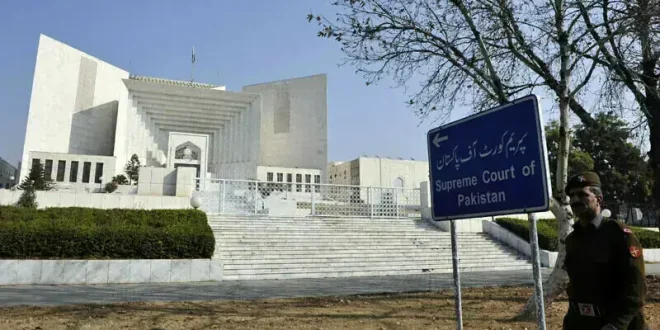
Pakistan’s Supreme Court has issued a landmark judgment, powerfully condemning the act of violence in response to a woman’s refusal to marry. Labelling such actions a “profound shame” on society’s conscience, the court reinforced the fundamental right of women to autonomy and free consent in marriage, delivering a significant blow to entrenched patriarchal customs and gender-based violence.
The News: A Judicial Stand Against Femicide
In a powerful nine-page judgment, Pakistan’s Supreme Court recently upheld the death sentence of Muhammad Kamran, convicted for the premeditated murder of a woman who rejected his marriage proposal. The bench, led by Justice Muhammad Hashim Khan Kakar, unequivocally stated that a man resorting to violence, or even taking a woman’s life, simply because his affections were not reciprocated, represents a “profound shame on the conscience of any civilised society.” This condemnation specifically targeted the notion that a man’s wounded ego justifies brutal acts, thereby rejecting any attempt to present a woman’s lawful refusal as a mitigating circumstance or “provocation.”
The court’s decision firmly distinguished between a death sentence and life imprisonment, dismissing the convict’s plea for commutation based on time served. More profoundly, the judgment delves into the societal roots of such violence, critically observing how various patriarchal systems often treat a woman’s consent in marriage as irrelevant, perceiving her as a commodity rather than an individual with agency. This “woman as commodity” mindset, the court asserted, is a direct challenge to a woman’s fundamental right to say “no,” often resulting in grave consequences like stalking, acid attacks, or femicide when a suitor’s perceived “honour” (ghairat) is challenged.
Background: Entrenched Patriarchy and Customary Chains
Pakistan, a diverse nation with a rich cultural tapestry, unfortunately grapples with deeply ingrained patriarchal structures that often subjugate women’s rights to customary practices and male dominance. The Supreme Court’s observations are not merely legal pronouncements but a direct confrontation with these societal realities.
The Shadow of Customary Practices:
- Ghag (Proclamation): This archaic Pashtun custom involves a man unilaterally claiming a woman as his bride, often through public declarations or even gunshots outside her home, without her or her family’s consent. It effectively “marks” a woman, intimidating other potential suitors and holding her marital status hostage, sometimes for decades, purely on a claim rather than a legal or religious union. The Khyber Pakhtunkhwa Elimination of Custom of Ghag Act, 2013, criminalized this practice, recognizing its coercive and exploitative nature.
- Suara, Vani, or Badal-e-Sulh (Compensation Marriages): These customs involve giving a girl or young woman in marriage to a man from a victim’s family as compensation for an offence, particularly homicide, decided by traditional councils (jirgas). These marriages serve as substitutes for criminal proceedings or financial compensation, effectively treating women as chattel to settle disputes. Often, the girls are minors, subjected to forced marriages into hostile environments. These practices were criminalized by the Criminal Law (Amendment) Act, 2004, and further solidified by the Prevention of Anti-Women Practices Act, 2011.
- Watta-Satta (Reciprocal Marriages): Meaning “give-take,” this custom involves simultaneous marriages between two families, typically a brother and sister from one family marrying a sister and brother from another. While seemingly balanced, it frequently compromises the free will of the brides, as their marriage is contingent on a reciprocal arrangement, often trapping them in potentially unhappy or abusive relationships due to family obligations.
These customs collectively highlight a recurring theme: the woman’s consent is deemed secondary or irrelevant, overshadowed by male ego, family honour, or dispute resolution. This pervasive mindset, as the Supreme Court underscored, stands in stark contrast to Islamic principles, which unequivocally mandate a woman’s free and full consent (nikah) as a prerequisite for a valid marriage. Furthermore, Pakistan’s commitment to international human rights instruments, such as the Convention on the Elimination of All Forms of Discrimination Against Women (CEDAW), specifically Article 16, obliges the state to ensure a woman’s right to freely choose a spouse.
Impact on Pakistan: A Glimmer of Hope for Women’s Autonomy
The Supreme Court’s assertive judgment carries profound implications for women’s rights and gender equality in Pakistan, marking a significant moment in the nation’s ongoing struggle against patriarchal violence.
Strengthening Legal Precedent and Judicial Resolve:
By explicitly condemning the “woman as commodity” mindset and rejecting any justification for violence against women for refusing marriage, the apex court has set a powerful legal precedent. This judgment reinforces the sanctity of women’s bodily autonomy and free will, sending an unequivocal message to lower courts and law enforcement agencies about the seriousness of such crimes. It aims to prevent the normalization or tacit acceptance of violence disguised as “honour” or “provocation.”
Challenging Entrenched Social Norms:
Beyond legal enforcement, the ruling serves as a vital tool in challenging deeply entrenched social norms that have historically undermined women’s agency. When the highest court in the land calls such practices a “profound shame,” it injects a moral imperative into the discourse, empowering women’s rights advocates, civil society organizations, and progressive voices to push for greater societal change. It supports a cultural shift away from the belief that men have an inherent “right” to a woman, regardless of her wishes.
Addressing Femicide and Honour Killings:
The judgment directly addresses a root cause of femicide and so-called “honour killings” in Pakistan, where women are often murdered for perceived affronts to family honour, including refusing arranged marriages, seeking divorce, or choosing their own partners. By categorizing such violence as a crime driven by a wounded male ego rather than legitimate provocation, the court helps dismantle the cultural justifications that often mitigate sentences or allow perpetrators to escape justice.
Highlighting the Implementation Gap:
While the judgment is laudable, it also implicitly highlights the vast gap between progressive legal frameworks and their on-ground implementation. Despite laws criminalizing ghag, vani, and other anti-women practices, these customs persist in many remote and conservative areas. The court’s reiteration of these prohibitions underscores the ongoing need for rigorous enforcement, public awareness campaigns, and robust protection mechanisms for women.
Analysis: A Step Towards True Gender Justice
The Pakistan Supreme Court’s ruling is more than just a legal decision; it’s a bold declaration in the ongoing battle for gender justice in a society frequently challenged by regressive traditions. Its significance lies in several key areas:
A Moral and Legal Reckoning:
The court’s use of strong, unambiguous language – calling violence a “profound shame” and the “woman as commodity” mindset “absurd” – marks a significant departure from judicial pronouncements that might, in the past, have subtly accommodated cultural nuances. This is a clear moral stance, positioning the judiciary as a progressive force committed to upholding constitutional rights and international human rights principles over outdated customs.
Reconciliation with Islamic Principles:
Crucially, the judgment explicitly reconciles legal and human rights frameworks with Islamic injunctions regarding marriage. By emphasizing that Islam requires a woman’s “free assent” as a prerequisite for a valid nikah, the court counters conservative interpretations that often deny women agency. This alignment strengthens the argument for women’s autonomy within a religiously pluralistic context, making the case for reform more palatable to a broader segment of society.
Judicial Activism for Social Reform:
This ruling exemplifies judicial activism aimed at societal reform. Recognizing that laws alone are insufficient, the court has used its platform to educate, influence public opinion, and push for a fundamental shift in attitudes. It’s an acknowledgment that changing deeply entrenched cultural practices requires not just punitive measures but also a strong moral compass from the highest echelons of justice.
The Road Ahead: Beyond the Verdict:
While the judgment provides immense hope, the journey towards complete gender equality in Pakistan remains arduous. The challenge now lies in translating this judicial pronouncement into tangible changes on the ground. This requires:
- Enhanced Law Enforcement: Strict implementation of existing laws against ghag, vani, and other anti-women practices.
- Public Awareness and Education: Broad-based campaigns to educate communities, particularly in rural areas, about women’s rights, the illegality of these customs, and the importance of consent in marriage.
- Support Systems: Strengthening support networks for women who defy traditional norms, including legal aid, safe houses, and psychological counseling.
- Changing Male Attitudes: Addressing the root causes of male entitlement and promoting gender sensitivity from a young age through educational reforms.
In conclusion, the Pakistan Supreme Court’s unequivocal stance is a beacon of hope, powerfully affirming women’s right to choose and condemning the violence that often accompanies its denial. It marks a critical step towards fostering a society where women are not commodities, but individuals whose choices are respected, and whose lives are valued as profoundly as any man’s.