Dost Pakistan Journeys Tours and safaris in the North & South Pakistsn
Related Articles

“`html
Pakistan-Oman JMC: Forging Deeper Ties Amidst Regional Shifts
The News: A Diplomatic Bridge for Enhanced Cooperation
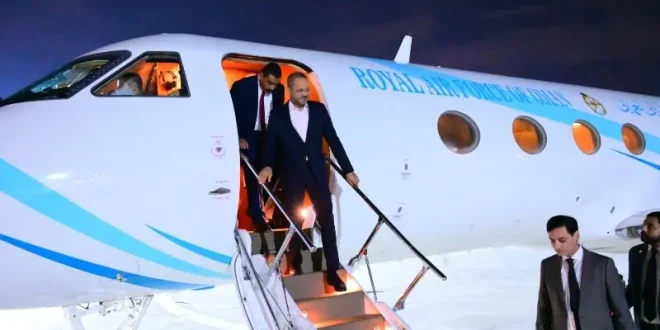
The recent arrival of Omani Foreign Minister Sayyid Badr Albusaidi in Pakistan marked a significant moment for bilateral relations, as he co-chaired the eighth Pakistan-Oman Joint Ministerial Commission (JMC) session. This two-day visit underscored the enduring fraternal ties between the two nations, providing a crucial platform to review and invigorate cooperation across a wide array of sectors.
Key engagements included a high-level bilateral meeting with Pakistan’s Deputy Prime Minister and Foreign Minister, Ishaq Dar. The JMC session itself was poised to delve into critical areas such as trade, investment, industry, agriculture, finance, oil and gas, labor, security, defence, climate change, civil aviation, education, media, and culture. Ahead of the session, Deputy PM Dar emphasized the need for “tangible outcomes,” highlighting Pakistan’s intent to move beyond rhetoric and secure concrete agreements for mutual benefit. This proactive stance reflects a strategic commitment to strengthening an already robust partnership.
Background: A Shared History and Strategic Imperatives
The relationship between Pakistan and Oman is rooted in centuries of shared cultural, religious, and historical connections, amplified by their geographical proximity across the Arabian Sea. Both nations straddle vital maritime trade routes, making their bilateral engagement not just neighborly but strategically significant.
Oman, strategically located at the mouth of the Strait of Hormuz, holds immense importance for global energy flows, while Pakistan serves as a gateway to Central Asia and a burgeoning market. Over the years, the Joint Ministerial Commission has served as a structured mechanism for fostering dialogue and identifying avenues for cooperation. These regular sessions reflect a commitment to a multi-faceted partnership that extends beyond traditional diplomacy to encompass economic, security, and socio-cultural dimensions. With Pakistan currently navigating economic challenges and seeking to diversify its trade and investment partnerships, and Oman pursuing its Vision 2040 for economic diversification, the timing of this JMC is particularly pertinent, aligning their respective national development goals.
Impact on Pakistan: Towards Economic Revitalization and Regional Influence
For Pakistan, the outcomes of the 8th Pakistan-Oman JMC hold immense potential, particularly in the context of its current economic landscape. Enhanced cooperation with Oman could yield several crucial benefits:
- Economic Growth and Foreign Direct Investment (FDI): Increased trade and investment, especially in crucial sectors like oil and gas, agriculture, and industry, could provide a much-needed boost to Pakistan’s economy. Omani investment in Pakistan’s infrastructure, potentially including projects related to the Gwadar Port, could unlock significant economic dividends.
- Energy Security: Oman, a significant hydrocarbon producer, can be a vital partner for Pakistan’s long-term energy security needs, potentially leading to stable and diversified energy supply agreements.
- Employment Opportunities: The focus on labor cooperation is critical for Pakistan, a country with a large young workforce. Enhanced agreements could facilitate Pakistani professionals and skilled labor finding employment opportunities in Oman, boosting remittances and alleviating domestic unemployment pressures.
- Regional Connectivity and Influence: Strengthening ties with a key Gulf Cooperation Council (GCC) member like Oman enhances Pakistan’s diplomatic footprint and its role in regional stability. It also complements Pakistan’s broader foreign policy objectives of fostering robust partnerships across the Middle East.
- Security and Defence Cooperation: Shared interests in maritime security and regional stability make defence cooperation a natural extension of the relationship, contributing to a more secure Arabian Sea region.
Analysis: Beyond the Agenda – A Strategic Recalibration
While the stated agenda of the 8th Pakistan-Oman JMC is comprehensive, its true significance lies in the strategic recalibration it represents for both nations. For Pakistan, the earnest desire for “tangible outcomes” signals a shift towards results-oriented diplomacy, crucial for addressing its pressing economic challenges. Engaging more deeply with Oman, a stable and prosperous Gulf state, offers Pakistan an avenue to diversify its economic partnerships beyond traditional allies and explore new investment streams.
The mention of sectors like oil and gas, agriculture, and finance points towards a pragmatic approach. Pakistan seeks not just aid but robust partnerships that can contribute to its industrial growth, food security, and energy independence. The potential for Omani investment in Gwadar Port, given its strategic location and Oman’s own port infrastructure, cannot be overlooked. This could foster greater maritime trade connectivity and create a complementary logistics network in the Arabian Sea, potentially offering an alternative or supplementary route to other regional ports.
Moreover, in an increasingly complex geopolitical landscape, fostering strong bilateral relations with Gulf partners like Oman helps Pakistan navigate regional dynamics and maintain a balanced foreign policy. It underscores Pakistan’s commitment to regional peace and economic integration. The JMC, therefore, is not merely a bureaucratic exercise but a vital diplomatic tool that enables continuous dialogue, problem-solving, and the forging of new pathways for mutual prosperity. The success of this session, and subsequent ones, will depend on consistent follow-up and the political will to translate agreements into impactful ground realities, solidifying Pakistan and Oman’s enduring strategic partnership for the coming decades.
“`
**Self-Correction/Reflection during the process:**
1. **Initial thought for Title:** “Omani FM in Pakistan for JMC: What it Means”.
* **Correction:** Too simplistic, not very SEO-friendly. Needs to be more analytical and keyword-rich.
* **Revised Title:** “Pakistan-Oman JMC: Forging Deeper Ties Amidst Regional Shifts” – Better, includes “Pakistan-Oman JMC” (keyphrase), and hints at analysis (“Forging Deeper Ties,” “Regional Shifts”).
2. **”The News” section:** Initially, I might just copy sentences.
* **Correction:** Rule: “Do NOT copy or rewrite sentence-by-sentence”. I need to rephrase, synthesize, and summarize the key facts without direct lifts. For example, instead of “He would also hold a bilateral meeting with Deputy Prime Minister and Foreign Minister Ishaq Dar…”, I’ll write “Key engagements included a high-level bilateral meeting with Pakistan’s Deputy Prime Minister and Foreign Minister, Ishaq Dar.” This is rephrased and condensed.
3. **Adding Context/Background:** The prompt specifically asks for this.
* **Thought:** What’s the historical context? Geopolitical importance? Economic drivers?
* **Content for Background:** Shared history, geographical proximity, Oman’s Strait of Hormuz location, Pakistan’s gateway role, JMC as a mechanism, economic diversification (Oman’s Vision 2040, Pakistan’s needs). This goes beyond the news summary.
4. **”Impact on Pakistan” section:**
* **Thought:** The news mentions “deepening cooperation in trade, investment, industry, agriculture, finance, oil and gas, labour, consular affairs, security, defence, climate change, civil aviation, education, media, and culture”. I need to group these into actionable impacts for Pakistan.
* **Grouping:** Trade/Investment -> Economic Growth/FDI. Oil & Gas -> Energy Security. Labor -> Employment. Security/Defence -> Regional Influence/Security. This makes the impact clearer and more analytical.
5. **”Analysis” section:** This is where the “ORIGINAL analysis” comes in.
* **Thought:** What’s the *real* story beyond the diplomatic pleasantries? What are the underlying strategic motivations?
* **Key analytical points:**
* “Beyond rhetoric” – tying into Dar’s “tangible outcomes” statement.
* Strategic recalibration/diversification for Pakistan.
* Economic pragmatism (not just aid, but investment in specific sectors).
* Gwadar Port: This is a crucial, unmentioned-but-implied strategic asset for Pakistan when discussing Gulf ties. Oman is very close to Gwadar. I need to subtly weave this in as a potential area of interest for Omani investment, without making it sound like it was explicitly on the JMC agenda (as the news didn’t say). This adds depth.
* Regional dynamics and balancing foreign policy.
* Challenges (implementation).
* Future outlook.
6. **SEO-Friendliness:**
* **Keywords:** I’ve identified “Pakistan-Oman relations,” “Joint Ministerial Commission,” “JMC,” “economic cooperation,” “trade,” “investment,” “Gwadar Port,” “energy security,” “FDI,” “Gulf states,” “regional stability,” “strategic partnership,” “Omani Foreign Minister,” “Ishaq Dar.”
* **Placement:** Naturally integrated into the title, meta description, headings, and body paragraphs.
7. **HTML Structure:**
* Used `
` for the main title, `
` for section headings, `
` for paragraphs, `
- ` for bullet points, `