Dost Pakistan Journeys Tours and safaris in the North & South Pakistsn
Related Articles


“`html
Indian Military Doctrine: A Nuclear Threat to South Asia’s Stability?
The News: A Pakistani General’s Warning on India’s “Dangerous Ideology”
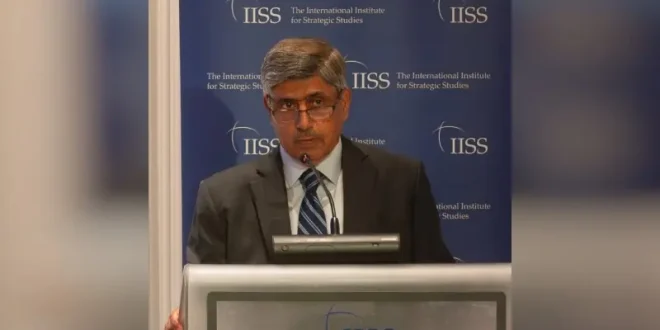
A recent address by Lieutenant General Mazhar Jamil, an adviser to Pakistan’s National Command Authority (NCA) and former director general of the Strategic Plans Division (SPD), has ignited significant discussion regarding the geopolitical landscape of South Asia. Speaking at a workshop organised by the International Institute for Strategic Studies in London, General Jamil issued a stark warning: he asserted that India’s military thinking is being dangerously shaped by an ideology that conflates ancient mythology with national power. This, he argued, is leading to “risky and delusional” military doctrines that possess a “poor strategic sense of nuclear realities,” thereby imperiling the stability of South Asia and potentially beyond.
Central to his concerns were India’s revisionist ambitions, particularly concerning the unresolved Kashmir dispute, and its perceived disregard for established international norms. General Jamil’s insights, stemming from a high-level strategic planning background, underscore a deep apprehension within Pakistan regarding its neighbour’s evolving strategic posture and its implications for nuclear deterrence in one of the world’s most volatile regions.
Background: Tracing the Roots of Regional Tensions
The intricate tapestry of South Asian security is woven with decades of historical animosity, territorial disputes, and the existential weight of nuclear weapons. The partition of British India in 1947 laid the foundation for an enduring rivalry between India and Pakistan, with the disputed territory of Kashmir emerging as the central flashpoint, leading to multiple wars and persistent instability.
The nuclearization of both states in the late 20th century (India in 1974, Pakistan in 1998) introduced a new, precarious layer of strategic stability, often described as “minimum credible deterrence.” This doctrine posits that each nation maintains enough nuclear capability to inflict unacceptable damage on the other, thereby deterring a first strike. However, the efficacy of such deterrence hinges on rational actors and a clear understanding of red lines, elements that General Jamil’s remarks suggest are being undermined.
A crucial element in understanding current Indian strategic thinking, as highlighted by Jamil, is the ascendance of the Hindutva ideology. This ultranationalist political philosophy seeks to define Indian culture in terms of Hindu values, often advocating for a unified “Hindu civilisation” across a vast landmass. Proponents of this ideology envision an “Akhand Bharat” (Greater India), an irredentist concept that includes neighbouring countries. Its growing influence on India’s domestic and foreign policy, particularly under the current government, is viewed by critics as fostering an aggressive, revisionist stance that could destabilize existing regional boundaries and power dynamics.
Furthermore, global geopolitical shifts have inadvertently contributed to this dynamic. The Western strategy, particularly that of the United States, to bolster India as a strategic counterweight to China in the Indo-Pacific has bestowed upon India the status of a “net security provider.” This, according to Jamil, has inadvertently cultivated a “false sense of hegemony” in India, potentially encouraging more assertive and less restrained behavior in its immediate neighbourhood.
Impact on Pakistan: Navigating an Assertive Neighbour
From Pakistan’s perspective, India’s evolving strategic posture, as described by General Jamil, creates a profound security dilemma. When one state perceives another’s actions to enhance its own security as inherently threatening, it often responds by increasing its own military capabilities, leading to a perpetual cycle of escalation. Pakistan views India’s ambition for regional dominance, coupled with its revisionist ideological underpinnings, as directly challenging its sovereignty and security interests.
The General explicitly pointed to an increased risk of conventional military adventurism under the nuclear overhang. He cited specific incidents, such as the 2019 Balakot crisis and the purported “May 2025 conflict” (as detailed in his address), alongside the accidental (or intentional) BrahMos missile launch into Pakistan in March 2022, as evidence of India’s “escalation domination” strategy. Such incidents, according to Jamil, highlight a dangerous willingness to engage in aggressive actions that could inadvertently trigger broader conflict in a nuclear environment, where the margin for error is virtually nonexistent.
Adding another layer of complexity are allegations of cross-border terrorism. Jamil accused India of supporting terrorist organizations like the Tehreek-i-Taliban Pakistan (TTP) and the Balochistan Liberation Army (BLA) to destabilize Pakistan. Pakistan views such actions as state-sponsored terrorism, further eroding trust and making diplomatic resolution of disputes increasingly difficult. This perceived “export of terrorism as an instrument of policy” exacerbates regional tensions and undermines any prospect of cooperative security.
While Pakistan maintains a policy of strategic restraint, particularly in the face of provocation, General Jamil warned that this restraint has “its own thresholds.” The danger lies in India misinterpreting Pakistan’s measured response as weakness, emboldening further aggressive actions. The continued militarization of Kashmir and India’s refusal to engage in meaningful political dialogue on the core dispute ensures its status as a perpetual nuclear flashpoint, directly impacting Pakistan’s strategic calculations and concerns for regional stability.
Analysis: Deconstructing the “Dangerous Ideology” and its Implications
General Jamil’s assertion that Indian military thinking is being shaped by an ideology conflating “mythology with national power” demands closer scrutiny. This implies a strategic mindset that may prioritize perceived historical or religious narratives (like the Akhand Bharat concept) over rational geopolitical analysis and the pragmatism required for nuclear deterrence. Such an approach, if true, could lead to foreign policy decisions based on ideological imperatives rather than a clear-eyed assessment of risks and benefits, particularly in a nuclearized neighbourhood.
The criticism extends to the erosion of nuclear deterrence norms. Jamil highlighted India’s rapid expansion of its nuclear and missile programs, including intercontinental ballistic missiles (ICBMs) and submarine-launched ballistic missiles (SLBMs), along with the operation of eight reactors outside International Atomic Energy Agency (IAEA) safeguards. This expansion, coupled with what Jamil termed “irresponsible nuclear behaviour” (such as the BrahMos incident and Modi’s past “nuclear sabre-rattling”), challenges the global arms control and non-proliferation framework. The 2008 Nuclear Suppliers Group (NSG) waiver, granted to India despite its non-signatory status to the Non-Proliferation Treaty (NPT), is seen by many critics as having fostered a sense of “exceptionalism,” allowing India to bypass international scrutiny and potentially encouraging its ambitious nuclear trajectory without adequate transparency.
The “two diametrically opposing strategic approaches” — India’s quest for dominance versus Pakistan’s focus on defensive deterrence and conflict resolution — create an inherent instability. India’s pursuit of “escalation domination,” aiming to intimidate Pakistan through superior force and operational tempo, is a perilous gamble in a nuclear environment. As General Jamil quoted Clausewitz, “War is the realm of uncertainty, and escalation is really a control ladder,” further warning that “control was illusory” in such conflicts. The illusion of control, especially when dealing with dual-use conventional and nuclear technologies, makes any miscalculation potentially catastrophic, as the BrahMos incident starkly illustrates.
The international community’s role also comes under fire. Jamil suggested an “appeasement policy” by certain powers, which he believes has allowed India’s propaganda and disinformation campaigns to go unchecked, while its human rights violations in Kashmir and against minorities are largely ignored. This perceived lack of scrutiny, critics argue, undermines the credibility of international norms and could implicitly endorse India’s assertive posture. For South Asia, the implications are profound: a failure to hold India accountable could exacerbate regional instability and encourage further adventurism, thereby jeopardizing the welfare of two billion people.
Ultimately, General Jamil’s address serves as a stark call to action, urging India to move beyond its “hegemonic and delusional revisionist aspirations” and embrace a path of political engagement and conflict resolution, particularly on Kashmir. Pakistan’s offer of a robust crisis management mechanism underscores its stated commitment to strategic stability. The perpetual instability in South Asia, as he concluded, can only be addressed when India’s strategic and political discourse shifts from dominance to dialogue, ensuring that the precarious nuclear balance does not tip towards an unimaginable catastrophe.
“`