Dost Pakistan Journeys Tours and safaris in the North & South Pakistsn
Related Articles

“`html
Makkah Alliance: A Decade-Long Pact Reshaping Regional Security and Defence Cooperation
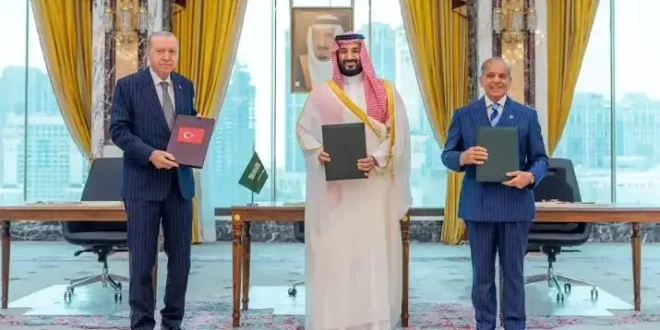
A significant shift in regional security architecture is underway with the formalisation of the Makkah Joint Defence Agreement, binding Saudi Arabia, Turkiye, and Pakistan into a decade-long mutual defence pact. This development, reminiscent of NATO’s foundational principles, arrives amidst escalating regional tensions, particularly the Houthi attacks targeting Saudi Arabia. Concurrently, a separate but related defence industry cooperation agreement involving Turkiye, Qatar, Pakistan, and Indonesia signals a broader ambition for self-reliance and strategic collaboration within the Islamic world.
The News: A Dual Thrust in Regional Alliances
The Makkah Defence Pact, signed in August, has taken a crucial step towards implementation with Turkiye submitting the agreement for parliamentary ratification. This move is pivotal, as it brings NATO’s second-largest army into a formal collective defence arrangement with Riyadh and Islamabad. The core tenet of this trilateral agreement is a mutual defence clause, mirroring NATO’s Article 5, which stipulates that an armed attack on one member is considered an attack on all. This provision is anchored in Article 51 of the UN Charter, affirming the inherent right of states to individual or collective self-defence.
The pact mandates that all three signatories will employ “all necessary means” to counter threats to each other’s territorial integrity, sovereignty, or internationally recognised borders. Designed for indefinite validity, the agreement includes a critical clause prohibiting withdrawal for the first ten years, underscoring a commitment to long-term stability and cooperation. While Pakistan has already ratified the treaty through its executive authority, reflecting its treaty-making system under Article 90 of its Constitution, Turkiye’s constitution requires specific parliamentary approval for deploying troops abroad, even under international agreements. Turkish officials have clarified that Turkiye’s contribution is initially expected to be limited to military equipment, intelligence sharing, and advanced weapons systems, rather than offensive troop deployments.
Beyond this trilateral security pact, a parallel initiative is gaining momentum. Turkiye, Qatar, Pakistan, and Indonesia are poised to sign a defence industry cooperation memorandum. This agreement, to be inked in Doha, signals a concerted effort to foster local defence production and enhance technological capabilities among these nations. Qatar’s declared ambition to become a regional defence production hub further highlights the strategic intent behind this cooperation.
Background: Shifting Sands of Regional Security
The emergence of these defence alliances is not coincidental but a direct response to a complex and volatile geopolitical landscape. For Saudi Arabia, the impetus is largely driven by persistent drone and missile attacks from Yemen’s Houthi rebels, underscoring vulnerabilities in its defence systems and a desire for robust security guarantees. The Makkah Pact represents Riyadh’s strategic diversification beyond traditional Western allies, seeking closer military and intelligence ties with regional powers like Turkiye and Pakistan.
Turkiye, a NATO member, has long pursued an independent foreign policy, seeking to expand its influence across the Middle East, North Africa, and Central Asia. Its burgeoning defence industry, capable of producing advanced drones, naval vessels, and other military hardware, is a key instrument in this strategy. The Makkah Pact offers Turkiye an opportunity to project power, boost defence exports, and solidify its role as a significant player in the Islamic world’s security architecture. Its participation also adds a layer of sophistication and technological prowess to the alliance.
Pakistan’s involvement stems from its long-standing strategic relationships with both Saudi Arabia and Turkiye. Islamabad has deep historical and religious ties with Riyadh, alongside a robust defence cooperation framework. Its relationship with Turkiye has also strengthened significantly in recent years, particularly in defence production and strategic dialogue. For Pakistan, these agreements offer enhanced strategic depth, economic benefits through defence industry collaboration, and a strengthened position in a newly emerging regional bloc. The explicit reference to UN Charter Article 51 provides a universally recognised legal framework for collective self-defence, lending legitimacy to the pact’s core principle.
The separate defence industry pact further underscores a broader trend: a push towards greater military self-reliance and intra-bloc cooperation, reducing dependence on external powers. Qatar’s aspiration to become a defence production hub, combined with Turkiye’s manufacturing capabilities and Pakistan’s experience, forms a potent combination for technological transfer and joint ventures, potentially including Indonesia, a large and strategically important nation in Southeast Asia.
Pakistan’s Strategic Calculus: Benefits and Challenges
For Pakistan, joining the Makkah Alliance and the defence industry pact presents a multifaceted strategic opportunity. Its swift ratification of the Makkah Pact, executed through the federal government under Article 90 of the Constitution, highlights its executive’s readiness to formalise these commitments. This contrasts with Turkiye’s more intricate parliamentary process, demonstrating Pakistan’s streamlined decision-making in matters of federal importance.
Benefits:
- Enhanced Strategic Depth: The alliance provides collective deterrence against threats and strengthens Pakistan’s diplomatic leverage in the region.
- Military Modernisation & Technology Transfer: Closer defence industry cooperation, particularly with Turkiye, offers avenues for acquiring advanced military technology, joint research and development, and boosting Pakistan’s indigenous defence production capabilities. This can be crucial for modernising its armed forces.
- Economic Opportunities: Involvement in joint defence projects and potential arms sales to partner nations can provide significant economic dividends, including foreign exchange earnings and job creation in the defence sector.
- Strengthened Alliances: Deepening ties with key Islamic nations like Saudi Arabia and Turkiye reinforces Pakistan’s position within a significant regional bloc, potentially attracting investment and diplomatic support.
- Regional Role: Pakistan positions itself as a crucial player in a new, influential security architecture, extending its influence beyond South Asia.
Challenges and Considerations:
- Balancing Act: Pakistan must carefully navigate its relationships with other critical powers, especially Iran, which may view such an alliance with suspicion. Maintaining neutrality and avoiding entanglement in regional proxy conflicts will be crucial.
- Resource Commitment: While Turkiye has indicated a limited scope of engagement, the “all necessary means” clause could, in theory, entail future military or logistical commitments, requiring careful assessment of resources.
- Defining “Collective Deterrence”: The practical implications of collective deterrence and the threshold for invoking the mutual defence clause will need clear definition and consensus among members, especially given Turkiye’s stance against offensive troop deployment.
- Domestic Consensus: While executive ratification is sufficient, broad political and public consensus is vital for the long-term sustainability and effectiveness of such a significant defence commitment.
Analysis: A New Chapter in Islamic World Defence?
The Makkah Defence Pact, combined with the wider defence industry cooperation agreement, marks a profound evolution in the security dynamics of the Islamic world. It signifies a tangible move towards greater self-reliance, strategic autonomy, and a redefinition of partnerships outside traditional blocs.
The explicit Article 5-like clause in the Makkah Pact invites comparisons to NATO, prompting questions about whether this is a nascent “Islamic NATO.” While the geographic spread (Middle East, South Asia, Southeast Asia) and diverse political systems of the participating nations present unique challenges compared to the Cold War origins of NATO, the shared objective of collective security and defence cooperation is undeniable. This alliance, however, appears less about forming a monolithic military bloc for intervention and more about enhancing individual and collective defence capabilities, intelligence sharing, and potentially, joint industrial production.
Turkiye’s role is particularly intriguing. As a NATO member, its involvement in a distinct Islamic defence pact adds a layer of complexity to its geopolitical alignment. It underscores Ankara’s pursuit of a multi-vectored foreign policy, balancing Western ties with engagement in the broader Islamic world. Its robust defence industry, a cornerstone of this new cooperation, positions Turkiye as a key enabler of military modernisation for its partners.
The emphasis on defence industry cooperation, as seen with the Turkiye-Qatar-Pakistan-Indonesia pact, is a critical strategic element. It reflects a growing desire among these nations to reduce dependence on Western arms suppliers, foster indigenous technological capabilities, and create a more integrated and resilient supply chain for military hardware. Qatar’s ambition to become a defence production hub is a significant step in this direction, potentially transforming it from a consumer to a producer in the global arms market.
Ultimately, these agreements represent more than just a response to immediate threats; they could lay the groundwork for a more enduring security architecture within a segment of the Islamic world. While challenges related to diverse national interests, implementation specifics, and regional rivalries will undoubtedly arise, the commitment to a decade-long pact and the dual focus on collective defence and industrial self-reliance signal a serious and concerted effort to reshape regional security for the long term. Pakistan’s central role in both initiatives underscores its enduring strategic importance and its proactive engagement in defining this emerging geopolitical landscape.
“`