Dost Pakistan Journeys Tours and safaris in the North & South Pakistsn
Related Articles


In Spectrum: Gymkhana: Colonial Origins and Politics of Selective Outrage
The recent scrutiny of Lahore Gymkhana ignites a complex debate, intertwining Pakistan’s colonial past, institutional evolution, and the contentious issues of public accountability and land use. This analysis delves into the historical context of such institutions and questions the fairness and consistency of current criticisms.
The News: Lahore Gymkhana Under Scrutiny
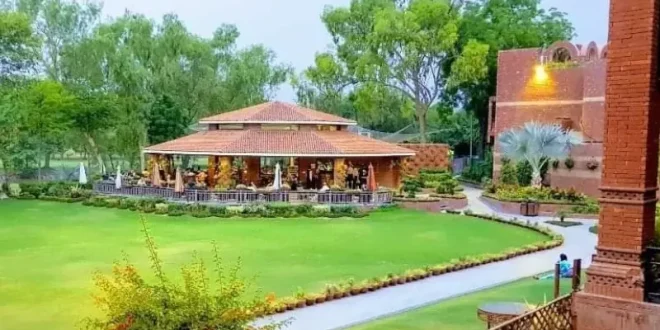
Lahore Gymkhana, an institution whose origins trace back to British colonial India, has recently become the focal point of public and parliamentary discussion in Pakistan. The primary concerns raised revolve around the valuable, centrally located land it occupies. Specifically, questions have been posed regarding the legal validity and financial fairness of its lease agreements, compliance with construction approvals, and its tax obligations. Reports indicate a provincial assembly member challenged the club’s chairman, leading to a broader public discourse.
This controversy has intensified a long-standing debate about institutions inherited from the colonial era and their place in contemporary Pakistan. While acknowledging the historical baggage of racial exclusivity that defined such clubs, the Lahore Gymkhana has demonstrably evolved since Pakistan’s independence in 1947. Once a symbol of British social superiority, it has transitioned into a civilian club, with membership drawn from diverse professional, business, and salaried segments of Pakistani society. Its internal electoral system, which allows members to elect office-bearers, is often cited as evidence of a distinct form of internal accountability, differentiating it from structures based purely on external authority or appointment.
However, critics contend that this adaptation, while significant, does not necessarily exempt the institution from rigorous public accountability, particularly concerning its use of prime state land. The core of the current debate extends beyond the club itself, encompassing fundamental principles governing public assets, institutional legacy, and the consistent application of legal and financial standards across all entities.
Background: The Enduring Shadow of Colonial Social Architecture
To fully comprehend the complexities surrounding Lahore Gymkhana, it is essential to contextualize the role of ‘Gymkhanas’ and similar exclusive clubs during the British Raj. These establishments were far more than mere recreational venues; they formed an integral part of the social and administrative architecture of colonial rule. The British meticulously designed these spaces to:
- Cultivate Elite Networks: They provided exclusive environments where British civil and military officials could socialize, forge professional relationships, and reinforce collective solidarity, crucial for maintaining administrative cohesion in a foreign land.
- Preserve Racial Distinctions: By explicitly excluding native Indians, these clubs served as powerful symbols of racial segregation. This deliberate exclusion underscored the colonial belief that political dominance conferred inherent social superiority, a practice that history unequivocally condemns for its discriminatory and dehumanizing nature.
- Maintain Identity and Morale: For colonizers far from home, these clubs offered a familiar social environment, helping to maintain morale, a sense of community, and cultural distinctiveness.
Lahore Gymkhana, officially named in March 1906, was a direct product of this system of colonial exclusivity. Its very inception was rooted in the oppressive and discriminatory policies of British rule. However, the analysis posits that while an institution’s origins are an undeniable part of its history, they do not necessarily define its immutable future. The capacity for institutions to adapt, transcend their founding circumstances, and evolve in response to changing societal norms is presented as a crucial measure of historical resilience and societal progress.
Impact on Pakistan: Adaptation, Privilege, and Unequal Scrutiny
The dawn of Pakistan’s independence in 1947 marked a seismic shift, dismantling the political and social order that had sustained colonial institutions. Lahore Gymkhana, against this backdrop, survived and embarked on a journey of transformation. It shed its racial barriers, integrating into the fabric of independent Pakistan’s civilian life and broadening its membership to include professionals, business owners, and salaried individuals. This adaptation highlights a critical aspect of post-colonial nation-building: how inherited institutions navigate and respond to a radically new national and social environment.
This evolution illustrates the potential for institutional continuity while accommodating a transformed society. Unlike many post-colonial transitions that merely saw a change in personnel within existing hierarchical structures, Lahore Gymkhana’s shift in membership and governance represents a deeper, albeit incomplete, adaptation. It demonstrates an ability to acquire a different social meaning, moving beyond its initial colonial purpose.
Despite this transformation, the institution is not immune to contemporary responsibilities. The current scrutiny brings to the fore the persistent issue of privilege, particularly concerning the control and use of valuable public land. The article pointedly observes that many “privileged individuals” vocal in their criticism of the Gymkhana might themselves be evading their fair share of the tax burden, in stark contrast to the salaried members of the club whose incomes are often taxed at source, contributing directly to government revenue.
Perhaps the most significant impact of this debate is the illumination of a **politics of selective outrage**. The article critically questions the inconsistency of targeting a civilian institution like Lahore Gymkhana while potentially overlooking or less rigorously scrutinizing similar arrangements enjoyed by more powerful constituencies. It provokes thought with pointed questions:
- What comparable level of scrutiny is directed at garrison clubs, military golf courses, or other establishments associated with influential state organs?
- Are their land leases, concessions, and utilization of public resources subjected to the same rigorous standards of transparency and legality?
This selective application of accountability, the analysis suggests, risks undermining the very principle of “equality before the law,” reducing it to a slogan selectively wielded against the more accessible while leaving entrenched power structures undisturbed. A deeper concern is also raised: that the scrutiny might not solely aim for public benefit but could create an opportunity to transfer a valuable urban asset from one privileged constituency to another, rather than genuinely democratizing its access or utility for the wider public.
Analysis: Balancing Legacy, Accountability, and Genuine Reform
The controversy surrounding Lahore Gymkhana necessitates a nuanced analysis that acknowledges its deeply problematic colonial origins while also recognizing its subsequent and significant evolution. The article argues that assessing the institution solely through the lens of its colonial birth is an oversimplification, effectively freezing its history at a moment of injustice. Instead, a comprehensive assessment must encompass both its historical trajectory and its current operational realities.
Condemnation of the Past, Recognition of Change
The racial exclusivity and discriminatory practices inherent in the establishment of colonial Gymkhanas are unequivocally indefensible. They represent a systemic injustice designed to uphold an oppressive colonial hierarchy. However, the subsequent adaptation of Lahore Gymkhana – its transition from a racially segregated enclave to a civilian club with a more diverse (though still selective) membership, coupled with its internal democratic electoral system – signifies a notable institutional transformation. This evolution offers valuable lessons for post-colonial societies seeking to reconcile with inherited structures and adapt them to new national identities.
The Imperative of Consistent Accountability
Crucially, while acknowledging institutional progress, the article firmly asserts that this progress does not grant immunity from accountability. Legitimate questions surrounding the legality and financial defensibility of its land lease, construction permits, and tax compliance are vital. No institution, irrespective of its history or perceived social value, should be exempt from legal and financial scrutiny. Public property must be administered with the utmost transparency and in a manner that demonstrably serves the broader public interest.
However, the article’s most profound critique targets the selectivity of the indignation. If the objective is genuine public accountability and equitable land utilization, then the application of scrutiny must be universal, consistent, and impartial. To selectively target a civilian club while ignoring or treating with less rigor similar or even greater concentrations of privilege in other, more powerful, sectors undermines the very essence of democratic accountability. This inconsistency risks transforming accountability into a political spectacle rather than a robust mechanism for systemic reform. It also fuels suspicions that underlying motivations might include the commercial appropriation of valuable urban land, rather than purely selfless public service.
Beyond Rhetoric: Seeking Genuine Public Interest
The article implores authorities to move beyond mere criticism and provide concrete plans for the future of such valuable urban assets. If existing arrangements are indeed found to be legally or financially indefensible, any proposed reforms must clearly articulate:
- What specific new arrangements would replace the current ones?
- Who would be the genuine beneficiaries of these changes?
- Would the city truly gain accessible recreational spaces for all citizens, or would it merely pave the way for another commercially driven development, effectively just shifting the beneficiaries of existing privilege?
An independent and mature society, the analysis concludes, distinguishes itself by judging institutions impartially, recognizing genuine adaptation, demanding unwavering transparency in the stewardship of public resources, and refusing to allow political theatre to supersede evidence-based governance. The Lahore Gymkhana controversy, therefore, serves as a crucial test case for Pakistan’s commitment to equitable governance, consistent accountability, and an honest reckoning with both its complex colonial past and its contemporary challenges.
“`