Dost Pakistan Journeys Tours and safaris in the North & South Pakistsn
Related Articles

“`html
Sindh Schools Closure for Iqbal Day: A Look at Pakistan’s Enduring Legacy
The recent decision by the Sindh government to observe Allama Iqbal Day with a school holiday highlights a renewed emphasis on Pakistan’s foundational ideology. This article delves into the historical significance of the holiday, its implications for national identity, and the lasting impact of the nation’s spiritual architect.
The News: Honoring a National Icon
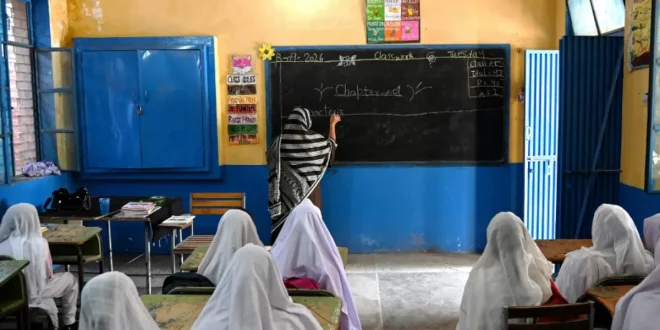
The Sindh government recently announced that all public and private educational institutions across the province would remain closed on November 9th. This closure is in observance of the birth anniversary of Dr. Allama Muhammad Iqbal, widely revered as Pakistan’s national poet and philosophical guide.
The notification, issued by the School Education and Literacy Department and disseminated via the Sindh Information Department, confirms this decision aligns with previous directives from the Steering Committee on Education. This ensures that academic activities will pause to formally acknowledge Iqbal’s profound contributions to the nation’s ideological framework and cultural heritage.
Background: Allama Iqbal’s Enduring Vision
Born on November 9, 1877, in Sialkot, Allama Muhammad Iqbal was a multifaceted genius whose intellectual pursuits spanned poetry, philosophy, law, and scholarship. His visionary leadership and eloquent expression of Muslim aspirations in British India earned him the prestigious title of Pakistan’s ideological founder. Iqbal’s poetic works, predominantly in Urdu and Persian, deeply resonated with the subcontinent’s Muslim population, fostering a sense of distinct identity and self-awareness.
A pivotal moment in the historical trajectory towards Pakistan’s creation was Iqbal’s address at the 1930 Allahabad session of the All-India Muslim League. During this address, he famously articulated the ‘Two-Nation Theory,’ a concept positing that Hindus and Muslims were two separate nations, incompatible with coexisting peacefully within a unified India. This seminal idea laid the intellectual and philosophical groundwork for the demand for a separate Muslim homeland, a vision that ultimately materialized as the independent state of Pakistan on August 14, 1947.
The Holiday’s Tumultuous Journey
For many decades following Pakistan’s independence, Iqbal Day was consistently observed as a national public holiday, reflecting the nation’s profound respect for its intellectual architect. However, this tradition saw an unexpected halt in 2015 when the Ministry of Interior rescinded the national holiday status, a decision made without a publicly specified reason, sparking considerable debate.
The holiday’s status remained inconsistent until 2022, when the government under Prime Minister Shehbaz Sharif officially restored Iqbal Day as a national public holiday. This restoration signaled a renewed governmental commitment to recognizing and celebrating the country’s foundational figures and national heritage, aligning with a broader national sentiment that values historical recognition.
Impact on Pakistan: Reinforcing National Identity and Ideology
The observation of Allama Iqbal Day, particularly through the closure of educational institutions, carries significant weight for Pakistan. It transcends being merely a day off; it serves as a symbolic act that reinforces the nation’s historical roots and foundational ideology.
- Cultural and National Identity: By honoring Iqbal, Pakistan reasserts its unique cultural and national identity, which was profoundly shaped by his philosophical and poetic contributions. It offers an implicit opportunity for citizens to reflect on the ideals that propelled the creation of their homeland.
- Educational Significance: While formal schooling is paused, the holiday inherently encourages a national discourse surrounding Iqbal’s life and work. It prompts educational institutions and families to engage with the principles of the Two-Nation Theory and the challenging journey towards independence. For students, it’s a potent reminder of a key figure in their nation’s history.
- Political Messaging: The restoration and subsequent observation of the holiday by provincial governments like Sindh transmit a clear political message. It signifies a governmental commitment to preserving and promoting national heritage, potentially resonating with public sentiment that values historical recognition and national pride. It also positions the current administration as a custodian of Pakistan’s founding principles.
- Unity and Reflection: In a diverse nation, commemorating figures like Iqbal can foster a crucial sense of shared heritage and national unity. It provides a valuable moment for collective reflection on the country’s origins and the enduring aspirations of its founders.
Analysis: Beyond a Day Off – A Cultural & Ideological Reaffirmation
Sindh’s decision to close schools on Allama Iqbal Day, following the national restoration of the holiday, is steeped in symbolism and carries broader implications for Pakistan’s educational and cultural landscape. It represents more than just an administrative directive for educational institutions; it is a profound reaffirmation of core national values.
Symbolic Restoration and Ideological Continuity
The initial cancellation of Iqbal Day as a national holiday in 2015 ignited significant public debate regarding the state’s commitment to its founding figures. Its subsequent restoration, now echoed by provincial actions such as Sindh’s, underscores a renewed national resolve to keep the ideals of Pakistan’s ideological founder alive. In an era where national narratives can sometimes feel contested, consistently celebrating figures like Iqbal helps to firmly anchor national identity within its historical and philosophical context. This move powerfully conveys that the contributions of such intellectual giants remain central to Pakistan’s ongoing self-understanding.
Educational Engagement vs. Leisure
While a school holiday invariably offers a welcome respite, a deeper analytical question emerges: how effectively does this day off translate into genuine educational engagement with Iqbal’s profound legacy? Is it merely a day for leisure, or does it inspire students and educators to independently explore his rich poetry, intricate philosophy, and pivotal political thought? Progressive educational approaches might suggest complementing such holidays with pre-holiday classroom discussions, thematic assignments, or readily accessible digital resources that encourage deeper learning about Iqbal’s multifaceted impact on literature, philosophy, and nation-building.
Furthermore, the holiday presents a unique opportunity for parents to engage in discussions about national history with their children, thus extending learning beyond formal school settings into the crucial home environment. This fosters a sense of collective memory and national pride that formal lessons alone might not fully capture, solidifying a bond between generations and their shared heritage.
Political and Societal Resonance
The decision to observe Iqbal Day also reflects a strong societal resonance with honoring national heroes. Public sentiment often leans towards commemorating figures central to national identity and historical narrative. By observing Iqbal Day, the government strategically aligns itself with this popular sentiment, reinforcing its image as a steadfast guardian of national heritage. This can be particularly significant in fostering national cohesion and pride among younger generations, who might otherwise have limited exposure to the detailed historical and philosophical underpinnings that shaped Pakistan’s existence.
Ultimately, Sindh’s directive concerning Iqbal Day transcends being a mere administrative order. It stands as a significant cultural marker, a powerful reaffirmation of the intellectual bedrock upon which Pakistan was founded. It serves as a recurring reminder of Allama Iqbal’s timeless vision, urging current and future generations to engage deeply with the profound ideas that continue to shape their nation’s destiny and identity.
“`