Dost Pakistan Journeys Tours and safaris in the North & South Pakistsn
Related Articles

“`html
Pakistan’s Fuel Price Resilience: Analyzing the Latest Cuts and Economic Strategies (Nov 2026)
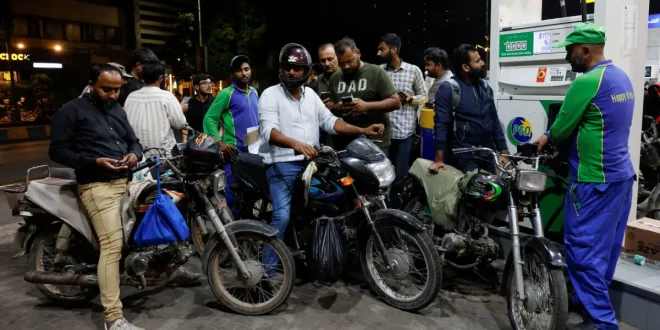
In a significant move offering much-needed relief to consumers, Pakistan’s government has announced a substantial reduction in the prices of petrol and high-speed diesel (HSD) as of November 6, 2026. This marks the fourth consecutive decrease, bringing petrol down by Rs9.41 per litre and HSD by Rs5.56. While a welcome development, this ongoing adjustment reflects a nation still navigating the turbulent waters of global energy markets and the complex interplay of domestic economic policy.
The Latest Fuel Price Reduction
According to the Oil and Gas Regulatory Authority (OGRA), petrol will now retail at Rs352.59 per litre, and HSD at Rs382.25 per litre. This consistent downward trend is a direct result of an innovative financial arrangement where oil refineries are contributing a cumulative Rs15 billion to the petroleum levy over a 30-day period. This mechanism alone accounts for a Rs14.71 reduction in the petrol price, demonstrating a proactive approach by the government to stabilize consumer costs.
Despite these reductions, the government maintains a significant tax and duty burden on fuel, levying Rs114 per litre on petrol and Rs100 per litre on diesel. This highlights the delicate balance between generating essential state revenue and cushioning the public from price shocks.
Navigating a Turbulent Energy Landscape: A Background
Context from the Price Chart (Feb-Nov 2026):
The provided data chart illustrates a dramatic fluctuation in Pakistan’s fuel prices throughout 2026. The year began with petrol at Rs266.17 and diesel at Rs280.86 on February 28, marking the “pre-crisis baseline.” However, the outbreak of the US-Iran war and the subsequent “Strait of Hormuz crisis” sent shockwaves through global oil markets, leading to an unprecedented surge. By April 3, petrol peaked at Rs458.41 and diesel at an all-time high of Rs520.35 per litre. This period underscores Pakistan’s acute vulnerability to international geopolitical events and its reliance on imported energy.
In response to this extreme volatility, the government shifted from weekly to a daily pricing mechanism on July 17. While this initially saw prices rise quickly, it has since allowed for more responsive adjustments, enabling the current series of reductions.
Pakistan’s economy, heavily reliant on imported crude oil, is particularly susceptible to global price shocks. The early 2026 crisis, stemming from renewed hostilities in the Middle East, thrust the nation into an energy predicament. The sharp increase in fuel costs directly fueled inflationary pressures across all sectors, from transportation to food, severely impacting the purchasing power of its citizens.
Beyond pricing mechanisms, the government introduced a raft of austerity measures to curb consumption. These included mandated 9 pm market closures and a 50% cut in fuel allocations for official vehicles for three months. To alleviate the burden on the most vulnerable, a “relief scheme” was also announced for owners of motorcycles, auto-rickshaws, and vehicles up to 800cc.
Economic Implications for Pakistan
The consistent reduction in fuel prices carries profound economic implications. Firstly, it offers a direct respite from inflationary pressures. Fuel is a foundational cost for almost every sector, and lower prices can translate into reduced operational costs for businesses, potentially leading to stable or even lower consumer prices for goods and services. This is particularly crucial for the common person, as petrol directly impacts the middle and lower-middle classes, especially those relying on two-wheelers and small vehicles. HSD, vital for heavy transport, power generation, and agriculture, affects the public at large.
Secondly, these cuts represent a strategic effort by the government to manage public sentiment and economic stability post-crisis. The political discussions between the Jamaat-i-Islami and the government on further fuel relief underscore the significant public pressure surrounding energy costs. Petroleum Minister Ali Pervaiz Malik’s announcement of efforts to introduce a similar daily pricing system for liquefied petroleum gas (LPG) signals a broader intent to extend this responsive pricing model across the energy sector.
Analysis: A Cautious Path to Stability?
The current streak of fuel price reductions suggests a more agile and responsive government policy compared to the reactive measures seen during the peak of the crisis. The shift to a daily pricing mechanism, though initially contributing to steep increases, now appears to be facilitating quicker downward adjustments as global oil prices ease. This mechanism, overseen by OGRA based on international market trends, theoretically allows for greater transparency and alignment with global realities.
Key Analytical Points:
- Refinery Contribution: The arrangement for oil refineries to absorb a portion of the petroleum levy (Rs15 billion) is a creative, albeit potentially temporary, solution. While it provides immediate relief, questions remain about its long-term sustainability and potential impact on the financial health and investment capacity of the refining sector. Is this a one-off measure, or does it signal a new paradigm of burden-sharing during price fluctuations?
- Balancing Act: The government’s continued reliance on substantial petroleum levies (Rs114/litre on petrol, Rs100/litre on HSD) indicates the ongoing fiscal pressure. These taxes are crucial revenue earners, making it challenging to provide more drastic relief without impacting the national exchequer.
- External Vulnerability: Despite these domestic policy adjustments, Pakistan’s fundamental vulnerability to international oil price volatility remains. The dramatic swings witnessed in 2026 serve as a stark reminder that sustained stability is contingent on global energy markets, over which Pakistan has little control.
- Holistic Approach: The combination of daily pricing, austerity measures, and targeted relief schemes reflects a multi-pronged strategy. While austerity aims to reduce overall consumption, the relief schemes target specific segments, indicating a nuanced approach to managing the crisis. The aspiration to extend similar mechanisms to LPG further reinforces this comprehensive energy policy direction.
In conclusion, the latest fuel price cuts are a positive indicator of Pakistan’s efforts to manage its energy economy effectively amidst ongoing global uncertainties. The responsiveness of the daily pricing system, coupled with innovative financial arrangements involving refineries, offers a degree of stability and relief to consumers. However, the underlying challenges of global market dependence, the sustainability of internal burden-sharing mechanisms, and the perpetual balancing act between revenue generation and public welfare will continue to define Pakistan’s energy policy landscape in the years to come.
Source: OGRA / Ministry of Energy (Petroleum Division); Dawn.com analysis (November 2026)
“`