Dost Pakistan Journeys Tours and safaris in the North & South Pakistsn
Related Articles


“`html
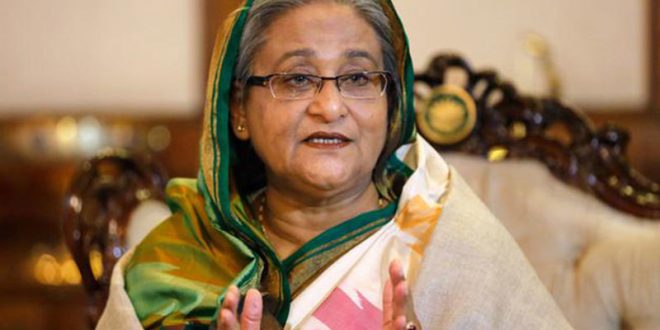
Bangladesh’s Political Crucible: Sheikh Hasina’s Defiant Return Bid and Regional Implications
The political landscape of Bangladesh is bracing for renewed turbulence as its ousted former Prime Minister, Sheikh Hasina, declares her intention to return home on December 16. This bold move, coming from over two years of exile in India, clashes directly with the Bangladeshi government’s firm stance that she can only re-enter the country via extradition, under strict legal terms. The unfolding drama carries significant weight, not just for Bangladesh’s internal stability but for the broader geopolitical dynamics of South Asia.
The News: A High-Stakes Return Bid
Sheikh Hasina, 79, who was ousted from power following widespread student-led uprisings in August 2024, has publicly stated her intention to return to Bangladesh on December 16 – a date symbolically significant as Bangladesh’s Victory Day. Her spokesperson confirmed this plan to Reuters, highlighting her request for the government to arrange her travel on the state flag carrier, Biman Bangladesh Airlines, arguing that since she was flown to India on a Bangladeshi aircraft, her return should be similarly facilitated.
This proposition has been met with outright rejection and condemnation from Dhaka. Bangladesh’s minister of state for foreign affairs, Humaiun Kobir, emphatically stated that Hasina, who was sentenced to death in absentia last year by a Bangladeshi court for her alleged role in a deadly crackdown, can only return through an extradition treaty, “in handcuffs, and under strict surveillance.” The government views her request for a state-arranged flight as “delusional.” India, meanwhile, has acknowledged Bangladesh’s extradition request and is reportedly examining it, aiming to maintain constructive bilateral ties with the new Bangladeshi administration.
The announcement further fuels already heightened political and legal tensions within Bangladesh, where Hasina’s party remains banned and political violence has been on the rise since her departure. The United Nations has reported approximately 1,400 casualties during the unrest that ultimately led to her flight into exile, underscoring the severe human cost of the political turmoil.
Background: A Nation on Edge
To comprehend the gravity of Sheikh Hasina’s announced return, it’s crucial to contextualize the political environment of Bangladesh. Hasina, daughter of the nation’s founding father Sheikh Mujibur Rahman, served multiple terms as Prime Minister, dominating Bangladeshi politics for decades. Her tenure, while marked by significant economic growth, also drew criticism for increasing authoritarianism, suppression of dissent, and allegations of human rights abuses. The student-led uprising that forced her out of office was a culmination of deep-seated public grievances against her government’s policies and perceived autocratic tendencies.
Her exile to India in August 2024, reportedly on a Bangladeshi aircraft, underscores the intricate and often sensitive relationship between Dhaka and Delhi. India has historically played a significant role in Bangladesh’s political narrative, a relationship forged during Bangladesh’s War of Liberation in 1971. Hasina’s long-standing rapport with India is well-known, making India’s current position on her extradition a delicate balancing act between diplomatic relations with the incumbent government and international human rights considerations.
The death sentence handed down to Hasina by Bangladesh’s International Crimes Tribunal in her absence for ordering a “deadly crackdown” highlights the deeply politicized nature of the country’s legal system. These charges are vehemently denied by Hasina from her exile. Her choice of December 16, Bangladesh’s Victory Day—a day commemorating the surrender of Pakistani forces in 1971 and the birth of independent Bangladesh—is a deliberate and potent political statement. It aims to invoke her family’s legacy and position herself as a defender of national liberation, directly challenging the legitimacy and authority of the current government which views her as a convicted fugitive.
Impact on Pakistan: A Regional Ripple Effect
While Bangladesh and Pakistan have a complex and often strained historical relationship stemming from the 1971 War of Liberation, the unfolding crisis in Dhaka holds primarily indirect implications for Pakistan. Pakistan’s engagement with Bangladesh typically focuses on regional stability, trade, and cautious diplomacy. However, the current political volatility in Bangladesh, exacerbated by Sheikh Hasina’s planned return, could resonate regionally in several ways:
- Regional Stability and Geopolitics: Any significant destabilization in Bangladesh affects the broader South Asian security landscape. Political turmoil, especially if it involves violence or prolonged uncertainty, can create ripple effects that influence regional trade routes, investment climates, and overall geopolitical alignments. For Pakistan, a stable South Asia is generally preferable for economic development and regional cooperation.
- India’s Regional Influence: India’s role in the Hasina saga—first as a temporary haven, now as the recipient of an extradition request—underscores its significant influence in regional affairs. How India navigates this delicate situation will be closely watched by all South Asian nations, including Pakistan, as it may set precedents for handling political exiles and regional security matters. A stronger Indian diplomatic posture in Bangladesh’s internal affairs could be perceived as a deepening of India’s regional footprint.
- Precedent for Human Rights and Rule of Law: The accusations against Hasina, her death sentence in absentia, and the reported casualties during the uprising raise critical human rights concerns. As a nation often sensitive to international scrutiny on its own human rights record, Pakistan, like others, observes how its neighbors handle such high-profile cases. The outcome could indirectly inform international perceptions of justice and governance in South Asia.
- Economic Considerations: While direct economic ties between Pakistan and Bangladesh are not as extensive as with other countries, continued political instability in a significant regional economy could impact investor confidence across South Asia. Pakistan, striving for economic recovery, would prefer regional stability that fosters trade and investment opportunities.
For Pakistan, the crisis in Bangladesh serves as a reminder of the fragility of democratic institutions and the enduring challenge of political succession in the region. While unlikely to directly intervene, Islamabad will keenly observe the developments, recognizing their potential to shape the regional political narrative and India’s position within it.
Analysis: A Confrontation with Far-Reaching Consequences
Sheikh Hasina’s announcement is not merely a request for passage; it is a calculated political maneuver designed to challenge the very legitimacy of the current Bangladeshi government and highlight her continued relevance on the national stage. By choosing Victory Day, she seeks to draw a powerful connection between her political identity and the nation’s foundational liberation struggle, attempting to galvanize supporters and rally international attention.
The stark contrast between her demand for a state-sponsored return and the government’s insistence on extradition underscores a profound political and legal impasse. For Dhaka, allowing Hasina to return on her terms would be an acknowledgement of her political standing and a de facto undermining of the legal proceedings against her, including the death sentence. This is a battle for narrative control and legal supremacy, with the government determined to assert its authority and Hasina equally determined to reclaim her political space.
India’s position is particularly precarious. While seeking to strengthen ties with Bangladesh’s new government, a hasty extradition of a former Prime Minister who has enjoyed a long and often supportive relationship with India could attract significant international criticism, especially given the severity of the charges and the dubious circumstances of the trial in absentia. Delhi faces the unenviable task of balancing geopolitical interests, internal pressure, and international human rights obligations. Its decision will be a critical indicator of its evolving foreign policy in the neighborhood.
Ultimately, this standoff has dire implications for Bangladesh’s democratic future and human rights record. A death sentence delivered in absentia, a banned political party, and documented widespread violence suggest a significant erosion of democratic norms and civil liberties. The international community, including the UN, will be closely watching. The potential for further unrest, violence, and human rights abuses is high, regardless of whether Hasina’s return attempt succeeds or fails.
The outcome of this high-stakes political drama will redefine Bangladesh’s political landscape for years to come. It will test the resilience of its institutions, the resolve of its leaders, and the extent of regional and international intervention. Whether Sheikh Hasina returns in defiance, through extradition, or remains in prolonged exile, her bid has already ensured that Bangladesh’s political crucible will continue to burn intensely, with significant reverberations across South Asia.
“`