Dost Pakistan Journeys Tours and safaris in the North & South Pakistsn
Related Articles

“`html
Pakistan’s Political Crossroads: The ‘State Siege’ of Maulana Fazlur Rehman
The Latest Development: A Leader Confined
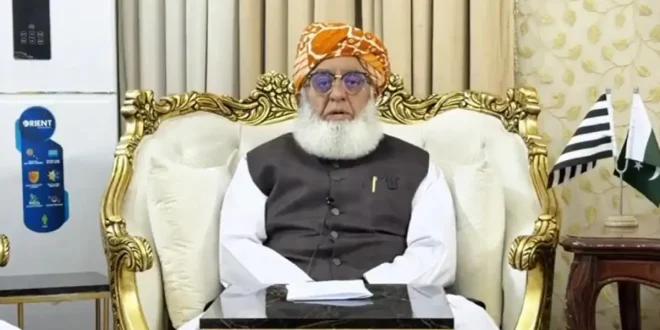
Pakistan’s political landscape, already simmering with underlying tensions, witnessed a notable escalation recently as Maulana Fazlur Rehman, chief of the Jamiat Ulema-i-Islam-Fazl (JUI-F), claimed he was subjected to an “hours-long state siege” in Lahore. This alleged restriction prevented him from addressing a scheduled seminar organised by the prestigious Lahore High Court Bar Association (LHCBA). The incident, marked by police deployment outside his temporary accommodation, sparked immediate condemnation from JUI-F leadership, who branded it a direct assault on fundamental civil liberties and constitutional rights.
While police eventually removed the barriers, allowing Fazlur Rehman to move freely by evening, the initial action, coupled with the swift imposition of Section 144 across Lahore – effectively banning public gatherings for three days – paints a vivid picture of a state seemingly intent on controlling political narratives and dissent. The JUI-F has not only filed a plea in the Lahore High Court challenging the alleged siege but has also vowed to proceed with planned public conferences, signalling a deepening confrontation.
Contextualizing the Rift: A Deep-Seated Conflict
To understand the gravity of the Lahore incident, it’s crucial to place it within the broader context of the ongoing and increasingly acrimonious relationship between Maulana Fazlur Rehman and the federal government. Fazl, a seasoned politician with a significant religious-political following, has been a vocal critic of the current administration.
The roots of the current friction trace back to mid-October, when Fazl vociferously criticised the imposition of governor’s rule in Khyber Pakhtunkhwa. He accused the Centre of reneging on commitments and depriving provinces of their legitimate rights, particularly concerning the contentious issue of mineral resources in tribal areas. This stance, portraying the JUI-F as a champion of provincial autonomy and equitable distribution of national wealth, has put him squarely at odds with Islamabad.
Recent weeks have seen a calculated escalation of pressure tactics against Fazl. These include the withdrawal of security personnel from his and his family’s residences in Islamabad and Dera Ismail Khan, along with heightened scrutiny from accountability bodies like the National Accountability Bureau (NAB) on his son, former federal communications minister Asad Mahmood. JUI-F has consistently decried these moves as a “coordinated character assassination campaign” and political victimisation. Interestingly, these actions have also drawn support for Fazl from unexpected quarters, including PPP Chairman Bilawal Bhutto Zardari, highlighting the complex, shifting alliances within Pakistan’s political arena.
The imposition of Section 144 in Lahore, ostensibly for security reasons citing “imminent threats” from militant organisations, is a frequently employed administrative tool in Pakistan to preempt or disperse political gatherings. While governments often justify such measures on grounds of public safety, critics argue they are disproportionately used to suppress legitimate political dissent and undermine fundamental rights to assembly and free speech.
Impact on Pakistan’s Democratic Fabric
The alleged “state siege” and subsequent events carry significant implications for Pakistan’s fragile democratic institutions and the rule of law:
- Erosion of Civil Liberties: Actions that restrict the freedom of movement, assembly, and speech of political leaders directly undermine the democratic rights enshrined in the Constitution. The LHCBA seminar was a platform for intellectual discussion, and preventing a key speaker from attending, regardless of political affiliation, sets a dangerous precedent for curtailing dissent.
- Heightened Political Polarization: Such incidents inevitably intensify political divisions. The JUI-F’s strong reaction, coupled with solidarity from other opposition figures present at the LHCBA event and statements of support from allies, suggests a hardening of stances. This makes consensus-building and de-escalation more challenging, particularly in the run-up to potential general elections.
- Questioning Institutional Neutrality: When state machinery, such as law enforcement and anti-graft bodies, appears to be selectively deployed against political opponents, it erodes public trust in these institutions’ impartiality and perceived political neutrality. This perception can further destabilize the political environment.
- Chilling Effect on Dissent: The use of administrative bans like Section 144, or alleged house arrests, can create a chilling effect, deterring ordinary citizens and political activists from participating in lawful assemblies or expressing critical viewpoints, thus shrinking the space for democratic discourse.
- Role of the Judiciary: The filing of a plea in the Lahore High Court underscores the critical role of the judiciary as a potential check on executive overreach and a guardian of constitutional rights. The court’s handling of this petition will be closely watched for its implications on due process and civil liberties.
Analysis: A Test of Democratic Resilience
The incident surrounding Maulana Fazlur Rehman in Lahore is more than just a localized political skirmish; it’s a potent symbol of the ongoing struggle between political forces and state power in Pakistan. The alleged “state siege” represents a strategic move, likely intended to curtail Fazl’s growing influence, particularly as he champions issues of provincial autonomy and resource distribution – themes that resonate deeply across various regions of Pakistan, including Khyber Pakhtunkhwa, Balochistan, and Sindh.
From the government’s perspective, such actions might be rationalized as necessary to maintain law and order, especially in light of the cited security threats. However, the timing and target suggest a distinct political calculus. Preventing Fazl from addressing a bar association, a forum typically associated with legal discourse rather than street protests, indicates an attempt to silence even intellectual dissent and to prevent the formation of a broader opposition front.
Ironically, these very tactics might be counterproductive. By turning Fazl into a symbol of suppressed free speech, the government risks galvanizing his support base and uniting disparate opposition elements. The presence of other prominent opposition leaders at the LHCBA event, despite Fazl’s absence, and the solidarity expressed by figures like Bilawal Bhutto Zardari, demonstrate that such actions can inadvertently foster a sense of shared grievance among the opposition, potentially strengthening their collective resolve.
Maulana Fazlur Rehman’s unwavering commitment to holding future rallies, despite arrests of party workers and alleged administrative hurdles, signals that JUI-F is prepared for a protracted confrontation. His assertion that his party fights for “the case of the public” and “the case of Pakistan,” coupled with his defiant claim that JUI-F should be “issuing certificates of loyalty” rather than seeking them, marks a significant rhetorical escalation.
Ultimately, this episode underscores the fragile state of democratic practices in Pakistan. The repeated recourse to administrative measures to manage political dissent, rather than engaging in dialogue or allowing free expression, places immense strain on civil liberties and the democratic process. As the nation navigates a complex political transition, the path chosen by both the state and political actors will determine the resilience of Pakistan’s democratic institutions and its commitment to fundamental rights.
“`