 Dost Pakistan Journeys Tours and safaris in the North & South Pakistsn
“`html
Rising Tide of Terror: Targeted Attacks Claim Lives of Police in Bannu
The recent tragic loss of two dedicated police constables in Bannu district casts a stark light on the persistent and evolving security challenges confronting Pakistan. These separate, audacious attacks, which claimed the lives of Constables Mishqat Amir and Muhammad Roshan, are more than individual tragedies; they signify a deeply troubling trend of escalating militant violence, particularly within the sensitive region of Khyber Pakhtunkhwa.
What Happened: The Immediate Crisis
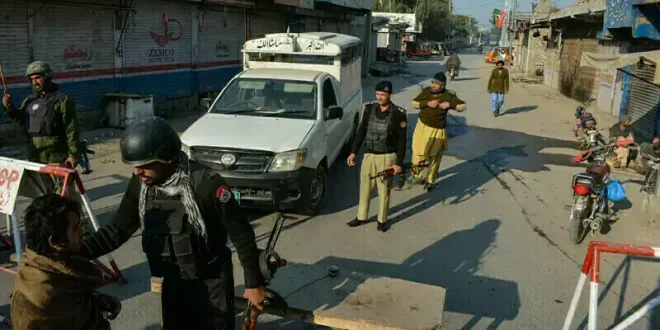
The latest incidents unfolded with grim precision. On a recent Friday morning, Police Constable Mishqat Amir was ambushed and fatally shot on the Bannu-Miranshah Road as he returned home after attending a gathering. This attack followed closely on the heels of another targeted killing the previous night, in which Police Constable Muhammad Roshan, serving with the Wazeer sub-division police, was gunned down outside his residence in Saidgi Baka Khel, having just completed his duties at a Temporarily Displaced Persons (TDPs) Camp.
In response, police authorities have unequivocally classified both fatalities as acts of terrorism and targeted killings. Comprehensive investigations are now underway from multiple angles, supported by intelligence-based search operations across the affected localities. These coordinated efforts underscore the state’s resolve to apprehend the perpetrators and restore a sense of security.
Background: Bannu, A Volatile Frontline
These latest attacks are far from isolated; they are symptomatic of Bannu’s increasingly precarious security environment. The district, situated strategically near Pakistan’s tribal areas, has historically been prone to instability. However, recent months have witnessed a pronounced intensification of militant activity, transforming Bannu into a critical flashpoint in the broader struggle against terrorism.
The surge in violence aligns with broader national trends. The Pakistan Institute for Conflict and Security Studies (PICSS) highlighted a sharp deterioration in the nation’s security situation in May 2026, reporting a 27% increase in militant violence primarily fueled by escalating terrorist acts in Khyber Pakhtunkhwa and Balochistan. Bannu has regrettably found itself at the heart of this resurgence.
Prior incidents underscore the gravity of the situation. Just last month, Bannu endured a devastating suicide attack that claimed the lives of 15 police personnel, prompting a “strong demarche” from Pakistan to Afghanistan regarding the alleged use of Afghan soil by militants. Beyond these high-profile assaults, the region has seen a consistent pattern of attacks targeting civilians, local security forces, and even members of traditional jirgas, necessitating continuous counter-operations by security forces to disrupt militant networks.
Why It Matters: The Strategic Impact of Targeted Killings
The systematic targeting of off-duty or returning police personnel carries profound strategic implications that extend beyond the immediate loss of life. Such attacks are meticulously designed to achieve multiple objectives: to instill a pervasive climate of fear and demoralization within law enforcement agencies, to overtly demonstrate the militants’ intelligence capabilities and operational reach, and critically, to erode public trust in the state’s ability to safeguard its frontline defenders and citizens alike. When those sworn to protect are themselves vulnerable in their personal lives, it fosters a deeply unsettling sense of insecurity across the populace.
These incidents suggest a disturbing level of sophistication within militant networks, indicating their capacity to gather specific intelligence on individual officers and execute precise, opportunistic strikes. This form of asymmetric warfare forces security forces to operate under heightened, constant threat, inevitably impacting morale, recruitment, and overall operational effectiveness in maintaining law and order.
Impact on Pakistan: A Broadening National Security Challenge
The continuous escalation of violence in critical regions like Bannu places immense and unsustainable pressure on Pakistan’s national security apparatus. It necessitates a significant diversion of precious resources – both human and financial – towards intensified counter-terrorism efforts. This often comes at the expense of other vital developmental and governance initiatives, hindering progress in areas crucial for long-term stability.
The economic repercussions are equally substantial; persistent insecurity acts as a potent deterrent to both domestic and foreign investment, disrupts local commerce, and severely hampers the livelihoods of communities already contending with displacement and economic hardship. Internationally, the recurring security incidents, particularly those with alleged cross-border linkages, strain Pakistan’s diplomatic relations, especially with Afghanistan, and can adversely affect the nation’s global standing, impacting its efforts to project stability and attract foreign direct investment.
Domestically, such violence invariably heightens societal anxieties, potentially exacerbating existing fault lines, and severely testing the resilience of communities already bearing the brunt of prolonged conflict. The escalating public demand for swift justice and enhanced security measures places increasing scrutiny on governmental counter-terrorism strategies and their efficacy.
Analysis: Adapting to an Evolving, Insidious Threat
The disturbing pattern of targeted killings in Bannu underscores a critical and alarming shift in militant tactics: a discernible move away from large-scale, conventional confrontations towards more insidious and personalized acts of violence. This calculated strategy aims to systematically erode state authority at the grassroots level and sow terror within the security establishment itself. It strongly suggests a sophisticated intelligence-gathering capability by militant cells, enabling them to identify, track, and target individual law enforcement personnel with chilling precision.
Countering this evolving and pervasive threat demands a multi-faceted and adaptive approach. Beyond intensified kinetic operations, there is an urgent imperative to bolster intelligence networks at the local level, ensuring better actionable foresight. Enhancing protective measures and training for law enforcement personnel, especially during off-duty hours, is crucial. Simultaneously, fostering stronger community engagement is vital for countering radicalization narratives and gathering critical human intelligence.
Furthermore, robust border management, coupled with sustained diplomatic pressure on neighboring countries to dismantle militant sanctuaries, remains paramount. Pakistan’s struggle against terrorism is a protracted and complex one. The profound sacrifices made by officers like Constables Mishqat Amir and Muhammad Roshan serve as a somber reminder of the ongoing challenge and the unwavering commitment required to secure lasting peace and stability in vulnerable regions like Bannu.
“`
