 Dost Pakistan Journeys Tours and safaris in the North & South Pakistsn
“`html
Pakistan and the R-4 Bloc: Deepening Ties for Regional Influence and Stability
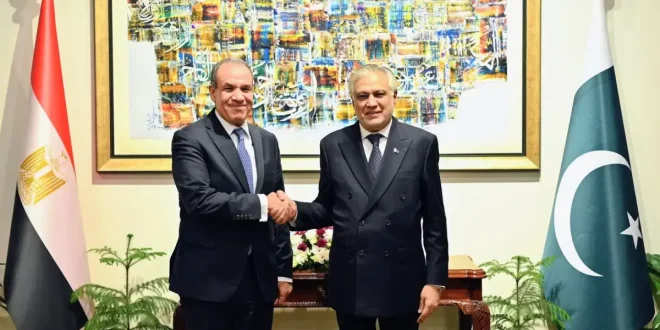
In a significant diplomatic move, Pakistan’s Deputy Prime Minister and Foreign Minister, Ishaq Dar, is set to attend the fourth meeting of the R-4 group of countries in Cairo on June 21, 2026. This gathering, bringing together the foreign ministers of Egypt, Saudi Arabia, Turkiye, and Pakistan, signifies a growing convergence among these key Muslim-majority nations on issues of regional peace, security, and cooperation. Dar’s participation underscores Pakistan’s commitment to multilateral diplomacy and its strategic engagement with influential partners in the Middle East and beyond.
The News in Focus: A Quadripartite Alignment
The upcoming Cairo meeting, hosted at the invitation of Egyptian Foreign Minister Dr. Badr Abdelatty, marks another crucial step in the evolving framework of the R-4 group. According to Pakistan’s Foreign Office (FO), the agenda focuses on discussing regional developments, exchanging views on peace and stability, and strengthening cooperation in areas of shared interest. This follows a previous high-profile quadrilateral moot hosted by FM Dar in Islamabad in March, which primarily addressed the pressing Middle East crisis. Beyond the group discussions, FM Dar is also scheduled for bilateral consultations with his Egyptian counterpart and a call on Egyptian President Abdel Fattah El-Sisi, highlighting the importance of deepening Pakistan-Egypt relations across diverse fields.
Background: The Rise of the R-4
The R-4 grouping, comprising Egypt, Saudi Arabia, Turkiye, and Pakistan, represents an intriguing, albeit still nascent, alignment of regional powers. While not a formally institutionalized bloc like the OIC or GCC, its regular ministerial meetings suggest a growing intent to coordinate foreign policy and strategic objectives. These four nations share several commonalities:
- Strategic Geographic Locations: Spanning North Africa, the Middle East, and South Asia, they collectively influence crucial geopolitical corridors.
- Significant Muslim-Majority Populations: They represent a substantial portion of the Muslim world, giving the group a potential moral and diplomatic voice on issues affecting Islamic nations.
- Economic & Military Clout: Each nation possesses varying degrees of economic strength and military capabilities, making them influential players in their respective regions.
- Shared Interests in Regional Stability: The volatile landscape of the Middle East, coupled with broader global shifts, necessitates coordinated efforts to manage conflicts, counter extremism, and ensure economic prosperity.
The group’s emergence can be seen in the context of a multipolar world where regional powers are increasingly forging ad-hoc or semi-formal alliances to address specific challenges and advance collective interests, often bypassing traditional, larger bodies perceived as less agile or effective. The focus on the Middle East crisis in earlier meetings suggests that immediate regional security concerns might have been a primary catalyst for its formation.
Impact on Pakistan: Amplifying Voice and Strengthening Ties
For Pakistan, participation in the R-4 group offers several strategic advantages, aligning with its foreign policy objectives of fostering regional peace, economic development, and enhanced diplomatic outreach:
- Enhanced Diplomatic Influence: Being part of a focused, high-level group with influential regional players elevates Pakistan’s diplomatic standing, allowing it to contribute actively to regional discourse and decision-making on critical issues.
- Economic Opportunities: The R-4 nations are significant economies. Cooperation with Saudi Arabia (a major investor), Turkiye (a growing industrial power), and Egypt (a gateway to Africa and a Suez Canal operator) presents immense opportunities for Pakistan in terms of trade, investment, energy collaboration, and even skilled labor export.
- Security and Stability: Pakistan has a vested interest in the stability of the broader Middle East, given its energy reliance on the region and the presence of a large Pakistani diaspora. The R-4 platform provides a mechanism for coordinated efforts against extremism, terrorism, and regional conflicts.
- Soft Power Projection: Engagement within the R-4 framework allows Pakistan to project its soft power, highlighting its role as a responsible Muslim-majority nation committed to peace and cooperation, potentially strengthening its stance on issues like Kashmir.
- Strategic Balancing Act: This grouping offers Pakistan another avenue for multilateral engagement, allowing it to diversify its foreign policy alignments and potentially balance its relationships with other global and regional powers.
Analysis: A New Axis of Power or a Consultative Forum?
The R-4’s continued meetings raise important questions about its future trajectory and geopolitical implications. While currently appearing to function as a consultative forum, its consistent engagement suggests ambitions beyond mere dialogue:
- Formalization vs. Flexibility: The key challenge for the R-4 will be whether it evolves into a more formalized bloc with a defined charter and institutional mechanisms, or if it retains its current flexible, issue-based approach. A more formal structure could provide greater impetus for joint projects but also introduce complexities due to diverse national interests and external alignments.
- Addressing Regional Challenges: The group’s stated objectives of discussing peace, security, and stability are particularly pertinent in a region grappling with conflicts, geopolitical rivalries, and economic uncertainties. The R-4 could play a vital role in de-escalation, conflict resolution, and promoting inclusive regional frameworks, especially concerning the ongoing situation in the Middle East.
- Economic Integration Potential: Beyond security, the R-4 has significant potential for economic integration. Imagine a coordinated investment strategy linking Saudi capital, Turkish industrial expertise, Pakistani human resources, and Egyptian logistical advantages. Such an economic axis could unlock new growth opportunities for member states and beyond.
- Geopolitical Realignment: The emergence of the R-4 could be viewed as part of a broader trend of regional powers asserting greater autonomy and seeking to shape their own destiny amidst shifting global dynamics. How this group positions itself relative to established global powers and other regional blocs (e.g., China, US, Russia, India, EU, Iran) will be crucial. Will it be seen as complementary, or potentially competitive, in certain spheres?
- Challenges to Cohesion: Despite shared interests, each member nation has distinct foreign policy imperatives and alliances. Turkiye is a NATO member, Saudi Arabia maintains strong ties with the West, and Egypt has its own unique regional role. Navigating these individual interests to forge a truly unified front will require astute diplomacy and a strong commitment to collective goals.
In conclusion, Pakistan’s active participation in the R-4 foreign ministers’ meeting in Cairo highlights its strategic intent to play a constructive role in regional and global affairs. The R-4, while still in its formative stages, has the potential to become a significant platform for fostering peace, enhancing security, and driving economic prosperity across a crucial swath of the world. Its evolution will be closely watched as these four influential nations collectively navigate the complexities of contemporary geopolitics.
“`
