Dost Pakistan Journeys Tours and safaris in the North & South Pakistsn
Related Articles


Charting a New Course: Pakistan’s Pivotal Role in US-Iran Peace Talks
Recent Breakthroughs: Technical Talks Underway in Switzerland
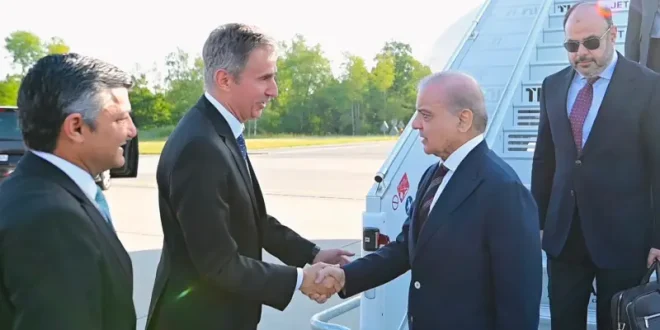
In a significant diplomatic development, Pakistan’s Prime Minister Shehbaz Sharif, accompanied by Chief of Defence Forces Field Marshal Asim Munir, arrived in Switzerland on Sunday to participate in crucial technical-level talks between Iran and the United States. These high-level discussions, held in Bürgenstock, mark the first formal engagement since the landmark “Islamabad Memorandum of Understanding (MoU)” was signed on June 17, heralding an end to protracted animosity in the Middle East.
Delegations from both the United States and Iran are actively participating, with key figures present including US Vice President JD Vance, and Iranian Parliament Speaker Mohammad Bagher Ghalibaf and Foreign Minister Abbas Araghchi. Qatar is also present as a mediator. The agenda for these talks focuses on the implementation of the Islamabad MoU, with specific attention on Iran’s nuclear program and securing a sustainable ceasefire in Lebanon. While the US expressed cautious optimism, Iran emphasized the need for all parties to fulfill their commitments to avoid jeopardizing the newly forged agreement.
The Long Road to Reconciliation: A Brief History of Tensions and Mediation
The current talks represent a monumental step in defusing decades of simmering tensions between Washington and Tehran, which have frequently destabilized the Middle East and sent ripples across the global economy. The animosity, rooted in geopolitical rivalries, ideological differences, and the contentious issue of Iran’s nuclear ambitions, escalated through sanctions, proxy conflicts, and naval skirmishes, particularly in the vital Strait of Hormuz.
The “Islamabad MoU,” signed by US President Donald Trump and Iranian President Masoud Pezeshkian with Pakistan’s PM Shehbaz Sharif as a mediator, laid the foundational framework for peace. This agreement outlined steps to end the conflict, lift the US blockade on Iran, and ensure the reopening of the Strait of Hormuz—a crucial chokepoint for global oil shipments. Furthermore, it included a 60-day timeline for follow-up negotiations and a conditional promise of a $300 billion reconstruction fund for Iran, contingent on a final nuclear agreement. Pakistan’s consistent diplomatic engagement and its unique ability to maintain relationships with both sides positioned it as an indispensable and trusted facilitator throughout this delicate process.
A Diplomatic Victory: Implications for Pakistan and Regional Stability
For Pakistan, its successful mediation in the US-Iran conflict is nothing short of a diplomatic triumph. The nation’s sustained, principled, and constructive approach has not only averted a potentially catastrophic regional war but also significantly enhanced its standing on the global stage as a credible peacemaker. This achievement reinforces Pakistan’s commitment to regional stability and its capacity to act as a bridge between estranged nations.
The direct benefits for Pakistan are manifold. Economically, the reopening of the Strait of Hormuz promises to stabilize global energy markets, potentially leading to lower oil prices and improved trade routes—a boon for Pakistan’s import-dependent economy. The lifting of the US blockade on Iran could also unlock new avenues for regional trade and economic cooperation, fostering prosperity. Furthermore, a reduction in Middle Eastern tensions directly translates to a more secure and predictable environment for Pakistan, mitigating the risk of regional conflicts spilling over into its borders. This mediation effort also solidifies Pakistan’s bilateral relationships with key players like the US, Iran, and Qatar, fostering greater trust and cooperation for future regional endeavors.
Navigating the Path Ahead: Challenges and Opportunities for Enduring Peace
While the current technical talks are a beacon of hope, the road to enduring peace between the US and Iran remains fraught with complexities. The immediate challenge lies in translating the broad framework of the Islamabad MoU into concrete, verifiable, and mutually acceptable agreements, especially concerning the intricacies of Iran’s nuclear program and the delicate situation in Lebanon. Trust deficit, built over decades of animosity, will undoubtedly be a persistent hurdle, requiring careful negotiation and robust verification mechanisms.
Moreover, the regional ecosystem presents its own set of challenges. The involvement of other regional actors, particularly Israel, whose security concerns were alluded to by the Iranian delegation regarding Lebanon, could influence the pace and outcome of these negotiations. External spoilers, driven by their own geopolitical interests, might also seek to derail the fragile peace process.
However, the sheer fact that high-level delegations are meeting and engaging on specific technical issues is a testament to the commitment of all parties to de-escalation. These technical discussions are vital for establishing clearer communication channels, building confidence, and meticulously ironing out the details necessary for a sustainable agreement. Pakistan’s continued, steady facilitative role will be instrumental in bridging gaps and ensuring momentum is maintained.
The successful implementation of this peace deal has the potential to fundamentally reshape the geopolitical landscape of the Middle East, fostering a new era of dialogue, economic integration, and stability. While cautious optimism is warranted, the current talks represent a crucial and encouraging step towards transforming a region long plagued by conflict into one striving for collective prosperity.
Keywords: US-Iran talks, Pakistan mediation, Islamabad MoU, Strait of Hormuz, Middle East peace, PM Shehbaz Sharif, Iran nuclear program, Lebanon ceasefire, regional stability, geopolitical implications, diplomatic breakthrough.
Strait of Hormuz: A strategically important strait between the Persian Gulf and the Gulf of Oman, essential for global oil shipments. Its closure or disruption can lead to significant increases in oil prices worldwide.