Dost Pakistan Journeys Tours and safaris in the North & South Pakistsn
Related Articles


“`html
Pakistan’s FY27 Budget: A Retreat from Climate Action Amidst Mounting Risks
Summary: Pakistan’s federal budget for fiscal year 2026-27 signals a worrying de-prioritization of proactive climate action. Despite its extreme vulnerability to climate change, the budget slashes allocations across most climate-related heads, with the notable exception of disaster management. This strategic shift draws sharp criticism from experts who advocate for greater transparency in climate spending and fundamental structural reforms to align Pakistan’s economic framework with its urgent environmental imperatives.
The News: Budgetary Shifts and Climate Cuts
Pakistan’s proposed federal budget for Fiscal Year 2026-27 (FY27) presents a concerning outlook for the nation’s climate resilience and green transition efforts. Despite the escalating frequency and intensity of climate-induced disasters, the government has opted for substantial cuts across most climate-related budgetary allocations. Funds earmarked for climate mitigation—efforts to reduce greenhouse gas emissions—have seen a drastic reduction from Rs603 billion to Rs124 billion. Similarly, allocations for climate adaptation, critical for communities to cope with the unavoidable impacts of global warming, have been scaled down from Rs85 billion to Rs70 billion.
The “green component” within various sectoral subsidies, encompassing energy, food, industry, transport, and agriculture, has also experienced significant budget cuts. This widespread contraction in proactive climate spending stands in stark contrast to an increased focus on disaster management. The budget allocates higher funds for reconstruction, recovery, and rehabilitation, alongside a newly introduced disaster tagging mechanism. While bolstering disaster response is undoubtedly necessary, this reactive approach raises critical questions about Pakistan’s long-term strategy for a climate-smart future.
Adding to the complexity, the budget includes measures to generate climate-related revenue, such as a projected Rs20 billion from an EV adoption levy and Rs50 billion from a Climate Support Levy. However, there’s a lack of clarity on whether these funds will be ringfenced for climate initiatives or absorbed into the general budget, a concern echoed by experts.
Background: Pakistan’s Acute Climate Vulnerability
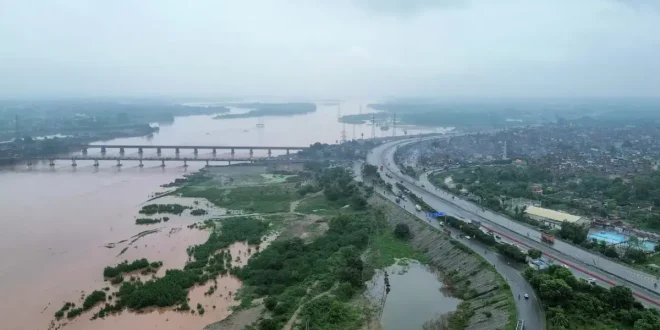
Pakistan’s position as one of the world’s most climate-vulnerable nations lends a critical lens through which to evaluate these budgetary decisions. The country has consistently ranked high on global climate risk indices, a reality dramatically underscored by the catastrophic floods of 2022. These unprecedented deluges submerged a third of the country, impacting millions, displacing large populations, and causing economic damages estimated at over $30 billion. Beyond floods, Pakistan regularly battles severe heatwaves, glacial lake outburst floods (GLOFs), prolonged droughts, and erratic monsoon patterns, all exacerbated by a warming planet.
Scientific warnings further amplify the urgency. Recent reports from institutions like the World Bank and the University of Chicago project that Pakistan could account for a staggering one-third of global heat-stress deaths by 2050, with several districts potentially becoming uninhabitable for humans as early as 2030. These dire predictions underscore an existential threat that demands not just attention, but robust and sustained financial commitment.
Globally, the discourse around climate finance for developing nations emphasizes the disproportionate burden borne by countries like Pakistan, which have historically contributed least to global emissions. While international climate finance commitments often fall short, the need for domestic resource mobilization and strategic allocation becomes paramount, especially for economies grappling with fiscal constraints.
Impact on Pakistan: A Looming Disaster and Stalled Progress
The FY27 budget’s reduction in climate action funding carries profound and potentially devastating implications across Pakistan’s environmental, economic, and social fabric:
- Heightened Vulnerability to Extreme Weather: By significantly cutting funds for both mitigation and adaptation, Pakistan risks a slower transition away from fossil fuels and inadequate preparation for inevitable climate impacts. This exposes communities to increased risks from recurrent floods, heatwaves, and droughts, undermining efforts to build resilient infrastructure and implement early warning systems.
- Worsening Public Health Crisis: Former climate change minister Malik Amin Aslam highlighted the “suicidal story” reflected in the budget, particularly the missing funding stream for addressing heat stress adaptation. Given scientific warnings about escalating heat-related mortalities, this oversight could precipitate a severe public health crisis, disproportionately affecting vulnerable populations.
- Economic Drain and Development Setbacks: A reactive approach, primarily focused on disaster recovery rather than prevention, inevitably leads to higher long-term economic costs. Climate-induced disasters devastate infrastructure, disrupt agricultural output, and derail development gains, creating a cycle of damage and rebuilding that hinders sustainable growth.
- Stalled Green Transition: Despite the absence of new taxes on renewables, pre-budget speculation alone caused price hikes for solar technologies and batteries, as noted by energy expert Dr. Khalid Waleed. This dampens enthusiasm and slows the adoption of critical green energy solutions essential for long-term sustainability and energy independence.
- Erosion of Trust and Accountability: If the newly introduced climate levies (EV adoption levy, Climate Support Levy) are not transparently ringfenced for climate action, they risk being perceived as mere revenue-generating taxes rather than genuine environmental initiatives. This could erode public trust and diminish the perceived legitimacy of climate policies.
The budget, therefore, signals a dangerous strategic gamble, potentially locking Pakistan into a cycle of reactive crisis management rather than fostering proactive, climate-resilient development.
Analysis: The Need for Transparency, Structural Reform, and Strategic Finance
The FY27 budget reveals a complex interplay of fiscal constraints, immediate economic priorities, and a seemingly diminished political will to confront the climate crisis proactively. While the increased revenue from climate levies (EV adoption, Climate Support Levy) is a step towards domestic resource mobilization, the lack of clarity regarding their “ringfencing” is a significant concern. Dr. Abid Suleri, a member of Pakistan’s National Economic Advisory Council, rightly emphasized that these funds must be dedicated to climate action, contrasting Pakistan’s approach with countries like Singapore and Sweden, which effectively channel carbon tax revenues into climate solutions.
Transparency and Oversight: Essential for Credibility
The efficacy of initiatives like climate tagging, while a positive step, hinges entirely on transparency. Experts call for regular, public reporting on how climate funds are allocated and the tangible outcomes achieved. The drastic 83% reduction in the Ministry of Climate Change’s Public Sector Development Programme (PSDP) funding since 2021, with 95% of the remaining allocation directed to a single project (the 10 Billion Tree Tsunami), further raises questions about the breadth and strategic focus of federal climate initiatives. Moreover, given that much of climate action—such as water management and climate-smart agriculture—is provincially led, a robust federal framework must include mechanisms for supporting and integrating provincial efforts effectively.
Beyond Stopgap Measures: Embracing Structural Reforms
Climate policy expert Ali Tauqeer Sheikh argues that relying on carbon-related taxes without simultaneously investing in public health and green transit risks creating “exclusionary tools” that unfairly burden the public. He, along with others, stresses the need for Pakistan to move beyond temporary fixes and embrace fundamental “structural reforms.” This means integrating climate considerations across the entire economic and financial system, rather than treating climate action as an isolated, optional expenditure. The current development model, Sheikh asserts, is partly responsible for the climate crisis itself and needs a paradigm shift.
Strategic Domestic Resource Mobilization
Given the persistent shortfall in international climate finance, Pakistan’s ability to mobilize domestic resources is critical. Giovanni Maurice Pradipta of Germanwatch highlights successful models like Indonesia’s green sukuk program as potential inspiration. For Pakistan, this could involve:
- Enhanced Budget Tagging: Improving the accuracy and transparency of climate-related expenditures within the national budget.
- Smarter Subsidy Allocation: Reforming existing subsidies to disincentivize fossil fuels and incentivize green technologies and practices.
- Blended Finance Mechanisms: Leveraging public funds to attract private investment into climate projects, with robust public oversight.
- Energy Sector Reforms: Renegotiating existing coal and gas supply deals, especially in light of the growing household solar revolution, to free up fiscal space for climate investments.
In conclusion, Pakistan’s FY27 budget, while navigating severe economic constraints, presents a worrying strategic disconnect. By significantly curtailing proactive climate action while intensifying disaster response, the nation risks exacerbating its extreme vulnerability. A truly climate-smart future demands not just increased funding, but also unwavering transparency, accountability, and a bold, integrated approach to structural economic reform that places climate resilience at its core.
“`