Dost Pakistan Journeys Tours and safaris in the North & South Pakistsn
Related Articles


“`html
Balochistan Farmers’ Postponed March: A Glimmer of Hope Amidst Pakistan’s Agricultural Crisis
The recent decision by the Pakistan Kissan Ittehad to postpone its planned long march on Islamabad from Quetta offers a temporary respite in a country grappling with persistent agricultural challenges. Following assurances from the Balochistan government to address farmer demands, the move highlights the intricate dance between citizen grievances, provincial governance, and national stability in Pakistan.
The News
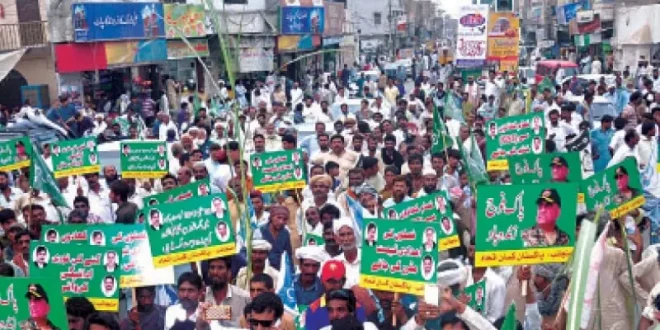
The Pakistan Kissan Ittehad, a prominent farmers’ union, has agreed to defer its highly anticipated “long march” and sit-in towards Islamabad. The protest, initially slated to commence from Quetta, was put on hold after a delegation from the Balochistan government, led by Provincial Minister Ali Madad Jattak and including Home Affairs Adviser Babar Yousafzai, met with Kissan Ittehad President Khalid Baath. The government reportedly provided assurances that concrete steps would be taken to address the farming community’s pressing concerns and legitimate demands.
Mr. Baath confirmed the postponement, citing the prevailing national situation and law and order considerations. Prior to the dialogue, he had outlined the farmers’ critical demands, which included calls for the resignation of Punjab Chief Minister Maryam Nawaz over her agricultural policies and an appeal to Balochistan CM Sarfraz Bugti to declare an agricultural emergency in the province. The Kissan Ittehad had emphasized that their movement sought to spotlight the deteriorating agricultural sector, which they described as the “backbone of the country’s food supply,” and advocated for urgent measures to support farmers amidst rising inflation and “flawed policies.”
Background: Pakistan’s Agricultural Heartland Under Strain
Pakistan’s economy is heavily reliant on its agricultural sector, which accounts for a significant portion of its Gross Domestic Product (GDP) and employs a substantial percentage of its workforce, particularly in rural areas. Despite its critical role in national food security and economic stability, the sector has been plagued by a confluence of systemic issues for decades. These challenges range from increasing input costs – including fertilizers, fuel, and electricity – to the devastating impacts of climate change, such as erratic rainfall, droughts, and unprecedented floods that have ravaged crops and livelihoods.
Furthermore, farmers frequently contend with inadequate support prices for their produce, exploitative market practices by middlemen, outdated irrigation infrastructure, and limited access to modern farming technologies and financing. Government policies, often criticized for being reactive rather than proactive, have struggled to provide consistent relief or long-term solutions. This chronic neglect has fueled widespread dissatisfaction, leading to recurrent farmer protests across the country, with various ‘Kissan Ittehad’ (farmers’ unity) groups frequently mobilizing to demand their rights.
In Balochistan, Pakistan’s largest but least populated province, these agricultural woes are exacerbated by unique regional challenges. Scarcity of water resources is particularly acute, alongside pervasive law and order issues that hinder development and governance. As highlighted by Khalid Baath, even basic administrative functions can be compromised, impacting the effective delivery of services and support to farmers. The demand for an agricultural emergency in Balochistan underscores the deep-seated crisis facing the province’s growers.
Impact on Pakistan: Beyond the Fields
The distress within Pakistan’s agricultural sector has far-reaching consequences that ripple through the entire nation. Primarily, it poses a direct threat to national food security. When farmers struggle, crop yields decline, and food production dwindles, leading to increased reliance on imports, higher food inflation, and greater food insecurity for the general populace. This impacts the purchasing power of low-income families, deepening poverty and potentially triggering social unrest.
Economically, a struggling agricultural sector impedes overall national growth. It affects rural livelihoods directly, pushing millions into poverty and contributing to rural-to-urban migration, which strains urban infrastructure. The stability of Pakistan’s currency and its balance of payments are also indirectly linked, as agricultural exports contribute foreign exchange, while import dependence for food strains reserves. Politically, sustained farmer grievances can destabilize governments. The Kissan Ittehad’s demand for the resignation of a provincial chief minister underscores how agricultural policy failures can escalate into broader political challenges and demands for accountability.
Moreover, the interplay between agricultural distress and law and order concerns, particularly in sensitive regions like Balochistan, complicates governance and security efforts. A disillusioned and economically vulnerable rural population can become susceptible to various forms of exploitation, further exacerbating instability.
Analysis: A Fragile Truce and the Road Ahead
The postponement of the Kissan Ittehad’s long march represents a crucial, albeit temporary, de-escalation. It signifies the power of collective action by farmers and the Balochistan government’s recognition of the immediate need to engage with these powerful stakeholders. The dialogue is a positive development, indicating a willingness from both sides to find a path forward without resorting to large-scale street protests that can disrupt public life and further strain resources.
However, the effectiveness of this “truce” hinges entirely on the swift and concrete implementation of the government’s assurances. Past experiences suggest that such promises often remain unfulfilled, leading to renewed frustration and more intense protests. The Kissan Ittehad’s decision, while acknowledging “national situation and law and order concerns,” also implies a strategic pause, not an abandonment of their core demands. If tangible progress is not seen in addressing issues like input costs, support prices, water management, and climate resilience measures, the postponement will merely serve as a countdown to a potentially larger confrontation.
The broader demands, including the call for CM Maryam Nawaz’s resignation, highlight that farmer grievances often transcend provincial boundaries and point towards a need for cohesive national agricultural policy. It suggests that federal intervention and a holistic approach, rather than piecemeal provincial initiatives, are essential to truly revive Pakistan’s agricultural sector. Prioritizing agriculture over other development projects, as suggested by Mr. Baath, might be a contentious but necessary debate for policymakers to have.
Ultimately, the current situation underscores the urgent need for a comprehensive and sustainable agricultural reform agenda in Pakistan. This must involve long-term investments in research and development, efficient water management infrastructure, climate-smart farming techniques, fair market mechanisms, and effective governance. Only through such committed and sustained efforts can Pakistan move beyond a cycle of crisis and temporary appeasement, ensuring food security, rural prosperity, and overall national stability. The eyes of the nation, and particularly its struggling farmers, will now be on the Balochistan government to see if their assurances translate into genuine, transformative action.
“`