Dost Pakistan Journeys Tours and safaris in the North & South Pakistsn
Related Articles



“`html
Stubble Trouble: Why Pakistan’s Punjab Outpaces Indian Punjab in Crop Fires and Smog
The shared agricultural heartland of Punjab, divided between Pakistan and India, has long grappled with the severe environmental challenge of crop residue burning. However, recent satellite data reveals a stark and worrying divergence in trends: Pakistan’s Punjab is now registering significantly more crop-fire detections than its Indian counterpart, directly contributing to the worsening smog crisis that chokes its cities, particularly Lahore.
The Alarming News: A Four-Fold Disparity
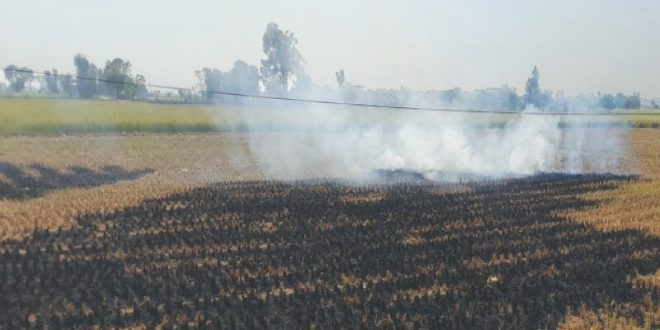
A comprehensive analysis by the environmental monitoring website HamariHawa, leveraging satellite data from NASA’s Fire Information for Resource Management System (FIRMS), has brought a critical issue to light. During the first 29 days of October, Pakistan’s Punjab recorded a staggering 13,241 fire spots, predominantly on farmland. In stark contrast, Indian Punjab registered only 3,158 detections within the same period, making Pakistan’s count 4.2 times higher.
This data, gathered through advanced VIIRS instruments aboard Suomi NPP, NOAA-20, and NOAA-21 satellites, indicates a troubling surge in agricultural burning activity, with nearly half of the monthly total occurring in the last week of October alone. October 29th marked the peak, with 1,327 fire spots detected in Pakistan’s Punjab, underscoring the intensity of the problem as the region transitions into its smog season.
Contextualizing the Crisis: The Practice of Stubble Burning
Crop burning, or stubble burning, is the practice of setting fire to crop residue left in the fields after harvesting. This method is predominantly employed by farmers to quickly and cheaply clear fields, eradicate pests, and prepare the land for the next planting cycle, especially for the crucial wheat crop that follows the rice harvest. While seemingly efficient, the environmental and public health costs are immense.
The smoke from these fires releases a cocktail of harmful pollutants, including particulate matter (PM2.5), carbon monoxide, nitrogen oxides, and greenhouse gases. These airborne contaminants form a dense, toxic haze known as smog, which significantly reduces air quality, visibility, and poses severe health risks. For years, both sides of the Punjab border have contributed to this regional air pollution, with the Indo-Gangetic Plain being particularly vulnerable due to its geography and agricultural patterns.
Historically, Indian Punjab was often cited for its extensive stubble burning. The HamariHawa analysis itself notes a significant reversal: in 2019, Indian Punjab recorded almost five times more fire detections than Pakistan’s Punjab during the same period. This historical context is vital, as it highlights that effective policy and implementation can, and have, altered these trends.
The Mounting Impact on Pakistan: A Public Health Emergency
The surge in crop fires in Pakistan’s Punjab has direct and devastating consequences for its populace. The most visible impact is the pervasive and hazardous smog that engulfs cities like Lahore, which consistently ranks among the world’s most polluted cities. On October 31st, Lahore’s Air Quality Index (AQI) hit 232, categorizing its air as ‘very unhealthy’ by platforms like IQAir. This isn’t just an inconvenience; it’s a public health emergency.
Health Implications: Prolonged exposure to such high levels of air pollution leads to a rise in respiratory illnesses, including asthma, bronchitis, and chronic obstructive pulmonary disease (COPD). It also exacerbates cardiovascular problems, causes eye and skin irritation, and contributes to a higher incidence of lung cancer and other systemic diseases. Children and the elderly are particularly vulnerable, facing impaired lung development and increased mortality rates.
Geographic Concentration: The problem in Pakistan’s Punjab is not evenly distributed. The analysis points to a heavy concentration of fires in the rice-growing belt surrounding Lahore. Districts such as Okara, Gujranwala, and Nankana Sahib collectively recorded 4,158 fire spots – exceeding the entire total for Indian Punjab. This geographical proximity means that smoke plumes, carried by prevailing winds, directly contribute to Lahore’s already deteriorating air quality, trapping pollutants and creating a suffocating environment.
Government Response: The Punjab Environment Protection Agency (EPA) has intensified its pre-smog enforcement campaign, targeting various pollution sources. Efforts include inspecting and penalizing brick kilns, industrial units, and plastic burning operations, alongside measures to control construction dust. For agricultural fires, Quick Response Units (QRUs) equipped with satellite-based fire detection and field monitoring are deployed, alongside drones and night squads. Director General Environment Abdullah Nayyar Sheikh has reiterated a “zero-tolerance policy” against environmental law violators, with fines amounting to tens of millions of rupees imposed.
Analysis: The Policy Disparity and Way Forward
The most pressing question arising from this data is: Why the alarming divergence between Pakistan’s and Indian Punjab? The answer lies largely in policy implementation and farmer incentives.
Lessons from Indian Punjab: The historical analysis from HamariHawa indicates that Indian Punjab managed to reduce its satellite-detected crop fires by an impressive 95% between 2021 and 2025 (as projected, with significant reductions observed in previous years). This achievement was driven by a multi-pronged strategy that included:
- Subsidized Machinery: Providing farmers with machinery like ‘Happy Seeders,’ zero-till drills, and balers that manage stubble without burning.
- Strict Enforcement: Imposing fines and penalties for non-compliance.
- Awareness Campaigns: Educating farmers about the harmful effects of stubble burning and the benefits of alternative methods.
- Market Linkages: Creating avenues for farmers to sell stubble for use in biomass power plants or as fodder, turning waste into revenue.
Pakistan’s Challenges: In contrast, Pakistan’s Punjab has seen a 33% increase in fire detections between 2019 and 2025. This suggests that while enforcement efforts are underway, they may not yet be adequately comprehensive or supported by sufficient alternatives for farmers. Economic pressures often compel farmers to choose the cheapest and quickest method of field clearance, even if environmentally damaging. The lack of widely available and affordable alternatives, coupled with potentially insufficient incentives for sustainable practices, leaves farmers with limited viable choices.
Moreover, the absence of publicly available, comparable official daily fire-count series in Pakistan, as noted by HamariHawa, hinders transparent monitoring and accountability. Robust data is crucial for targeted interventions and assessing the effectiveness of policies.
Moving Forward: Addressing this escalating crisis requires a sustained, multi-faceted approach:
- Farmer Empowerment: Subsidizing and promoting farm mechanization for in-situ stubble management (e.g., mulching, incorporating residue into the soil).
- Economic Incentives: Developing a robust market for crop residue, perhaps for biomass energy or industrial uses, to turn stubble into a valuable resource rather than waste.
- Enhanced Enforcement: Strengthening monitoring, detection, and prosecution of offenders, ensuring penalties act as genuine deterrents.
- Public Awareness: Launching extensive campaigns to educate farmers and the broader public about the health and environmental impacts of stubble burning.
- Cross-Border Dialogue: While politically complex, environmental challenges like smog demand regional cooperation and sharing of best practices.
- Data Transparency: Establishing an official, publicly accessible system for tracking crop fires and air quality data to ensure accountability and inform policy.
The satellite findings serve as a stark reminder of the urgent need for Pakistan to adopt more aggressive, farmer-centric, and well-resourced strategies to curb agricultural fires. Without a decisive shift, the human and environmental cost of smog will continue to rise, making the dream of clear, breathable air an ever-distant reality for millions.
“`