Dost Pakistan Journeys Tours and safaris in the North & South Pakistsn
Related Articles


Pakistan’s Multifaceted Strategy: Confronting Terrorism, Empowering Balochistan, and Embracing AI
Prime Minister Shehbaz Sharif outlines a comprehensive vision, addressing cross-border security threats, boosting regional development, and championing technological advancement for Pakistan’s future.
The Core Announcements
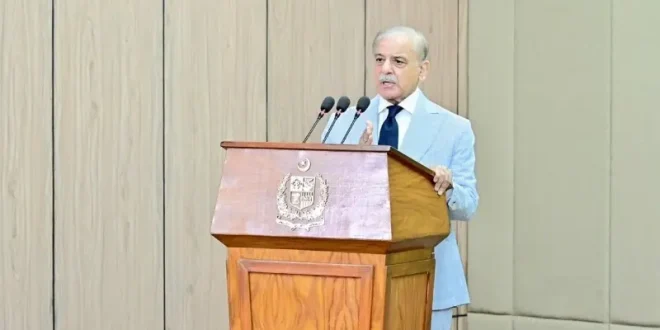
In recent significant addresses, Prime Minister Shehbaz Sharif has articulated a broad strategic framework for Pakistan, touching upon critical aspects of national security, economic development, and technological progress. His primary concern revolved around cross-border terrorism, where he issued a renewed call for the interim Afghan government to act decisively against militant groups using Afghan soil to launch attacks against Pakistan. The Prime Minister underscored the shared 2,600-kilometer border and lamented what he described as a failure by Kabul to prevent such activities.
Concurrently, PM Sharif unveiled substantial development packages aimed at Balochistan, Pakistan’s largest yet least developed province. Key projects include a Rs300 billion Karachi-Chaman dual carriageway slated for completion within two years, accelerated work on the Kachhi Canal, and a Rs75 billion initiative to convert 27,000 agricultural tube wells to solar energy, with significant federal contributions. These measures are complemented by enhanced educational quotas and scholarships for the province, reflecting a commitment to inclusive national growth.
On the geopolitical front, the Prime Minister reiterated allegations of India financing terrorism within Pakistan, linking the resurgence of militancy post-2017/18 to an “organised conspiracy.”
In a forward-looking move, the Premier inaugurated the Sky47 AI Cloud centre, hailing it as a landmark achievement reflecting Pakistan’s burgeoning technological capabilities. He lauded the collaborative efforts of military and civilian experts, specifically acknowledging the leadership of Chief of Army Staff Field Marshal Asim Munir, as instrumental in bringing this project to fruition.
Background and Context: Navigating Complex Terrain
Pakistan’s relationship with its western neighbour, Afghanistan, has been historically complex, marked by shared cultural ties but also deep-seated security challenges. The withdrawal of international forces and the subsequent takeover by the Taliban in August 2021 have led to a significant surge in cross-border militant activities, primarily by the Tehrik-i-Taliban Pakistan (TTP). Pakistan has consistently accused the interim Afghan administration of either being unwilling or unable to control these groups, whose sanctuaries across the border pose a direct threat to Pakistan’s internal stability and economic progress. This ongoing security dilemma necessitates a robust response, balancing diplomatic pressure with enhanced border security measures.
Balochistan, rich in natural resources, has long faced socio-economic disparities and a persistent low-intensity insurgency. Its vast landscape, strategic location bordering Afghanistan and Iran, and its central role in the China-Pakistan Economic Corridor (CPEC) make its stability paramount for Pakistan’s national security and economic future. Previous development initiatives have often been criticized for their impact or scope. The current government’s renewed focus, with significant infrastructure and agricultural projects, aims to address historical grievances, foster greater inclusion, and counter separatist narratives through tangible improvements in living standards and connectivity.
The accusations against India regarding state-sponsored terrorism are part of a long-standing narrative in the adversarial relationship between the two nuclear-armed neighbours. Pakistan has frequently presented dossiers to international bodies alleging Indian involvement in destabilizing activities, particularly in Balochistan. This rhetoric often intensifies amidst security incidents and is a key component of Pakistan’s geopolitical messaging.
Finally, the inauguration of the Sky47 AI Cloud centre signifies Pakistan’s strategic pivot towards a knowledge-based economy and digital transformation. In an increasingly interconnected world, leveraging Artificial Intelligence and cloud computing is crucial for innovation, economic growth, and enhancing national capabilities. This initiative reflects a broader national ambition to build indigenous technological infrastructure, foster a vibrant tech ecosystem, and compete in the global digital landscape, echoing similar efforts seen in other developing nations.
Impact on Pakistan: Stability, Prosperity, and Progress
The Prime Minister’s recent pronouncements have far-reaching implications for Pakistan’s domestic stability, economic trajectory, and regional standing. The firm stance on cross-border terrorism from Afghanistan is critical for maintaining internal security. Continued militant incursions not only cause casualties but also disrupt economic activity in border regions, deter investment, and strain national resources. Effective resolution of this issue, whether through diplomatic means or robust counter-terrorism operations, is paramount for Pakistan’s long-term stability.
The comprehensive development package for Balochistan has the potential to be a game-changer for the province and the nation. Improved infrastructure, like the Karachi-Chaman dual carriageway, will enhance connectivity, facilitate trade, and open up new economic opportunities. Solarizing agricultural tube wells will boost the province’s agrarian economy, reduce energy costs for farmers, and promote sustainable practices. These initiatives, if executed effectively, can address decades of underdevelopment, mitigate grievances that fuel insurgencies, and integrate Balochistan more fully into the national mainstream, fostering a stronger sense of national unity.
The reiteration of allegations against India highlights the ongoing geopolitical tensions and the complex security environment Pakistan operates within. This public messaging serves to rally internal support for national security efforts and to shape international perceptions regarding regional security dynamics.
Perhaps most indicative of a future-oriented vision is the inauguration of the Sky47 AI Cloud centre. This facility is a foundational step towards building a robust digital infrastructure, crucial for fostering innovation, attracting foreign direct investment in the tech sector, and creating high-skilled jobs. By embracing AI and cloud computing, Pakistan positions itself to participate more effectively in the global digital economy, enhancing productivity across various sectors from healthcare to finance and defence. This move signals a commitment to cultivating a knowledge-based economy and ensuring the nation’s relevance in the technological age.
Analysis: Navigating a Multifaceted Future
Prime Minister Shehbaz Sharif’s recent statements reveal a pragmatic, multifaceted strategy aimed at tackling Pakistan’s most pressing challenges while simultaneously building foundations for future prosperity. The simultaneous focus on external security threats, internal development, and technological advancement underscores an understanding that these domains are not isolated but intricately linked. National security cannot be achieved without economic stability and development, particularly in marginalized regions, and both are increasingly dependent on technological prowess.
The assertive message directed at the interim Afghan government signals Pakistan’s growing impatience with cross-border terrorism. This pressure is likely intended to force a more concrete response from Kabul or to justify Pakistan’s own future actions to secure its borders. However, the complexity of the Afghan situation means a definitive resolution remains challenging, requiring persistent diplomatic engagement alongside enhanced operational readiness.
The Balochistan development package is a crucial piece of the national integration puzzle. By investing heavily in infrastructure, agriculture, and education, the government aims to address the root causes of alienation and insurgency. The success of these projects will hinge on transparent governance, effective resource allocation, and sustained commitment, ensuring that the benefits genuinely reach the local populace. This effort, coupled with contributions from other provinces like Punjab, also strengthens the spirit of federalism and national solidarity.
The inauguration of the Sky47 AI Cloud centre exemplifies a strategic leap towards a digital future. The presence of both the Prime Minister and the Chief of Army Staff at this event highlights a significant aspect of Pakistan’s governance: the explicit collaboration between civil and military institutions on strategic national projects. This civil-military synergy, often critiqued in other contexts, is presented here as a strength for achieving complex national goals, from defense to technological innovation. It suggests a unified approach to steering the nation towards modernity and resilience.
In essence, Pakistan is charting a course that attempts to balance immediate security imperatives with a long-term vision for socio-economic and technological growth. The challenge lies in the sustained implementation of these ambitious plans amidst domestic political complexities, regional geopolitical shifts, and resource constraints. The Prime Minister’s strategy reflects a comprehensive approach, aiming to build a more secure, prosperous, and technologically advanced Pakistan for the future.