Dost Pakistan Journeys Tours and safaris in the North & South Pakistsn
Related Articles



Tharparkar’s Drought Crisis: A Call for Sustainable Solutions in Sindh
The News
In a significant move addressing escalating environmental concerns, Sindh Chief Minister Syed Murad Ali Shah has officially declared Tharparkar a drought-affected district. This declaration follows a comprehensive review of the dire situation, particularly focusing on the devastating crop losses across the region. During a high-level meeting at CM House, attended by various political representatives and key administrative officials, CM Shah issued immediate directives for concerted relief efforts. These measures include ensuring the urgent provision of drinking water and essential supplies to affected communities.
The briefing revealed alarming statistics: all seven talukas of Tharparkar are grappling with drought-like conditions, with an estimated 85 to 90 percent of cultivated crops completely destroyed or rendered unproductive. Field reports corroborate these figures, indicating only a marginal 10-15 percent crop survival rate. Expressing profound concern, the Chief Minister underscored the critical need to protect livestock, which serves as a primary source of livelihood for the desert district’s populace. Key directives include the priority repair and restoration of all non-functional reverse osmosis (RO) plants, identification and rectification of faults in existing water supply sources, and a feasibility assessment for a dedicated water supply line from Naukot to Mithi to ensure a reliable, long-term water solution. The provincial government has pledged its full support to the people of Tharparkar during this challenging period, emphasizing continuous monitoring and vigilant administration to ensure no community is left without vital assistance.
Background: The Fragile Ecosystem of Tharparkar
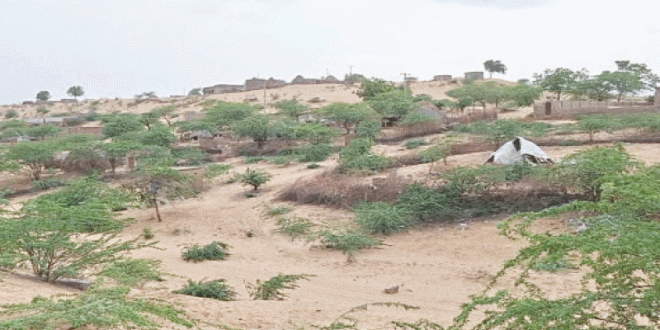
Tharparkar, nestled in the southeastern part of Sindh province, Pakistan, is a unique and often challenging landscape. It is one of the world’s largest arid regions, characterized by vast sand dunes, thorny scrubland, and an economy deeply intertwined with its sparse and unpredictable rainfall. The district’s population, largely comprising indigenous communities, relies heavily on rain-fed agriculture and livestock farming for survival. This makes Tharparkar exceptionally vulnerable to the vagaries of climate, particularly variations in monsoon patterns.
Historically, Tharparkar has experienced cyclical droughts, with devastating consequences for its fragile ecosystem and human population. Each drought period brings widespread crop failure, acute water scarcity, and significant livestock mortality, pushing communities into poverty and food insecurity. Livestock, especially cattle, goats, and sheep, are not merely economic assets but also cultural symbols and a crucial safety net against financial hardship for the Thari people. The lack of reliable surface water sources has led to an increasing dependence on groundwater, which is often saline, necessitating solutions like reverse osmosis (RO) plants. While RO plants were introduced to provide potable water, their consistent operation and maintenance have been a perennial challenge, often rendering them ineffective precisely when needed most.
The latest declaration of Tharparkar as drought-hit underscores the region’s inherent vulnerability and the intensifying impact of climate change, which often manifests through extreme weather events like prolonged dry spells or erratic rainfall distribution. The monsoon season, traditionally the lifeline for Tharparkar, has become increasingly unpredictable, with the current situation highlighting insufficient and poorly distributed rainfall, especially a critical shortfall in September when crops typically mature.
Impact on Pakistan: A Ripple Effect from the Desert
The drought in Tharparkar, while geographically localized, sends ripple effects across Pakistan, highlighting the nation’s broader vulnerability to climate change and its implications for human security and economic stability.
- Food and Livelihood Security: The destruction of 85-90% of crops directly threatens the food security of thousands of Tharparkar residents. Beyond immediate consumption, the loss of livelihoods for farmers and herders can trigger internal migration, placing additional strain on urban centers and other rural areas. The decline in livestock numbers, a critical component of the local economy, will exacerbate poverty and potentially lead to malnutrition, especially among vulnerable groups like children and the elderly.
- Economic Strain and Development Setbacks: The Sindh government’s commitment to immediate relief, while necessary, places a significant burden on provincial resources. Funds allocated for relief measures, repairing infrastructure like RO plants, and potentially laying new water lines divert resources from other development initiatives. This cycle of disaster and relief hinders long-term development efforts aimed at sustainable growth in arid regions.
- Public Health Crisis: Water scarcity invariably leads to health issues. Lack of safe drinking water increases the risk of waterborne diseases. Malnutrition due to food shortages weakens immunity, making communities more susceptible to various illnesses. The stress and trauma associated with prolonged drought conditions also have significant mental health impacts.
- Environmental Degradation: Prolonged drought accelerates desertification, reduces natural vegetation cover, and degrades soil quality, making the land even less productive in subsequent years. This creates a vicious cycle that is difficult to break, impacting biodiversity and ecological balance.
- Broader Climate Change Adaptation Challenges: Pakistan is listed among the countries most vulnerable to climate change. The Tharparkar drought serves as a stark reminder of the urgent need for national climate adaptation strategies, especially for arid and semi-arid regions. It underscores the importance of investing in climate-resilient infrastructure, early warning systems, and diversified economic opportunities across the country to mitigate future impacts.
Analysis: Addressing Symptoms vs. Seeking Sustainable Solutions
The Sindh Chief Minister’s swift declaration of Tharparkar as drought-hit and the immediate directives for relief are commendable steps, reflecting a recognition of the urgent humanitarian crisis. The focus on providing drinking water, essential supplies, and fodder for livestock addresses the most pressing needs of the affected population. Furthermore, the emphasis on restoring non-functional RO plants and exploring a dedicated water supply line to Mithi demonstrates an understanding of the critical infrastructure gaps.
Immediate Response, Long-Term Questions:
While the immediate relief is crucial, a deeper analysis reveals that many of the proposed solutions, while necessary, tend to be reactive rather than truly transformative in the face of ongoing climate change.
- Infrastructure Resilience: The perennial issue of non-functional RO plants highlights a systemic challenge in maintenance and operational sustainability. Installing more plants or repairing existing ones without robust long-term maintenance frameworks and community involvement will likely lead to a recurrence of the same problems. Similarly, the feasibility of a dedicated water supply line, while promising, requires significant investment and protection against environmental factors and potential mismanagement.
- Beyond Livestock Reliance: The heavy reliance on livestock in Tharparkar makes communities highly susceptible to droughts. While protecting current livestock is vital, long-term resilience demands exploring and facilitating diversified livelihood opportunities that are less dependent on erratic rainfall. This could include vocational training, small-scale industries, or climate-smart agricultural practices.
- Holistic Water Management: The current directives focus on supply-side solutions (RO plants, water lines). A truly sustainable approach would integrate demand-side management, rainwater harvesting, efficient irrigation techniques, and community-led water conservation initiatives. Understanding and managing groundwater recharge and usage sustainably is also paramount.
- Early Warning and Preparedness: The news highlights uneven monsoon rainfall, with a critical shortfall in September. This underscores the need for robust early warning systems that can predict such anomalies with greater accuracy and allow for proactive measures, such as providing drought-resistant seed varieties, pre-positioning fodder, or initiating financial aid before the crisis escalates.
- Climate Change Adaptation Strategy: The Tharparkar drought is not an isolated event but a manifestation of broader climate change impacts. Sindh, and Pakistan as a whole, requires a comprehensive, long-term climate change adaptation strategy specifically tailored for arid and semi-arid regions. This strategy should integrate scientific research, indigenous knowledge, and technological solutions.
The Chief Minister’s pledge that the provincial government “will stand by the people of Tharparkar” is a crucial assurance. However, true resilience will only be achieved through a paradigm shift from emergency response to sustained, strategic investment in climate adaptation, robust infrastructure maintenance, diversification of economic activities, and empowering local communities to become stewards of their own environmental and economic future. The Tharparkar drought is a clarion call for Pakistan to accelerate its efforts in building climate resilience, ensuring that its most vulnerable populations are not left behind in the face of an increasingly unpredictable climate.
“`