Dost Pakistan Journeys Tours and safaris in the North & South Pakistsn
Related Articles



“`html
Pakistan’s Blue Passport Backlash: A Deep Dive into Privilege, Policy, and Public Trust
A recent proposal to extend official blue passport privileges to the children of former parliamentarians has ignited a fierce public debate in Pakistan. This controversy highlights deeper issues surrounding elite entitlements, the challenges of international diplomacy, and the ever-present struggle for public accountability in governance.
The News: A Policy Reversal Amidst Public Outcry
The saga began with a bill approved by a Senate panel on July 10, aiming to grant blue passports to dependent children (under 28) of ex-Members of Parliament. This move sought to align their status with retired Grade-22 government officers, whose families already enjoy similar entitlements. However, the proposal immediately triggered a wave of public criticism, drawing ire over what many perceived as an expansion of self-serving privileges.
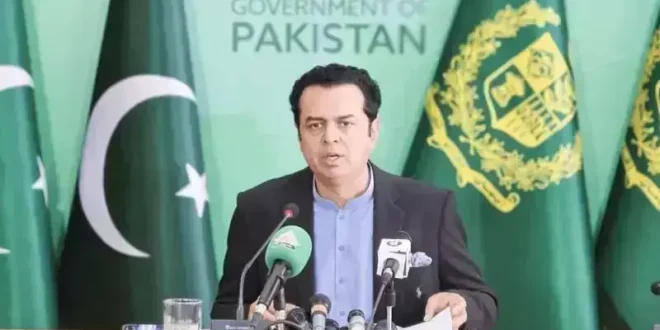
In response to the growing backlash, Minister of State for Interior, Tallal Chaudhry, whose initial stance appeared to support the bill, swiftly changed tack. He now asserts that he opposed the bill from the outset and has announced more stringent measures for blue passport issuance. These include requiring Interior Ministry approval for every application, potentially referring cases up to the Interior Minister. Chaudhry also pledged a further 15-20% reduction in the already trimmed number of blue passports, which currently stands at less than 50,000, down from an estimated 70,000.
The Minister acknowledged a critical consequence of the high number of official passport holders: it significantly impedes Pakistan’s efforts to secure visa abolition agreements with other nations, crucial for fostering diplomatic and trade relations. Discussions for visa exemption are reportedly at an advanced stage with Saudi Arabia and ongoing with countries like Italy. Significantly, Chaudhry also suggested an alternative path: instead of extending the privilege to ex-parliamentarians’ children, the government should consider revoking the facility for retired bureaucrats. This sentiment was echoed by PTI’s Barrister Ali Zafar, who emphatically stated that blue passports are for official state functions, not status symbols or lifelong entitlements, vowing to oppose the bill if it reaches the Senate.
Currently, official blue passports are issued to a wide array of constitutional office holders, senior government and judicial officials, and their eligible dependents. This extensive list, updated as recently as August 2023, grants visa-free access to 55 countries, including 14 Schengen states, facilitating diplomatic and official engagements for short-term duties.
Background: The Entitlement Culture and its Diplomatic Cost
The “blue passport,” or official passport, is more than just a travel document in Pakistan; it’s a tangible symbol of state privilege. Its primary purpose is to facilitate smooth international travel for individuals undertaking official duties, diplomatic missions, or representing the state abroad. The visa-free access it provides to numerous countries, including a significant portion of the Schengen Area, is designed to remove bureaucratic hurdles for government functionaries, thereby enhancing the efficiency of Pakistan’s foreign policy and state affairs.
However, over the decades, the eligibility criteria for these passports have expanded significantly, often blurring the lines between genuine necessity and perceived entitlement. The August 2023 notification notably widened the net, including not just serving officials but also retired officers of BPS-22, their spouses, parents, and dependent children up to 28 years of age. This continuous expansion has contributed to a deep-seated “entitlement culture” within Pakistan’s bureaucracy and political elite, where public office is often viewed as a pathway to personal perks rather than solely a responsibility to serve the citizenry.
This culture directly clashes with the aspirations of the general public, who often grapple with economic hardship and limited opportunities. The sight of elected representatives and their families enjoying privileges, particularly those that bypass international travel restrictions faced by ordinary citizens, fuels public resentment. Furthermore, the sheer volume of official passport holders, regardless of their immediate need for international travel, has had a tangible negative impact on Pakistan’s foreign relations. As Minister Chaudhry noted, a large number of such passports complicates and slows down negotiations for crucial visa abolition agreements, as host countries often perceive a higher risk of misuse or overstay if the official category is too broad or loosely managed.
Impact on Pakistan: Eroding Trust and Stalling Progress
The ongoing blue passport controversy has far-reaching implications for Pakistan, impacting its governance, international standing, and public cohesion.
Erosion of Public Trust: At its core, this debate is a potent symbol of the widening chasm between the ruling elite and the ordinary citizen. Proposals that appear to expand privileges for those already perceived as benefiting disproportionately from the system only deepen public cynicism towards political institutions and the democratic process. It reinforces the narrative of “elite capture,” where legislative actions are seen as self-serving rather than driven by public welfare, thereby undermining the very legitimacy of governance.
Hurdles in International Diplomacy: The most tangible consequence highlighted by the minister is the negative impact on Pakistan’s efforts to secure visa-free access for its citizens. While official passports are for official duties, other countries view an excessively large or loosely defined category of holders with caution. This makes them hesitant to enter into visa abolition agreements, fearing potential abuse or administrative burdens. This directly harms Pakistan’s diplomatic goals, economic ties (hindering business travel), and global image, restricting the mobility of genuine government functionaries and frustrating efforts to improve ease of travel for all Pakistanis.
Policy Incoherence and Credibility: The government’s stated intent to reduce the number of blue passports and streamline their issuance stands in stark contrast to a bill that seeks to expand their eligibility. This policy incoherence sends mixed signals, raising questions about the sincerity of reform efforts and the government’s ability to enforce its own policies. It damages the credibility of both the executive and legislative branches in the eyes of the public and international partners.
Exacerbation of Social Divide: The debate further entrenches the perception of a two-tiered society – one for the privileged few and another for the struggling masses. Such disparities breed social unrest and resentment, diverting national attention from critical issues of development, education, and healthcare towards debates over entitlements.
Analysis: A Struggle for Accountability and National Image
The blue passport controversy is more than just a procedural issue; it is a microcosm of Pakistan’s perennial struggle with governance, accountability, and the delicate balance between state necessity and public welfare. Minister Chaudhry’s swift U-turn and subsequent commitment to stricter measures can be interpreted as a strategic move to mitigate political damage and address public anger. His acknowledgement of the detrimental effect on visa agreements signals a pragmatic understanding of international realities, yet the very existence of such a bill points to persistent internal pressures for elite concessions.
The suggestion to “take away the facility available to retired bureaucrats” rather than extending it to former parliamentarians’ children is a critical pivot. It challenges the very foundation of the entitlement culture and signals a potential shift towards an overall reduction in privileges, rather than their expansion. This aligns with the public demand for austerity and equity. Barrister Ali Zafar’s unequivocal opposition further reinforces the principle that state resources and privileges must serve legitimate state functions, not personal aggrandizement.
Ultimately, this situation underscores the need for a comprehensive and transparent review of all state-provided privileges. Criteria for official passports must be clearly defined, strictly adhered to, and regularly audited to ensure they serve the national interest. The focus should shift from “who gets what” to “what serves Pakistan best.” This means prioritizing diplomatic effectiveness, fostering public trust, and presenting a coherent, credible image on the international stage.
For Pakistan to genuinely progress and regain public confidence, its political leadership must demonstrate a commitment to serving the people over perpetuating personal or familial perks. The fate of this bill will be a litmus test for the government’s resolve in combating elite capture and fostering a system based on meritocracy and public service rather than inherited or acquired entitlements. Reforming the blue passport system is a small, yet symbolically potent, step towards building a more equitable and respected Pakistan.
“`