Dost Pakistan Journeys Tours and safaris in the North & South Pakistsn
Related Articles

Pakistan’s Bold Test Overhaul: Shan Masood Axed, Youth Takes Center Stage Against Sri Lanka
The News: A Paradigm Shift in Pakistan Test Cricket
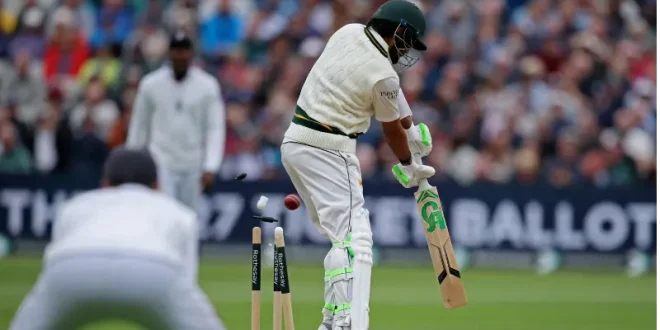
In a significant announcement that signals a new direction for Pakistan’s Test cricket, the selectors have unveiled a revamped 14-member squad for the upcoming ICC World Test Championship (WTC) series against Sri Lanka. The most striking decision is the omission of former Test captain and established opener, Shan Masood. In his place, a wave of fresh, young talent, primarily drawn from stellar domestic performances, has been ushered in. While Babar Azam retains his captaincy, the inclusion of three uncapped batters – Mohammad Taha, Mohammad Suleman, and Sameer Minhas – alongside Ali Usman and Salman Ali Agha, underscores a clear shift towards nurturing the next generation.
This bold move, described by many as a youth-first strategy, aims to rejuvenate Pakistan’s red-ball fortunes. The two-match series, scheduled from November 9-21 in Rawalpindi and Lahore, will serve as a crucial test for this new-look side and a definitive statement from the Pakistan Cricket Board (PCB) about their vision for Test cricket.
Background: The Road to Red-Ball Renewal
Shan Masood’s exclusion, while impactful, is not entirely without context. A seasoned campaigner with 50 Tests under his belt and an average of 30.80, Masood has often shown flashes of brilliance, including a century against West Indies earlier this year. However, his overall consistency, particularly against top-tier attacks like England where he managed only 161 runs in six innings, has been a persistent question mark. This decision to drop him, along with other experienced names like Imam-ul-Haq, Abdullah Shafique, and Mohammad Rizwan, indicates a broader dissatisfaction with the status quo and a pressing need for a change in personnel and philosophy.
Pakistan’s journey in the current WTC cycle has been fraught with challenges, making it imperative to strengthen their foundation in Test cricket. The selectors have evidently turned their gaze towards the domestic circuit, specifically the President’s Trophy Grade-I competition, as the primary pipeline for national selection. This emphasis on domestic performance is long overdue in many cricketing nations and aims to reward consistent excellence at the foundational level.
The new inclusions are a testament to this renewed focus: Mohammad Taha, 26, has been a standout, leading the President’s Trophy scoring charts with an impressive 730 runs, including three centuries. He is joined by Mohammad Suleman, fifth in the same competition with 652 runs and three centuries, and Sameer Minhas, an exciting young talent making waves in his maiden first-class season after impressing at the U-19 level. These selections highlight a commitment to backing domestic form, a principle that often generates a more robust national team over time.
Impact on Pakistan: A Risky Yet Potentially Rewarding Gamble
The immediate impact of this squad overhaul on Pakistan cricket is a complete restructuring of the top order. The established opening pair and middle-order anchors have been replaced by individuals eager to make their mark. This introduces an element of unpredictability, both for opponents and for Pakistan themselves. While youth often brings fearless energy and a hunger to perform, it also carries the risk of inexperience under intense Test match pressure.
For Babar Azam’s Test captaincy, this series against Sri Lanka will be a defining moment. Leading a team with a significant number of debutants and young players requires exceptional leadership, mentorship, and strategic acumen. His ability to gel this diverse group and extract performances will be crucial. This shift also places immense pressure on the new batters – Taha, Suleman, and Minhas – to adapt quickly to international cricket’s demands. Their performances will not only shape the series outcome but also influence the longevity and effectiveness of this ‘youth policy’.
Crucially, this bold selection sends a strong message throughout Pakistan’s domestic cricket ecosystem: performances in first-class cricket truly matter. This validation can significantly boost morale and competitiveness within the domestic circuit, encouraging more players to strive for excellence. It also provides a clear pathway for talent, potentially fostering a sustainable model for future Test team selections.
From a WTC standings perspective, while the immediate goal is to win the series, Pakistan is also using this as an opportunity to build a resilient and future-proof Test side. The series offers points, but more importantly, it offers invaluable experience for the burgeoning talent, setting the stage for long-term improvement in global Test cricket.
Analysis: A Strategic Leap into the Unknown
Pakistan’s decision to usher in a radical youth movement is a calculated gamble. Historically, teams that have successfully rebuilt often do so by integrating youth gradually, but this particular overhaul is swift and comprehensive. It suggests that the selectors, perhaps under a renewed mandate from the Pakistan Cricket Board (PCB), believe that incremental changes were insufficient to address the team’s red-ball struggles.
This approach can be compared to periods of aggressive rebuilding seen in other cricketing nations, where a clear break from past selections was deemed necessary for long-term success. The effectiveness of such a strategy hinges on several factors:
- Talent identification: The selectors’ faith in Mohammad Taha, Mohammad Suleman, and Sameer Minhas must be vindicated by their adaptability to international pressure.
- Coaching and support: The young players will require robust support from the coaching staff and senior players like Babar Azam to transition smoothly.
- Patience: Test cricket is a format that often requires patience with young talent. Instant results cannot always be guaranteed, and the PCB will need to commit to this policy beyond a single series.
The series against Sri Lanka, itself a team undergoing a transition phase, offers a relatively favorable environment for these young players to find their footing. However, the stakes remain high as ICC World Test Championship points are on offer. This move signifies a conscious effort by Pakistan to carve out a distinct identity in Test cricket, moving away from relying solely on established names towards building a squad rooted in current domestic form and future potential.
In conclusion, the axing of Shan Masood and the embrace of youth represent a pivotal moment for Pakistan Test cricket. It’s a bold declaration that signals an end to an era and the beginning of another, laden with both excitement and uncertainty. The upcoming series against Sri Lanka will not just be about wins and losses; it will be a crucial litmus test for this new philosophy, shaping the trajectory of Pakistan’s red-ball fortunes for years to come.