Dost Pakistan Journeys Tours and safaris in the North & South Pakistsn
Related Articles



“`html
Balochistan’s Volatile Frontline: Pakistan’s Counter-Terrorism Push and the Shadow of Regional Rivalry
The Intensifying Campaign in Balochistan
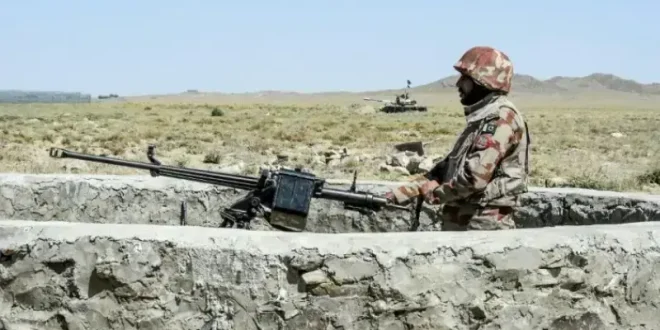
Pakistan’s security forces have recently announced a significant escalation in their counter-terrorism efforts within the restive province of Balochistan. According to statements from the Inter-Services Public Relations (ISPR), the military’s media arm, 33 alleged terrorists have been neutralized since September 21 in a series of targeted operations. These actions are part of an ongoing drive to eliminate militant threats that have seen a notable uptick in activity across the resource-rich, strategically vital region.
The ISPR’s reports detail several intelligence-based operations, including “Operation Shaban,” where security forces engaged militants identified as belonging to groups termed Fitna-al-Khawarij and Fitna-al-Hindustan. While Fitna-al-Khawarij is a designation used for the banned Tehreek-i-Taliban Pakistan (TTP), the term Fitna-al-Hindustan specifically refers to Balochistan-based militant organizations that Pakistan alleges are supported by India, underscoring a consistent narrative of external sponsorship of domestic instability. President Asif Ali Zardari lauded these operations, reiterating the resolve to thwart “India-backed terrorist elements.” This intensified campaign operates under the umbrella of Pakistan’s new national counter-terrorism vision, ‘Azm-i-Istehkam’, signaling a comprehensive approach to internal security challenges.
A Region Under Siege: Understanding Balochistan’s Complex Landscape
Strategic Significance and Enduring Conflict
Balochistan, Pakistan’s largest province by area, is a region of immense strategic importance. Its extensive coastline, proximity to the Strait of Hormuz, and vast natural resources, particularly gas and minerals, make it a focal point for regional powers. Crucially, it hosts the Gwadar Port, a cornerstone of the multi-billion dollar China-Pakistan Economic Corridor (CPEC), a flagship project of China’s Belt and Road Initiative.
Despite its potential, Balochistan has been plagued by a protracted ethno-nationalist insurgency for decades. Separatist groups, such as the Balochistan Liberation Army (BLA) and Baloch Republican Army (BRA), demand greater provincial autonomy, control over resources, and, in some cases, outright independence. They accuse the federal government of exploitation and neglect, leading to cycles of violence and counter-insurgency operations. The recent assessment by the Pakistan Institute for Conflict and Security Studies (PICSS), noting a seven percent increase in terrorist attacks in the province from July to August, highlights the persistent and escalating nature of this conflict.
The Shadow of External Interference: India Allegations
Pakistan has consistently accused India of covertly supporting Baloch separatists and other militant groups to destabilize the country, particularly to undermine CPEC. The official adoption of terms like Fitna-al-Hindustan by the ISPR and political leadership is a public formalization of this accusation, intended to internationalize the narrative of foreign interference and legitimize robust counter-insurgency measures. While India routinely denies these allegations, the accusations form a significant part of Pakistan’s strategic communication regarding its internal security challenges and contribute to the already tense bilateral relations between the nuclear-armed neighbours.
The Resurgence of TTP and the ‘Azm-i-Istehkam’ Vision
Beyond the Baloch nationalist groups, Pakistan also grapples with the resurgence of the Tehreek-i-Taliban Pakistan (TTP), or Fitna-al-Khawarij. Emboldened by the Taliban’s return to power in Afghanistan, the TTP has intensified its cross-border attacks and re-established footholds in parts of Pakistan, often exploiting the existing instability in regions like Balochistan. This dual threat necessitates a multi-faceted response.
The newly approved ‘Azm-i-Istehkam’ (Resolve for Stability) vision represents Pakistan’s latest strategic shift in its war on terror. Unlike previous kinetic-focused operations, ‘Azm-i-Istehkam’ is envisioned as a holistic, national campaign. It encompasses not just military operations but also political, economic, social, and legislative components aimed at addressing the root causes of extremism, fostering national cohesion, and ensuring sustainable peace and development. The intensified operations in Balochistan are a direct manifestation of this renewed commitment, seeking to degrade militant capabilities while paving the way for broader stabilization efforts.
Implications for Pakistan and Regional Stability
Bolstering Domestic Security and State Narrative
The success reported by the ISPR in neutralizing a significant number of militants aims to reinforce the state’s capacity to maintain law and order and protect its citizens. Such operations, particularly when coupled with strong presidential endorsements, serve to boost national morale, reassure investors, and project an image of a strong state actively confronting security threats. The narrative of “India-backed terrorists” also attempts to unify domestic opinion against perceived external aggressors, diverting attention from underlying socio-economic grievances that fuel local insurgencies.
Geopolitical Ripples: Pakistan-India Tensions
The explicit attribution of terrorism to India through terms like Fitna-al-Hindustan inevitably heightens tensions between Islamabad and New Delhi. These accusations become bargaining chips in diplomatic exchanges and further complicate any efforts towards de-escalation or normalization of relations. The ongoing proxy accusations add another layer of complexity to regional security dynamics, potentially leading to tit-for-tat actions or heightened rhetoric on international forums, impacting broader South Asian stability.
Economic Aspirations and Security Challenges
For Pakistan, security in Balochistan is inextricably linked to its economic future, especially the success of CPEC. Persistent instability and terrorist attacks on infrastructure projects or personnel deter foreign investment and impede development initiatives crucial for the province’s and the nation’s prosperity. By intensifying counter-terrorism operations, Pakistan seeks to create a more secure environment conducive to economic growth and the successful execution of CPEC projects, which are vital for its long-term economic stability.
Analysis: Beyond the Operations – A Path to Sustainable Peace?
The Dual Challenge: Internal Grievances and External Blame
While the kinetic operations demonstrate Pakistan’s resolve and capacity to confront militant groups, the deeper analysis reveals a complex interplay of factors. The constant emphasis on “India-sponsored” terrorism, while potentially rooted in intelligence assessments, also serves a strategic purpose: to delegitimize the Baloch insurgency as a purely indigenous movement for rights and resources. This narrative risks overshadowing the very real grievances of the Baloch populace concerning economic disparity, political marginalization, and human rights issues, which are often cited as primary drivers of local separatism.
A sustainable solution in Balochistan requires more than military victories. It demands a nuanced approach that acknowledges and addresses both external threats and internal alienation. The military operations might suppress militancy in the short term, but without significant political outreach, economic empowerment, and justice for historical grievances, the cycle of violence could persist.
“Azm-i-Istehkam”: A Holistic Approach or Kinetic Focus?
The ‘Azm-i-Istehkam’ vision, with its stated aim of a comprehensive approach, offers a promising framework. However, the initial focus remains heavily on kinetic operations, as evidenced by the ISPR reports. The true test of this vision will be its ability to implement the non-military components effectively. This includes fostering political dialogue with disaffected segments of the Baloch society, investing genuinely in education, healthcare, and infrastructure development that directly benefits local communities, and ensuring accountability and transparency in governance.
Simply eradicating militants without addressing the socio-economic and political vacuums they exploit could lead to the emergence of new groups or the radicalization of existing ones. For ‘Azm-i-Istehkam’ to be truly successful, it must transcend being merely a military campaign and evolve into a genuine national effort for reconciliation and inclusive development.
The Way Forward: Dialogue, Development, and De-escalation
Achieving lasting peace in Balochistan requires a multi-pronged strategy:
- Political Engagement: Initiating credible and inclusive political dialogue with all stakeholders, including alienated Baloch nationalist elements willing to lay down arms, is paramount.
- Socio-Economic Development: Ensuring equitable distribution of resources and benefits from projects like CPEC to local communities, thereby fostering a sense of ownership and reducing economic despair.
- Good Governance and Justice: Addressing issues of governance, human rights, and ensuring that justice is accessible and seen to be done for all citizens.
- Regional De-escalation: While Pakistan has valid security concerns, a sustained effort towards de-escalating tensions with neighbours, particularly India, through diplomatic channels could reduce the scope for proxy conflicts and foster regional stability.
The recent counter-terrorism operations underscore Pakistan’s commitment to securing its borders and combating militancy. Yet, the road to sustainable peace in Balochistan is long and intricate, requiring not just firepower but also political will, economic justice, and social cohesion.
“`