Dost Pakistan Journeys Tours and safaris in the North & South Pakistsn
Related Articles

“`html
Pakistan’s Crucial Diplomatic Role Amidst US-Iran Tensions: A Balancing Act for Regional Stability
Recent high-level interactions between Iran and Pakistan underscore a renewed push for strengthened bilateral ties, particularly against the backdrop of ongoing regional tensions involving the United States. Tehran’s diplomatic overtures to Islamabad emphasize shared goals of peace and security, highlighting Pakistan’s increasingly vital role as a mediator in a volatile geopolitical environment.
The Latest Diplomatic Engagements
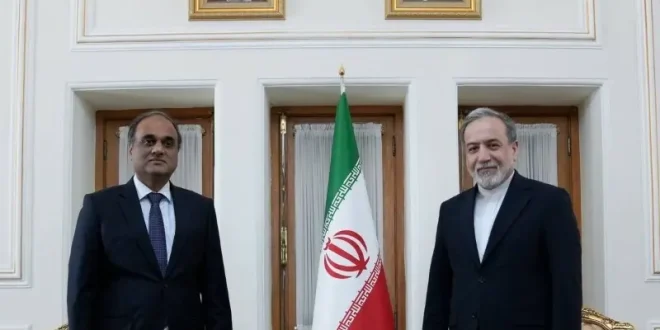
The week commenced with significant diplomatic activity. Iranian Foreign Minister Abbas Araghchi, in a meeting with Pakistan’s newly appointed ambassador to Tehran, Imran Ahmed Siddiqui, affirmed that achieving peace and security stands as a paramount objective for bolstering Iran-Pakistan relations. This discussion follows a period of intense, yet ultimately stalled, diplomatic efforts to de-escalate hostilities between the United States and Iran, where an earlier Islamabad-mediated understanding faltered over contentious issues like the Strait of Hormuz.
Further solidifying the engagements, Iranian Interior Minister Eskander Momeni arrived in Islamabad for discussions with key Pakistani leaders, including Prime Minister Shehbaz Sharif and Chief of Army Staff Field Marshal Syed Asim Munir. The focus of these talks is expected to center on the persistent US-Iran conflict, revisiting Pakistan’s potential role in future mediation attempts, especially after the collapse of previous arrangements.
These visits reflect a concerted effort by both nations to reinforce their historical bonds and expand cooperation across various sectors, even as regional security challenges and external pressures persist.
Background: A Legacy of Complex Relations and Regional Geopolitics
Pakistan and Iran share a deep-rooted history, marked by strong cultural, religious, and fraternal ties. Their 900-kilometre border, while a point of shared geography, has also presented security challenges, including cross-border militant activities that occasionally strain bilateral trust. Despite these issues, both nations have consistently expressed a desire to deepen economic cooperation, exploring avenues such as increased bilateral trade, improved connectivity between Pakistani ports (like Gwadar) and Iranian infrastructure, and the long-anticipated Iran-Pakistan (IP) gas pipeline project.
However, the pursuit of these economic ambitions is frequently hampered by external factors. The shadow of stringent US sanctions on Iran significantly complicates financial transactions and deters international investment, making large-scale projects like the IP pipeline difficult to materialize. Banking restrictions and the potential for secondary sanctions on entities dealing with Iran further constrain the scope of economic engagement.
The broader regional context is dominated by the enduring friction between the United States and Iran. This conflict, rooted in disagreements over Iran’s nuclear program, regional influence, and maritime security in vital waterways like the Strait of Hormuz, has profound implications for global energy markets and regional stability. The Strait of Hormuz, a narrow maritime choke point at the mouth of the Persian Gulf, is crucial for the global oil supply chain, making any disruption there a major international concern. Pakistan, maintaining a historically complex relationship with both the US and Iran, has positioned itself as a neutral arbiter, seeking to mitigate tensions and promote dialogue.
Impact on Pakistan: Balancing Diplomacy and National Interests
Pakistan’s active diplomatic role in the US-Iran crisis offers several strategic benefits. By hosting talks and relaying messages, Islamabad enhances its regional standing and demonstrates its commitment to fostering peace. This ‘honest broker’ approach can bolster Pakistan’s image as a responsible international actor capable of influencing complex geopolitical dynamics in South Asia and the Middle East.
However, this role also entails significant challenges. Pakistan must navigate a delicate balance, avoiding perceptions of alignment with either side while maintaining critical relationships with both the US and Iran, as well as other regional powers like Saudi Arabia. The primary motivation for Pakistan’s involvement stems from its profound interest in regional stability. An escalation of the US-Iran conflict would have devastating security and economic consequences for Pakistan, potentially exacerbating border security issues, disrupting trade routes, and impacting energy supplies.
Economically, fostering closer ties with Iran presents potential benefits, especially concerning energy security through projects like the IP gas pipeline. However, the looming threat of US sanctions and the necessity of adhering to international financial regulations, such as those imposed by the Financial Action Task Force (FATF), present formidable obstacles. Pakistan’s strategic development initiatives, including the China-Pakistan Economic Corridor (CPEC), also rely on a stable regional environment, making any conflict highly detrimental.
Analysis: Navigating a Precarious Regional Landscape
Minister Araghchi’s emphasis on “peace and security” as core objectives highlights not just bilateral aspirations but also Iran’s broader desire for regional stability, which is often jeopardized by external pressures and internal conflicts. For Pakistan, engaging with Iran on these terms is a pragmatic move to safeguard its own security and economic interests.
Pakistan’s unique position as a Muslim-majority nation with strategic ties to both the US and Iran makes it a plausible mediator. It has a vested interest in preventing wider conflict and has historically maintained channels of communication with diverse regional actors. However, the breakdown of the previous mediated understanding underscores the profound complexities and deep-seated mistrust between the US and Iran, particularly concerning critical strategic assets like the Strait of Hormuz.
Looking ahead, the path for Iran-Pakistan cooperation remains fraught with challenges. While diplomatic exchanges signal intent, translating them into concrete economic progress will require innovative solutions to circumvent sanctions and address border security concerns effectively. The long-delayed IP gas pipeline is a litmus test for the viability of ambitious joint ventures under current geopolitical constraints. Pakistan’s diplomatic skill will continue to be tested as it strives to balance its national development agenda with the intricate demands of regional peacemaking and the pressures of global power dynamics.
Ultimately, the shared objectives of peace and security, championed by Iran, resonate deeply with Pakistan’s own strategic imperatives. How successfully both nations can navigate this complex terrain, especially with the ongoing US-Iran tensions, will significantly shape the future stability and prosperity of the wider region.
“`