 Dost Pakistan Journeys Tours and safaris in the North & South Pakistsn
Related Articles

“`html
Five Terrorists Killed in KP Operations: A Deeper Look into Pakistan’s Anti-Terror Efforts
The News: Intensified Security Sweeps Across Khyber Pakhtunkhwa
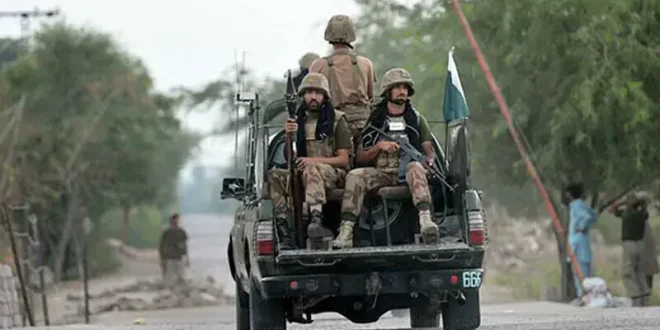
In a significant wave of anti-terrorism efforts, Pakistani security forces and law enforcement agencies have neutralized five militants across Khyber Pakhtunkhwa (KP). These coordinated intelligence-based operations (IBOs) spanned Bannu, Lower South Waziristan, and Dera Ismail Khan, signaling an intensified crackdown against militant networks.
In Bannu district, three terrorists were killed during an IBO in the Bakakhel area. This operation, launched on credible intelligence, led to a confrontation when forces raided a militant hideout. The action is part of a broader, ongoing campaign in Bannu, with expanded search operations in areas like Janikhel, Miryan, and Sarra Dargah. This push follows a recent attempted vehicle-borne bomb attack on the Miryan police station on July 15, underscoring the persistent threat in the region. Furthermore, Bannu police detained 28 suspects in a related search in Norar and Mambati Barakzai.
A major terrorist plot was successfully averted in Lower South Waziristan’s Wana. Security forces, demonstrating exceptional vigilance, tracked an explosives-laden vehicle intended for a suicide attack for three consecutive days. The vehicle, along with a motorcycle, was ultimately destroyed in the Ghwakhwa area after being moved away from populated zones to minimize civilian harm. This decisive action resulted in the killing of one terrorist and injury to five others, preventing a potential catastrophe. Interior Minister Mohsin Naqvi lauded the forces for saving countless lives.
Separately, in Dera Ismail Khan (D.I. Khan), the Counter-Terrorism Department (CTD) eliminated a highly sought-after terrorist during an IBO. Identified as Khalid alias Commander, the militant was affiliated with the banned Tehreek-i-Taliban Pakistan’s (TTP) Zakir Kochi Karwan group. Khalid was wanted for multiple offenses, including the targeted killing of CTD Constable Muhammad Ali in March 2025. Acting on technical intelligence, a CTD team engaged Khalid in the Korai area. He was killed after resisting arrest and opening fire on personnel. Authorities recovered a 9mm pistol, a hand grenade, and a smartphone, and efforts are underway to dismantle his broader support network.
Background: Pakistan’s Enduring Battle Against Militancy
Khyber Pakhtunkhwa, bordering Afghanistan, has historically been a volatile frontier and a focal point in Pakistan’s battle against militancy. The region’s rugged terrain and strategic location made it a sanctuary for various extremist groups, most notably the Tehreek-i-Taliban Pakistan (TTP), since its formation in 2007. The TTP, an umbrella organization of various Pakistani militant groups, aims to overthrow the government and establish its version of Sharia law, often resorting to brutal acts of violence against civilians and security forces.
For over two decades, Pakistan has been a frontline state in the war on terror, conducting numerous military operations like Zarb-e-Azb (2014) and Radd-ul-Fasaad (2017) to dismantle terrorist infrastructure in its tribal areas. These campaigns achieved significant success, pushing militants out of their strongholds and restoring a semblance of peace. However, the security landscape has seen a resurgence of militant activities, particularly following the Taliban’s return to power in Afghanistan in August 2021. This shift has emboldened groups like the TTP, which allegedly operate from sanctuaries across the border, leading to an uptick in cross-border attacks and internal acts of terrorism.
The recent incidents in Bannu, Wana, and D.I. Khan are not isolated events but rather indicative of the ongoing and complex security challenges Pakistan faces. They highlight the persistent threat posed by regrouped militant outfits and the continuous need for robust counter-terrorism strategies, particularly in regions prone to infiltration and radicalization.
Impact on Pakistan: Stabilizing the Frontier, Securing the Nation
The success of these operations carries significant implications for Pakistan’s internal security and broader stability. Firstly, the immediate impact is the prevention of potential devastation and loss of life. Thwarting large-scale attacks, such as the suicide plot in Wana or dismantling militant cells in Bannu, directly saves civilian lives and protects critical infrastructure, thereby reinforcing the state’s writ in vulnerable areas.
Secondly, these successful actions boost the morale of Pakistan’s security forces and law enforcement agencies, who often operate under immense pressure and risk. Each successful operation serves as a testament to their dedication and intelligence capabilities, fostering a sense of confidence among the public in their ability to protect the nation. It also underscores the crucial role of inter-agency coordination, with military intelligence, CTD, and local police working in concert.
Economically, persistent terrorism deters foreign investment and disrupts local commerce, particularly in underdeveloped regions like KP. By demonstrating control over militant elements, the government aims to create a more secure environment conducive to economic development and investment, which is vital for the long-term prosperity of these areas. This is particularly relevant for projects like the China-Pakistan Economic Corridor (CPEC), whose routes traverse parts of KP.
Regionally, Pakistan consistently emphasizes the need for Afghanistan to prevent its soil from being used by terrorists. These operations, while internal, indirectly send a message about Pakistan’s resolve to counter cross-border threats, highlighting the interconnectedness of regional security. Ultimately, maintaining peace and stability in Khyber Pakhtunkhwa is paramount for national security, preventing spillover effects into other parts of the country and safeguarding Pakistan’s vision for a progressive future.
Analysis: Strategic Imperatives and Future Challenges
The recent spate of successful anti-terrorism operations underscores several key aspects of Pakistan’s evolving counter-terrorism strategy. Foremost is the emphasis on intelligence-based operations (IBOs). All three incidents highlight a shift towards precise, actionable intelligence guiding targeted strikes, rather than large-scale, conventional military campaigns. This approach is more efficient, minimizes collateral damage, and allows forces to directly target specific individuals and networks.
The Wana operation, involving three days of surveillance on a suicide vehicle, exemplifies a commendable proactive approach. This pre-emptive neutralization of a significant threat before it could materialize is a critical strategic victory. In contrast, the expanded operations in Bannu following the Miryan police station attack demonstrate a robust reactive capability aimed at quickly dismantling militant infrastructure and restoring order post-incident. The coordinated effort between security forces and local police in Bannu also highlights the importance of integrated law enforcement and military action.
The nature of the threat is also evolving. While conventional attacks persist, the focus on vehicle-borne improvised explosive devices (VBIEDs) in Wana and targeted killings (as seen in D.I. Khan against a CTD constable) indicates terrorists are adapting their tactics. Militant groups like TTP’s Zakir Kochi Karwan continue to leverage the region’s complex socio-political landscape and rugged terrain for their operations, making precise intelligence even more crucial.
Beyond kinetic operations, the CTD’s intention to identify and take action against facilitators, financiers, and logistical support networks of the slain D.I. Khan terrorist signals a comprehensive strategy. This focus on dismantling the entire ecosystem of terrorism—its financial lifelines, ideological breeding grounds, and logistical chains—is vital for long-term success. While these operations are undoubtedly crucial, sustainable peace in KP will also require a multi-pronged approach that includes socio-economic development, strengthening local governance, and community engagement to address root causes of radicalization.
In conclusion, Pakistan’s security forces are engaged in a relentless and sophisticated battle against a resilient militant threat. The recent successes demonstrate improved intelligence gathering, inter-agency coordination, and proactive strategies. However, the continuous emergence of plots and the need for ongoing operations suggest that the road to complete peace in Khyber Pakhtunkhwa remains a sustained and challenging endeavor, demanding unwavering commitment and a holistic national strategy.
“`
