 Dost Pakistan Journeys Tours and safaris in the North & South Pakistsn
Related Articles

Red Sea Flashpoint: Houthis Strike Saudi Arabia as Middle East Conflict Deepens
The Latest Escalation
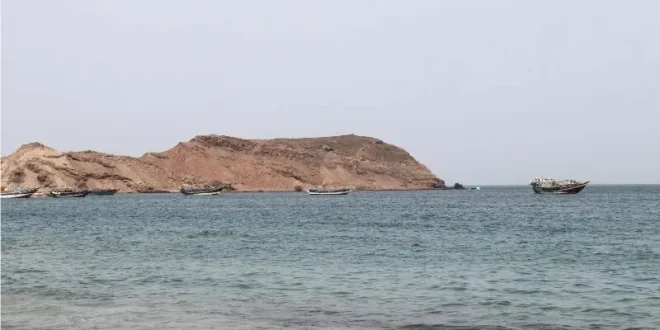
The already volatile Middle East has witnessed a significant escalation, with Houthi rebels claiming a missile strike on the southern Saudi city of Jizan. This assertion followed swift on the heels of the Houthis vowing retaliation against Saudi Arabia for recent strikes by the Saudi-led coalition in Yemen. Riyadh’s forces had targeted Houthi military sites in Hodeida and on Kamaran island, destroying what they described as threats to commercial shipping in the crucial Red Sea, with reports indicating two individuals were wounded in these retaliatory actions.
This exchange of fire is not an isolated incident but rather a direct response to the Houthis’ recent declaration of a maritime blockade against Saudi Arabia, a top global oil producer, and their subsequent attacks on Saudi vessels. One such incident, involving the NCC MASA in the Red Sea, was confirmed by Saudi state media, sustaining minor damage before resuming its course. The Saudi civil defence agency issued and swiftly lifted warnings for Jizan and Yanbu, reminiscent of past protocols during missile or drone incursions.
The opening of this new front in the Red Sea further deepens a broader regional conflict already exacerbated by recent US-Israeli strikes on Tehran and Iran’s ongoing blockade of the Strait of Hormuz. For Saudi Arabia, reliant on the Red Sea as its only alternative maritime route to the Persian Gulf, these Houthi actions represent a grave threat to its economic lifelines, especially with disruptions in Hormuz traffic.
Background: A Region on Edge
To understand the gravity of these events, it’s essential to recall the complex geopolitical landscape of the Middle East. The conflict in Yemen, ongoing since 2014, fundamentally pits the internationally recognised government, supported by a Saudi-led coalition, against the Houthi movement, which controls significant parts of the country including the capital Sana’a. This war has long been viewed as a proxy conflict between regional rivals Saudi Arabia and Iran, each supporting opposing factions to exert influence.
The Strait of Hormuz, connecting the Persian Gulf to the open ocean, and the Bab al-Mandab Strait, at the southern end of the Red Sea, are two of the world’s most critical maritime chokepoints. A substantial portion of global oil and gas shipments passes through them daily. Iran’s long-standing threats and recent actions regarding Hormuz, coupled with the Houthis’ ability to target shipping in the Red Sea, create a twin challenge to global energy security and international trade.
Adding another layer of complexity are the direct tensions between the United States and Iran. While President Trump has publicly stated his preference for talks over “major operations” against Iran, hinting at potential negotiations if Iran becomes “more serious,” the reality on the ground reflects an escalating cycle of attacks. The US justifies its strikes as efforts to prevent Iran from closing Hormuz, while Iran has responded with its own claims of targeting US assets in Bahrain, Jordan, and Kuwait, alongside an Amazon data center. This precarious balance between diplomatic overtures and military confrontation underscores the high stakes involved.
Potential Impact on Pakistan
As a key regional player with deep historical, economic, and security ties to the Gulf, Pakistan stands to be significantly affected by the deepening Middle East conflict:
- Economic Repercussions: Pakistan is a net importer of oil. Any sustained disruption to shipping in the Red Sea or the Strait of Hormuz will inevitably lead to a surge in global oil prices. This would directly translate into a higher import bill for Pakistan, exacerbating inflation, increasing pressure on its already stretched foreign exchange reserves, and potentially slowing economic growth.
- Trade Routes Disruption: Pakistan’s trade largely relies on maritime routes passing through or near the conflict zones. Increased security risks, higher insurance premiums, and potential delays could raise shipping costs, impacting Pakistan’s import-export balance and overall supply chains.
- Remittances: Millions of Pakistani expatriates work in Saudi Arabia and other Gulf Cooperation Council (GCC) countries. Escalating regional instability could threaten their employment, safety, and the crucial remittances they send home, which are a vital source of foreign exchange for Pakistan’s economy.
- Security and Diplomatic Challenges: Pakistan has historically maintained a delicate balance in its relations with both Saudi Arabia and Iran. A deepening conflict forces Islamabad into a challenging diplomatic position, requiring careful navigation to safeguard its interests without alienating either side. Regional instability could also have broader security implications, potentially feeding into extremist narratives or destabilizing forces closer to Pakistan’s borders.
- CPEC and Regional Connectivity: While the China-Pakistan Economic Corridor (CPEC) focuses on connectivity eastward and northward, broader regional instability can deter investment and undermine the long-term vision of Gwadar Port as a hub for regional trade, impacting Pakistan’s strategic economic ambitions.
Analysis: A Dangerous Expansion of Proxy Warfare
The latest Houthi strike on Saudi Arabia signifies a dangerous expansion of the regional conflict. It underscores several critical points:
- New Front in Proxy Warfare: The Houthi actions, likely facilitated or at least encouraged by Iran, effectively open a new front in the long-standing proxy war between Riyadh and Tehran. This moves the conflict beyond the direct borders of Yemen and into vital international shipping lanes, directly impacting Saudi economic interests.
- Strategic Chokepoints Under Threat: With Iran’s persistent threats to the Strait of Hormuz and now the Houthis demonstrating capability in the Red Sea, two of the world’s most critical energy chokepoints are simultaneously under direct military pressure. This creates an unprecedented level of risk for global energy markets and international trade.
- Houthi Capabilities and Intent: The ability to launch missile strikes into Saudi Arabia and target commercial shipping in the Red Sea highlights the Houthis’ evolving military capabilities and their willingness to use them to achieve strategic objectives. This also suggests a sophisticated network for intelligence and targeting.
- Trump’s Dilemma and Regional Realities: While President Trump publicly seeks de-escalation and talks with Iran, the ongoing events reveal a stark disconnect with the escalating realities on the ground. The “tipping point” for a major military response, as articulated by Trump (Iran developing a nuclear weapon), seems distinct from the ongoing, lower-level but highly destabilizing proxy conflicts and direct attacks on US interests and allies. This creates an environment of uncertainty, where regional actors may misinterpret intentions or feel emboldened.
- Risk of Miscalculation: The heightened tensions, combined with multiple actors (Saudi-led coalition, Houthis, Iran, US, Israel), significantly increase the risk of miscalculation. A single incident could quickly spiral out of control, leading to a direct military confrontation between major powers, with catastrophic consequences for the region and the global economy.
In conclusion, the claim of a Houthi missile strike on Saudi Arabia is more than just another skirmish; it is a clear indicator that the Middle East conflict is expanding in scope and geography, directly threatening vital global trade arteries. The interconnectedness of regional conflicts, from Yemen to the Persian Gulf, suggests a dangerous trajectory where a “tipping point” may be reached sooner than anticipated, regardless of diplomatic overtures. For Pakistan and other nations reliant on the stability of this region, the economic and security implications are profound and immediate.
