 Dost Pakistan Journeys Tours and safaris in the North & South Pakistsn
Related Articles

Pakistan’s Pivotal Role: Iran Minister’s Visit Amidst Escalating US-Iran Conflict
The News: A Diplomatic Lifeline Amidst Conflict
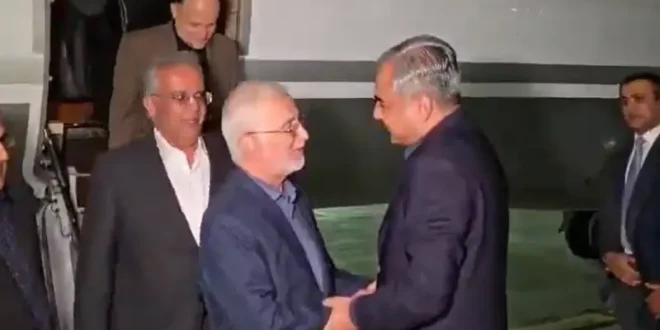
In a critical diplomatic maneuver, Iran’s Interior Minister Eskandar Momeni arrived in Islamabad, Pakistan, for an official visit. His arrival on Monday night saw him received by his Pakistani counterpart, Mohsin Naqvi, highlighting the immediate importance of the engagement. Momeni, accompanied by a high-level delegation, is slated for significant meetings with Pakistan’s Prime Minister Shehbaz Sharif and Chief of Army Staff, General Syed Asim Munir. This visit unfolds against the backdrop of a severely escalating confrontation between the United States and Iran, marked by a collapsed interim ceasefire and renewed military hostilities across the Middle East.
Pakistan’s role as a mediator has become central, particularly in efforts to salvage the “Islamabad Memorandum of Understanding” (MoU) – a peace deal initially signed between the US and Iran last month, which has now faltered. The news emerges amidst the ninth consecutive night of US strikes across Iran, targeting critical infrastructure, including a city hosting a nuclear power plant. Concurrently, Iran’s Islamic Revolutionary Guards Corps (IRGC) has retaliated with strikes in Bahrain, Jordan, and Syria, signaling a dangerous widening of the conflict. Both US President Donald Trump and Iranian President Masoud Pezeshkian have publicly declared the ceasefire “over” and termed the situation a “full-scale war,” with Tehran specifically accusing Washington of breaching the MoU. Despite the fiery rhetoric and military actions, Iranian foreign ministry spokesman Esmaeil Baqaei affirmed that diplomatic exchanges with the US, facilitated by mediators like Pakistan, are reportedly ongoing.
Background: A Region on Edge and Pakistan’s Enduring Role
The current volatility between the US and Iran is deeply rooted in decades of complex geopolitical dynamics, marked by mistrust, sanctions, and proxy conflicts. The 2015 Iran nuclear deal (JCPOA), from which the US withdrew under the Trump administration, represents a peak of diplomatic engagement followed by a sharp decline. This historical animosity often manifests in regional flashpoints, with the Strait of Hormuz serving as a perennial pressure point.
The Strait of Hormuz is not merely a waterway; it is a critical choke point for global oil and gas supply, accounting for approximately one-fifth of the world’s petroleum liquids consumption. Any disruption in this vital maritime corridor invariably sends shockwaves through international energy markets, leading to soaring oil prices and potentially a global fuel crisis – a scenario that unfolded after US and Israeli attacks on Iran on February 28, prompting Tehran’s measures to disrupt traffic in the Strait. It was this initial crisis that spurred Pakistan into active mediation.
Pakistan, sharing a border with Iran and maintaining long-standing ties with both Iran and the United States, has historically positioned itself as a diplomatic bridge. Its strategic location and unique relationships grant it a degree of leverage and trust, making it a credible, albeit challenged, interlocutor. The Islamabad MoU, a 14-point interim peace deal signed in June, represented a significant, albeit fragile, breakthrough. It promised to end the war and reopen the Strait of Hormuz, offering a brief lull in hostilities. However, the rapid unraveling of this agreement underscores the profound challenges and deep-seated animosities that continue to plague US-Iran relations, with both sides trading accusations of non-compliance.
Impact on Pakistan: Navigating Regional Instability
For Pakistan, the renewed escalation between the US and Iran carries significant and multifaceted implications. Geographically, as a neighbor to Iran, Pakistan is directly vulnerable to the spillover effects of regional instability. A prolonged conflict risks exacerbating existing security challenges along its western borders, potentially leading to refugee flows, increased cross-border militancy, and disruptions to vital trade routes.
Economically, the impact is equally profound. Global oil price hikes, a direct consequence of hostilities in the Strait of Hormuz, severely strain Pakistan’s import-dependent economy. Surging energy costs inflate import bills, worsen trade deficits, and fuel domestic inflation, directly impacting the common citizen. Beyond energy, regional trade disruptions and reduced foreign investment due to heightened risk perceptions further impede Pakistan’s economic recovery and growth.
Diplomatically, Pakistan’s role as a mediator is a delicate balancing act. While successful mediation efforts enhance Pakistan’s international standing and strategic importance, failure could strain its relationships with either or both sides. Pakistan must carefully navigate its long-standing strategic alliance with the US and its crucial neighborly relations with Iran. This role, while high-stakes, also presents an opportunity for Pakistan to project itself as a responsible actor committed to regional peace and stability, garnering goodwill and diplomatic capital on the global stage.
Analysis: Diplomacy’s Faint Pulse in the Shadow of War
Iranian Interior Minister Eskandar Momeni’s visit to Pakistan, especially amidst declarations of a “full-scale war” and ongoing military strikes, is a telling indicator: even when rhetoric is at its most bellicose, diplomatic channels remain vital. His meeting with Pakistan’s civilian and military leadership signifies Iran’s continued reliance on Islamabad as a credible and active interlocutor. It suggests that despite the public condemnation of the failed Islamabad MoU, both Tehran and Washington still perceive value in maintaining indirect lines of communication, recognizing the catastrophic potential of an uncontained conflict.
The challenge for Pakistan, however, is monumental. The deep-seated mistrust, the conflicting narratives regarding who breached the MoU, and the continuous military actions create an exceptionally complex environment for mediation. What new proposals can Pakistan bring to the table? What assurances can it offer? The military leadership’s involvement in the discussions suggests that the focus might not solely be on reviving the exact terms of the collapsed ceasefire, but perhaps on establishing a new framework for de-escalation, confidence-building measures, or even identifying fresh parameters for future, more robust peace talks.
The broader implications of the escalating US-Iran conflict extend far beyond the immediate region. A prolonged confrontation jeopardizes global energy security, disrupts international shipping, and risks drawing in other regional and international actors, potentially triggering a wider conflagration with devastating humanitarian and economic consequences. For Pakistan, a stable and peaceful Middle East is not merely a diplomatic aspiration; it is a fundamental strategic imperative for its own security and economic well-being.
While the immediate prospects for a comprehensive peace deal appear dim given the current intensity of the conflict, Momeni’s visit serves as a crucial reminder that the pursuit of diplomacy, however faint, persists. It underscores Pakistan’s enduring, albeit challenging, role as a peace broker in a volatile region. The hope lies in Pakistan’s ability to leverage its unique position to prevent further escalation, foster an environment conducive to future dialogue, and ultimately contribute to a desperately needed return to peace in the Middle East. The global community watches closely, aware that the stakes – for regional stability, global energy markets, and international peace – could not be higher.
