 Dost Pakistan Journeys Tours and safaris in the North & South Pakistsn

“`html
The Pink Enigma of Muzaffargarh: Pakistan’s New Flamingo Breeding Grounds?
An extraordinary wildlife discovery in Pakistan challenges conventional understanding of bird migration and elevates conservation urgency.
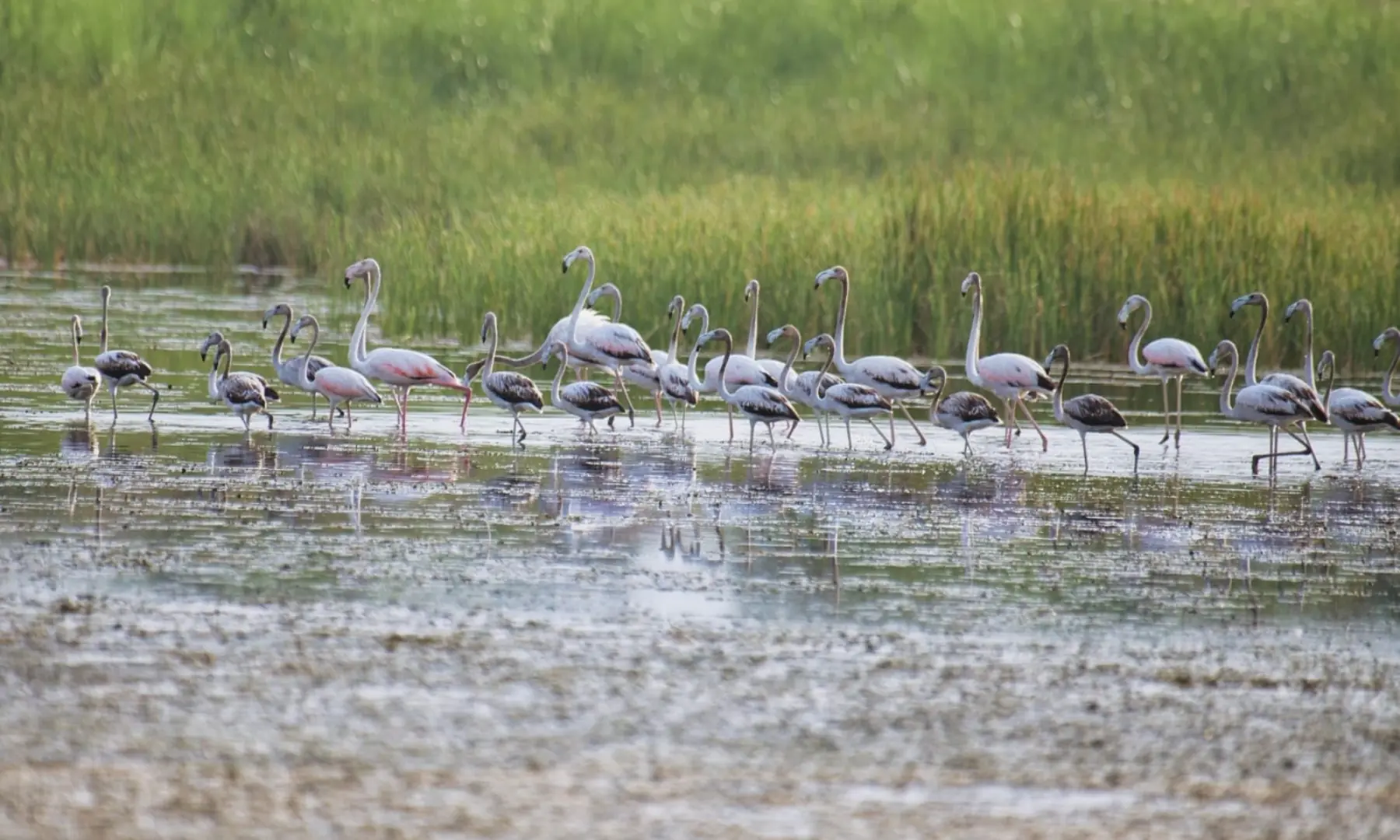
A flock of greater flamingos wade through the brackish waters of Muzaffargarh. — Photo by Syed Najam ul Hassan
The News: An Unexpected Sighting in South Punjab
A routine wildlife survey in the Rangla Wetland Complex, half an hour’s drive from Muzaffargarh in South Punjab, recently unveiled a remarkable and perplexing sight: a flock of 43 greater flamingos, including a significant number of sub-adults and juveniles, some estimated to be as young as six months old. This mid-July discovery, far from the typical migratory season and locale for such young birds, has sent ripples of excitement and hypothesis through Pakistan’s wildlife conservation community. The presence of these “pink chicks” with their parents, still sporting their pale grayish-brown down, strongly suggests a phenomenal shift in their ecological behavior – a potential signal of local breeding.
The Rangla Wetland Complex itself, a vital yet fragile lowland ecosystem of 18 interlinked saline and freshwater lakes, river floodplains, and marshes, lies where the mighty Indus River slows its pace, becoming an indispensable sanctuary for diverse avian life. While these wetlands are known to host wintering waterfowls and various migrants, the sight of juvenile greater flamingos in high summer presents a compelling mystery that challenges our long-held understanding of the species’ presence in the region.
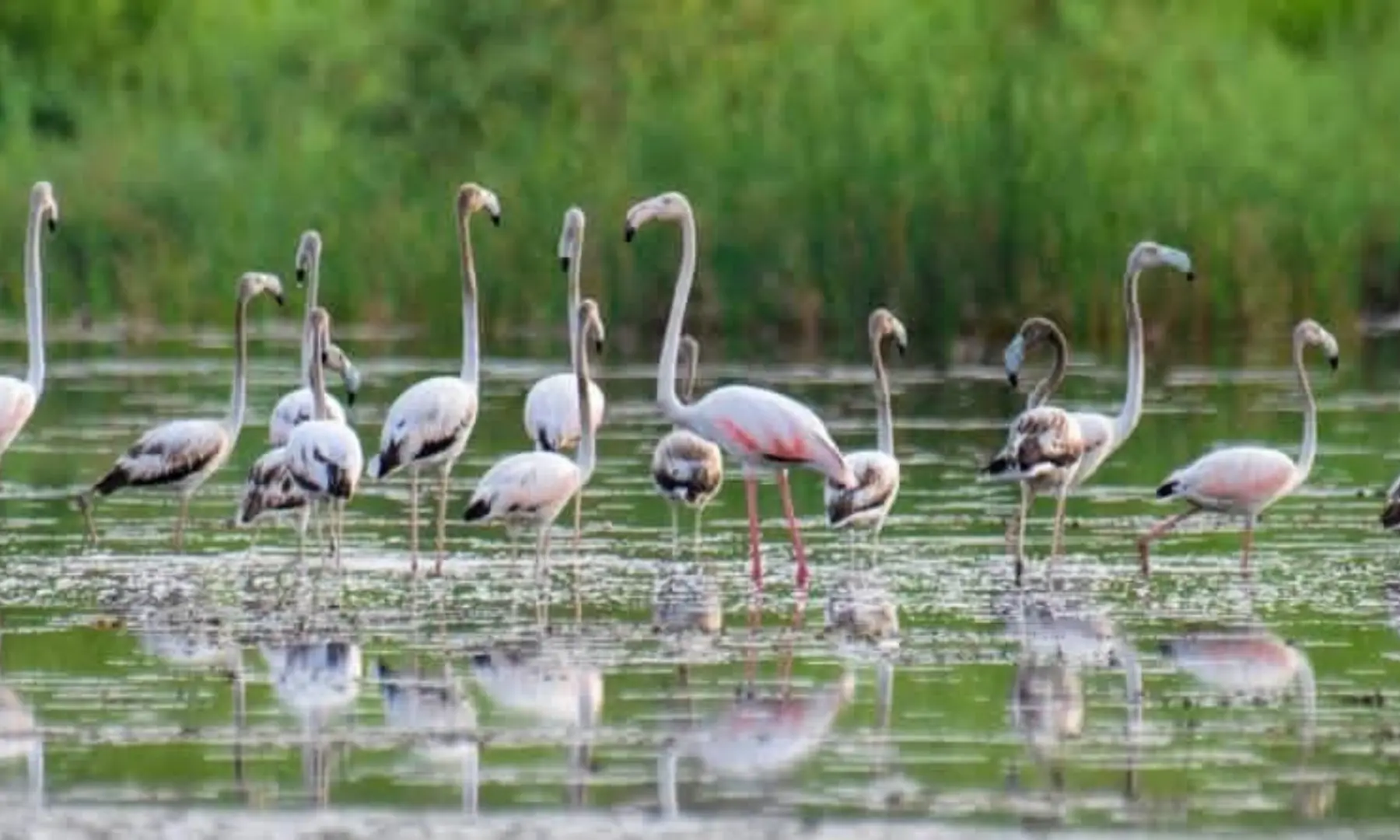
Flamingo chicks stand close by their parents in the Muzaffargarh wetlands. — Photo by Syed Najam ul Hassan
Background: The Migratory Puzzle of Greater Flamingos
Greater flamingos (Phoenicopterus roseus) are renowned for their spectacular migratory journeys. Traditionally, these elegant pink birds are annual winter visitors to Pakistan’s southern coastal mudflats and inland wetlands, arriving in late autumn. Their epic journey spans over 4,500 kilometers, traversing the “Indus Flyway” from their breeding grounds in Central Asia and the Siberian tundra, enduring the formidable Karakoram, Hindukush, and Sulaiman ranges. As spring beckons, they embark on the equally arduous return flight north.
A critical aspect of this migration is the maturity required. Young flamingos typically need three to five months to fully develop their flight feathers and acquire the strength and skill necessary for such demanding long-distance travel. The biological implausibility of six-month-old chicks completing a gruelling trans-continental migration is what makes the Muzaffargarh sighting so extraordinary. This observation has led experts to converge on a groundbreaking hypothesis: a resident or semi-resident population of greater flamingos has established a secret, undisturbed breeding colony somewhere within Pakistan.
Flamingos are highly selective and colonial nesters, requiring extremely specific conditions for successful breeding. These typically include remote mudflats or inaccessible saline islands surrounded by shallow water, offering protection from land predators and human intrusion. Such pristine environments are essential for them to build their characteristic conical mud nests and incubate their eggs. Once hatched, the young grow and learn to fly, after which the flock often undertakes localized movements driven by their specialized dietary needs. The Muzaffargarh wetland complex, rich in microscopic organisms, aquatic insects, and crucially, Artemia (brine shrimp), provides an abundant foraging ground, making it an ideal stopover for a nomadic local flock.
Historically, Pakistan’s wetland ecosystems, particularly in South Punjab, have faced immense anthropogenic pressures. Uncontrolled hunting, opportunistic egg collection, agricultural run-off, and encroaching human settlements have severely degraded the fragile littoral zones – the critical shallow margins where these lakes meet land. This long history of environmental stress makes the emergence of a potential new breeding ground a testament to nature’s resilience, yet also underscores its vulnerability.
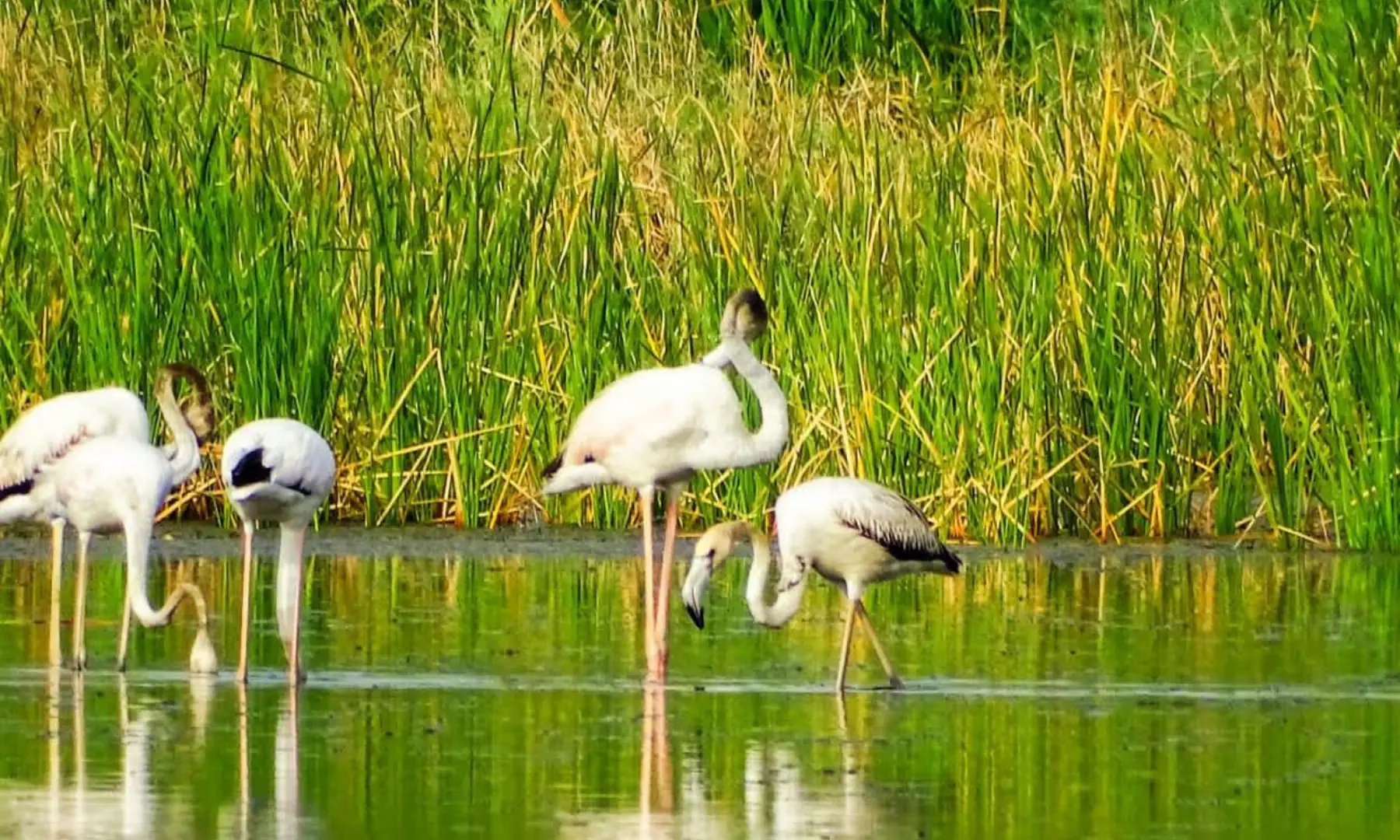
Flamingos use their long beaks to filter food from the water. — Photo by Syed Najam ul Hassan
Impact on Pakistan: A Beacon for Conservation, A Call for Action
The discovery of potential local breeding by greater flamingos represents a monumental moment for wildlife conservation in Pakistan. If confirmed, it would significantly elevate the country’s biodiversity profile, adding a new dimension to its rich avian heritage. It not only signifies the ecological health and resilience of the Rangla Wetland Complex but also highlights the potential existence of other pristine, undiscovered habitats crucial for sustaining such sensitive species.
This finding transforms Muzaffargarh and potentially other undisclosed locations into critical conservation hotspots. For Pakistan, a nation grappling with the impacts of climate change and habitat degradation, a resident flamingo population could become a powerful symbol for wetland protection and sustainable ecological management. It presents an opportunity to boost ecotourism and engage local communities in conservation efforts, fostering a sense of ownership over these natural treasures.
However, the revelation also brings a heightened sense of urgency. These hypothesized breeding grounds, by their very nature, must be isolated and undisturbed. Their exposure, even for scientific study, carries the risk of increased human disturbance, poaching, or developmental encroachment. Therefore, the immediate priority for provincial wildlife departments and research institutions must be to move beyond simple visual surveys and adopt advanced conservation technologies.
Ecologists are advocating for a scientific capture-and-release program, utilizing lightweight leg rings and solar-powered satellite transmitters on a select number of juveniles. This cutting-edge approach would provide real-time telemetry data, allowing researchers to precisely track the movement patterns of the flamingos as they navigate between Punjab’s riverine systems and saline basins. Ultimately, this data could lead scientists directly to their hidden, undisturbed breeding grounds. Once identified, these critical nesting sites must be swiftly designated as protected sanctuaries, shielded by law and vigilant management from any form of human interference.
Protecting these “gray and chonky chicks,” as the article affectionately calls them, is not just about safeguarding a species; it’s about preserving an entire fragile ecosystem. The existence of a resident flamingo population underscores the vital importance of Pakistan’s wetland biodiversity and the need for robust, technology-driven conservation strategies to ensure its survival.
Analysis: Beyond the Pink Plumage – Climate, Conservation, and Future Pathways
The Muzaffargarh flamingo discovery is far more than an exciting bird-watching expedition; it’s a potent signal with multi-faceted implications. Firstly, it challenges our fundamental understanding of avian behavior and established migratory routes on the Indus Flyway. Could this be an adaptation to changing environmental conditions, perhaps a response to evolving climate patterns that make traditional breeding grounds less hospitable or new areas more suitable? The idea of “a climate, and a map that’s shifting under them” resonates deeply, suggesting that global warming might be influencing species distribution and reproductive strategies.
Secondly, it underscores the critical importance of localized, deep ecological research. While satellite imagery and broad surveys offer macro-insights, on-the-ground observations by dedicated researchers remain invaluable for uncovering hidden ecological phenomena. This discovery highlights the gaps in our current knowledge and the vast potential for new findings within Pakistan’s diverse landscapes.
The call for advanced conservation technology, specifically satellite tagging, is crucial. Such an initiative would position Pakistan at the forefront of modern wildlife tracking in the region, providing invaluable data not just for flamingo conservation but for understanding broader avian migration dynamics across South Asia. The data collected could inform national and international conservation policies, strengthening cross-border cooperation for migratory species.
Finally, this event serves as a powerful reminder that nature is not merely a collection of picturesque landscapes but a dynamic, interconnected “home” that requires diligent guardianship. The unexpected return of these magnificent birds to breed in Pakistan’s plains offers a glimmer of hope that, despite centuries of human pressure, pristine pockets of nature can still thrive. It reinforces the ethos that conservation is not just about preventing loss, but about enabling life to flourish in new, unexpected ways. By protecting their hidden habitats, Pakistan can safeguard not only the future of its greater flamingos but also the ecological integrity of its invaluable wetland ecosystems for generations to come.
Header image: A pair of flamingos drink water by a lake in South Punjab. — photo by Kashif Minhas of Multan
“`
