 Dost Pakistan Journeys Tours and safaris in the North & South Pakistsn
Pakistan’s Governance Divide: Naqvi’s Call for New Provinces Sparks Heated Debate
The Catalyst: Interior Minister Mohsin Naqvi’s Call for Administrative Overhaul
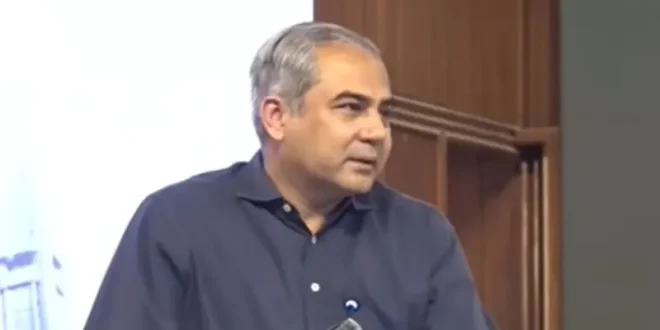
Pakistan’s political arena is once again ablaze with a contentious debate, ignited by Interior Minister Mohsin Naqvi’s recent proposal for a sweeping overhaul of the nation’s governance structure and the potential creation of new administrative units or provinces. Speaking at the Pakistan Economic Summit in Islamabad, Naqvi delivered a stark assessment, declaring the current system as “collapsed” and fundamentally incapable of addressing the country’s myriad challenges.
The Minister advocated for an urgent consensus among all political parties to implement structural reforms, including the establishment of new provinces. He argued that such changes are essential to bring public facilities closer to citizens, foster new leadership, and fulfill the aspirations of Pakistan’s youth for justice, meritocracy, and employment opportunities. He cautioned that without these fundamental shifts, the same unresolved debates would persist a decade from now.
Naqvi’s provocative statements have predictably drawn strong and diverse reactions:
- The **Pakistan Peoples Party (PPP)**, through its Secretary General Nayyar Bokhari, acknowledged the discussion’s importance but firmly underscored the necessity of adhering to constitutional procedures. This would entail securing a two-thirds majority in the relevant provincial assemblies, followed by similar approval in both the National Assembly and the Senate. The party has referred the matter to its Central Executive Committee (CEC) and called for the federal government to initiate the process constitutionally within Punjab first.
- Sindh Chief Minister **Syed Murad Ali Shah** unequivocally rejected the proposal, dismissing it as a “stereotype” that the people of Sindh would never accept. He questioned the specific “system” Naqvi referred to, highlighting Pakistan’s multi-party governmental landscape.
- The **Lahore High Court Bar Association (LHCBA)** issued a joint statement condemning the minister’s remarks as unconstitutional. The association criticized those responsible for the current systemic failures for now proposing a “new system,” emphasizing that the nation’s progress hinges on strict adherence to the Constitution, the rule of law, and an independent judiciary. They also drew attention to the timing, linking the debate to the prolonged detention of political leaders and workers.
- **Sindhi nationalist groups**, notably Awami Tehreek, went a step further by demanding Naqvi’s immediate resignation. They accused him of acting as an “undeclared spokesperson for the establishment,” promoting an agenda to divide Sindh under the guise of creating new provinces.
Deep Roots: A History of Administrative Reform and Identity Politics in Pakistan
The discourse surrounding new administrative units is by no means a novel concept in Pakistan; it taps into decades-old grievances and proposals aimed at decentralization and improving governance. For a long time, the nation has grappled with challenges related to administrative efficiency, equitable resource distribution, and the aspiration to bring public services closer to its diverse populace.
Persistent Demands for Provincial Reorganization
Calls for creating new provinces, particularly a Seraiki-speaking province in Southern Punjab, and the restoration of the Bahawalpur province, have been a consistent feature of Pakistan’s political landscape. These demands often originate from perceptions of economic marginalization, underdevelopment, and a lack of political representation within larger provincial entities. However, such proposals inevitably face strong opposition rooted in provincial identity, historical boundaries, and fears of ethnic or linguistic fragmentation. The province of Sindh, in particular, has historically shown immense sensitivity to any suggestion of division, driven by strong nationalist sentiments protecting its territorial integrity.
The Constitutional Maze of Article 239
Pakistan’s Constitution, specifically Article 239, lays out an exceptionally rigorous and complex procedure for altering provincial boundaries or establishing new provinces. It mandates approval by a two-thirds majority vote in the *relevant* provincial assembly, followed by similar supermajorities in both the National Assembly and the Senate. This high constitutional bar was intentionally set to ensure that such fundamental changes to the federal structure are only undertaken with broad political consensus and democratic legitimacy, making executive orders or simple parliamentary majorities insufficient for such a monumental task.
A Shifting Political Landscape and the ‘Establishment’
Mohsin Naqvi’s current position as Interior Minister, following his tenure as caretaker Chief Minister of Punjab, imbues his statements with significant weight and scrutiny. His remarks emerge at a juncture of profound political instability, a fragile economy, and the aftermath of a general election that has left many political questions unresolved. In such an environment, any suggestion of fundamental structural change is bound to be interpreted through the lens of political maneuvering and the perceived influence of non-elected power centers, often referred to as “the establishment” in Pakistani political discourse. This historical context fuels suspicions that such proposals might serve agendas beyond purely administrative efficiency.
Ripple Effects: Potential Impacts on Pakistan’s Polity and Social Cohesion
Minister Naqvi’s proposal, though framed as a remedy for governance shortcomings, carries substantial implications for Pakistan’s already intricate political and social fabric.
Heightened Political Polarization and Fragmentation
The debate is poised to deepen existing political divisions, especially along provincial, ethnic, and linguistic lines. While proponents might envision new provinces as a pathway to improved governance and more equitable resource distribution, opponents perceive it as a grave threat to provincial autonomy and historical identity, potentially leading to greater fragmentation rather than unity. This can exacerbate existing tensions and create new fault lines.
Constitutional and Federalism Debates Reignited
The discussion will inevitably reignite critical constitutional debates surrounding federalism, provincial rights, and the delicate balance of power within the federation. The rigorous constitutional amendment process, as highlighted by the PPP, underscores the formidable legal and political hurdles involved, making any swift or unilateral implementation highly improbable and likely to be met with legal challenges.
Public Discourse and Redefining National Identity
Beyond the corridors of power, the proposal will undoubtedly spark extensive public discourse across the nation. Citizens will be compelled to weigh the theoretical merits of administrative efficiency against deeply held concerns over regional identity, ethnic representation, and the potential redrawing of their homeland’s map. This could lead to a re-evaluation of national identity in the context of sub-national aspirations and regional loyalties.
Strains on Governmental Alliances
The divergent reactions from various political parties, including key coalition partners or influential opposition groups like the PPP, could strain existing governmental alliances and cooperation mechanisms. Disagreements on such fundamental, identity-laden issues can significantly divert focus and resources from urgent economic stabilization, security challenges, and social development imperatives.
Exacerbation of Ethnic and Regional Tensions
In provinces like Sindh, where the mere suggestion of division has historically fueled intense resistance from nationalist elements, the debate risks exacerbating pre-existing ethnic and regional tensions. Accusations of external agendas or “establishment” involvement, common in Pakistani politics, further complicate any efforts to find common ground or build consensus, potentially leading to unrest.
Beyond the Rhetoric: Analyzing Naqvi’s Gambit and the Path Forward
Mohsin Naqvi’s intervention, delivered from the influential platform of the Interior Ministry, transcends a casual observation; it represents a significant political statement that warrants deeper analysis regarding its motivations, feasibility, and broader implications for Pakistan.
Motivations and the Shadow of the ‘Establishment’
The timing and nature of Naqvi’s remarks immediately raise questions about the underlying motivations. Is this a genuine, long-term vision for administrative reform aimed at improving citizen lives, or a politically calculated move designed to test waters or serve a particular agenda? Given his recent background as a former caretaker chief minister and now a key federal minister in a new political setup, his words are often interpreted through the prism of Pakistan’s powerful non-elected institutions. The accusation by Sindhi nationalists that Naqvi acts as an “undeclared spokesperson for the establishment” in promoting this agenda is a familiar and potent narrative in Pakistani politics, suggesting a potential top-down push for reorganization that may not organically originate from broad political consensus.
Feasibility vs. Desirability: The Constitutional Hurdle
While the desirability of bringing governance closer to the people is a universally accepted principle, the practical feasibility of creating new provinces via the constitutional route is incredibly challenging. The stringent requirement of a two-thirds majority across multiple legislative bodies necessitates an unprecedented level of political unity and compromise on a deeply contentious issue. Historically, such consensus has proven elusive in Pakistan, making the current proposal appear more aspirational than immediately actionable without significant, almost improbable, political capital and will.
Reforms Beyond Redrawing Maps: The Deeper Issues
The core issue Naqvi identifies—a “collapsed” governance system—is an undeniable reality in Pakistan. However, the proposed solution of merely creating new administrative units might be a superficial remedy to deeper systemic flaws. Effective governance often hinges more on genuine devolution of power to local governments, comprehensive bureaucratic reforms, improved resource management, accountability mechanisms, and combating rampant corruption, rather than simply redrawing administrative boundaries. Without addressing these underlying institutional weaknesses, merely adding more administrative layers may not yield the desired improvements in service delivery, justice, or economic development.
Provincial Autonomy and Identity Politics: A Volatile Mix
The strong opposition from Sindh’s Chief Minister and various nationalist groups powerfully underscores the profound link between provincial identity and administrative boundaries in Pakistan. For many, particularly in Sindh, any discussion of territorial division is perceived as an existential threat to their historical and cultural sovereignty, fueling fears of marginalization and political disenfranchisement. This makes the issue a highly sensitive and volatile one, where pragmatic administrative arguments often clash with powerful sentiments of identity, self-determination, and historical narratives.
A Distraction or a Necessary Conversation?
The timing of Naqvi’s statement, amidst a severe economic crisis, ongoing political uncertainty, and heightened societal tensions, raises a critical question: Does this debate serve as a necessary, albeit difficult, conversation about long-term reform, or does it inadvertently act as a distraction from more immediate and pressing national challenges? While structural reforms are undoubtedly crucial for Pakistan’s long-term stability and prosperity, introducing such a divisive agenda at this particular juncture could divert valuable political capital and public attention from the urgent need for economic stabilization, social cohesion, and institutional strengthening.
In conclusion, Mohsin Naqvi’s call for a governance overhaul and the creation of new provinces has undeniably stirred a critical, albeit deeply divisive, national conversation. While the aspiration for improved governance and citizen welfare is laudable, the path forward is fraught with constitutional complexities, deep-seated political resistance, and profound concerns over provincial autonomy and identity. The enduring challenge for Pakistan’s leadership lies in moving beyond rhetoric to foster a genuine national dialogue that prioritizes sustainable, inclusive, and constitutionally viable solutions for its persistent governance crisis.
