 Dost Pakistan Journeys Tours and safaris in the North & South Pakistsn
Related Articles

“`html
Pakistan’s Peace Initiative Hailed by UN: A Call for Proactive Diplomacy Amid Global Crises
The News: A Renewed Focus on Diplomacy
In a critical juncture of global affairs, marked by intensifying conflicts and geopolitical instability, United Nations Secretary-General Antonio Guterres has lauded Pakistan’s significant diplomatic stride at the UN Security Council (UNSC). His commendation centers on Pakistan’s Resolution 2788 (2025), a groundbreaking initiative aimed at strengthening the mechanisms for the peaceful settlement of disputes and championing preventative diplomacy.
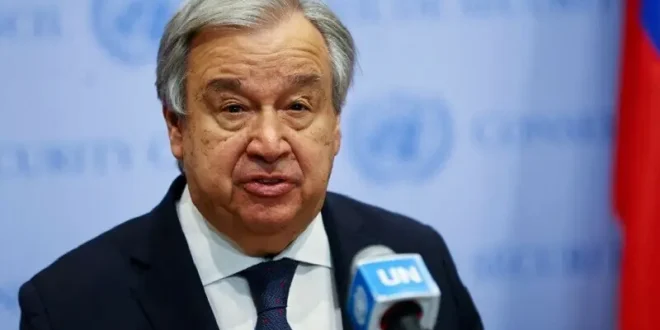
Speaking at an UNSC open debate, Secretary-General Guterres underscored the timely relevance of this resolution, which Pakistan successfully steered to unanimous adoption during its UNSC presidency last year. The resolution advocates for a robust application of diplomatic tools enshrined in the UN Charter, such as negotiation, mediation, conciliation, arbitration, and judicial settlement, as essential instruments to avert conflict escalation.
Guterres’ address painted a stark picture of current international dynamics, warning that military interventions alone cannot secure lasting peace, especially as the Middle East grapples with an unprecedented widening circle of confrontation. He passionately urged for restraint, the safeguarding of civilians, and a renewed global commitment to diplomacy, specifically acknowledging Pakistan’s “mediation” efforts in the region for their role in de-escalating tensions and fostering dialogue. Pakistan’s permanent representative to the UN, Ambassador Asim Iftikhar Ahmad, welcomed these remarks, affirming the resolution’s potential to reinforce both dispute settlement mechanisms and the core tenets of the UN Charter itself.
Background: The UN Charter, Chapter VI, and a World in Turmoil
The essence of Pakistan’s Resolution 2788 is deeply rooted in Chapter VI of the UN Charter, which outlines the “Pacific Settlement of Disputes.” This foundational chapter empowers the Security Council to proactively engage in resolving disputes or situations that threaten international peace, primarily through non-coercive, diplomatic means. It stands in contrast to Chapter VII, which deals with more forceful actions in response to direct threats or breaches of peace. Resolution 2788 seeks to revitalize this preventative aspect of the Charter, emphasizing that diplomacy should be the first line of defense, not merely a last resort.
The contemporary global landscape renders this initiative particularly salient. The persistent Israel-Hamas conflict has rippled outwards, exacerbating regional instability and impacting critical global arteries like the Strait of Hormuz and Bab al-Mandab. Beyond this immediate crisis, numerous unresolved disputes and emerging geopolitical challenges underscore the limitations of a reactive, crisis-management approach. The human and economic costs of these conflicts highlight an urgent need to pivot towards sustained conflict prevention through diplomatic means.
The UNSC, often constrained by the diverse national interests of its member states, particularly its permanent members’ veto power, frequently finds itself in a reactive posture. Ambassador Ahmad’s observation regarding the “delayed, selective and inconsistent use” of existing dispute resolution mechanisms directly addresses this systemic challenge. Resolution 2788 is thus a deliberate effort to re-inject a proactive, preventative ethos into the Council’s operations, advocating for diplomacy as a continuous process rather than an emergency measure.
Impact on Pakistan: Elevated Diplomatic Stature and a Consistent Narrative
The UN Secretary-General’s explicit praise for Pakistan’s diplomatic leadership and its Resolution 2788 significantly bolsters Islamabad’s standing on the international stage. By spearheading an initiative focused on peaceful settlement of disputes and mediation, Pakistan reinforces its image as a responsible global actor committed to multilateralism and international peace. This narrative helps to position Pakistan beyond purely regional security concerns, highlighting its constructive contributions to broader global governance.
Furthermore, Guterres’ direct acknowledgement of Pakistan’s active “mediation” efforts in West Asia – specifically its role in fostering dialogue between Iran and the United States, as cited by Ambassador Ahmad – provides concrete validation of its foreign policy. This demonstrates a clear alignment between Pakistan’s advocacy for preventative diplomacy at the UN and its practical engagement in complex regional dynamics. Such endorsements can enhance Pakistan’s credibility as a neutral and effective facilitator, potentially expanding its role in future peace-building initiatives.
This international recognition also has positive domestic implications, reinforcing the legitimacy and strategic direction of Pakistan’s foreign policy. It underscores the value of diplomatic engagement in safeguarding national interests and promoting regional stability, contributing to national pride and projecting a favorable image globally.
Analysis: The Promise and Perils of Proactive Diplomacy
Resolution 2788 transcends mere procedural adjustment; it serves as a powerful affirmation of diplomacy’s indispensable role in global governance. In an era where military interventions often yield prolonged instability and humanitarian disasters, the call for proactive, preventative diplomacy is not only ethically sound but also profoundly pragmatic. The escalating costs of inaction or reactive military responses, both in human suffering and broader geopolitical destabilization, underscore the urgent necessity of this paradigm shift.
However, the journey from adopting such a resolution to realizing its full impact is fraught with challenges. Despite unanimous adoption, the effectiveness of 2788 ultimately hinges on the sustained political will of UN member states, particularly the permanent members of the UNSC, whose national interests and veto powers can often impede early intervention. Furthermore, the principles of national sovereignty, while fundamental, can at times be invoked to resist external diplomatic engagement until disputes have already spiraled into full-blown crises. Effective mediation and conflict prevention also demand significant and consistent resource allocation – financial, diplomatic, and human – from the international community.
Ambassador Ahmad’s poignant reflection – “History documents the wars that broke out. It rarely records the war that did not begin because a channel remained open, a mediator persisted, a leader exercised restraint or an institution acted in time” – perfectly encapsulates the often-unseen yet vital successes of preventative diplomacy. The true legacy of Resolution 2788 will not be measured solely by its unanimous passage, but by the consistent commitment of nations to implement its principles, prioritizing diplomatic solutions before conflicts erupt. Pakistan’s initiative offers a beacon of hope for a more proactive and peaceful approach to international relations, provided that the global community collectively embraces and enacts this renewed commitment to diplomacy.
“`
