Dost Pakistan Journeys Tours and safaris in the North & South Pakistsn
Related Articles


“`html
AJK’s Standoff: Unpacking the State’s Crackdown on JAAC and the Fight for Stability
The recent statements by Azad Jammu and Kashmir (AJK) Home Secretary Chaudhry Guftar Hussain have brought into sharp focus the escalating tensions between the state and the proscribed Joint Awami Action Committee (JAAC). As AJK braces for general elections, the government’s strong condemnation of JAAC’s activities, coupled with recent deadly clashes, underscores a critical juncture for the region’s stability and its intricate relationship with Pakistan.
The News: State Accusations and Escalating Conflict
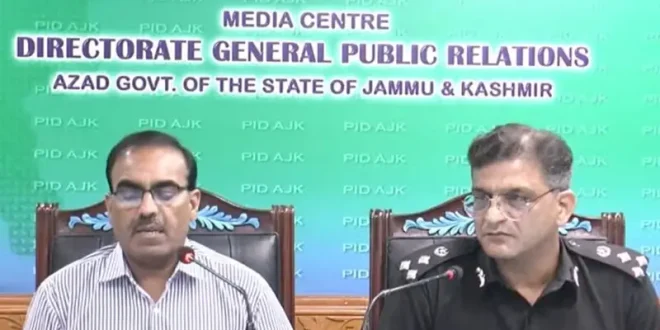
In a recent press conference, AJK Home Secretary Chaudhry Guftar Hussain laid bare the state’s severe allegations against the JAAC. He accused the organization of orchestrating “coordinated campaigns” on social media, propagating “baseless claims and propaganda” to incite public dissent. Hussain asserted that JAAC leaders had abandoned their commitments, resorting to using women and children as “human shields” during protests—a move he described as both unethical and violative of “Kashmiri values.”
The Home Secretary detailed a range of disruptive actions attributed to JAAC: promoting anti-state narratives, antagonizing the Pakistan Army, attempting to damage the historical relationship between Pakistan and AJK, blocking crucial roads, and disrupting daily life. He firmly stated that JAAC’s true objective was not to protect rights but to undermine AJK’s peace, economy, and law and order. The state, he vowed, would continue to take necessary measures to ensure safety and stability.
His remarks were reinforced by AJK police spokesperson Irfan Masood Kashfi, who affirmed the police’s commitment to protecting lives and property. Kashfi confirmed ongoing operations to clear road blockades, particularly following deadly clashes in Poonch division that resulted in the martyrdom of two law enforcers and the loss of seven JAAC activists. These incidents followed earlier warnings from the Home Secretary about dealing with “blackmailers” with an “iron hand.” Amidst this unrest, Hussain reaffirmed that AJK’s general elections would proceed as scheduled on July 27.
Background: AJK’s Political Landscape and Rising Grievances
Azad Jammu and Kashmir is a self-governing territory administered by Pakistan, holding significant strategic and emotional importance for the nation. Its unique political status and close ties with Pakistan are foundational to its identity.
The Joint Awami Action Committee (JAAC) emerged as a significant force, channeling public grievances that have simmered for some time. While the immediate trigger for its proscription on June 5th was a call for a strike, the underlying issues often revolve around socio-economic concerns. These typically include demands for reduced electricity tariffs, lower flour prices, and broader economic justice – echoing sentiments of hardship prevalent in many regions grappling with inflation and cost-of-living crises. The committee gained momentum by mobilizing people around these tangible issues, often utilizing protests and long marches as a means of pressuring the government.
The current unrest is not an isolated incident but rather a culmination of prolonged agitation, which reportedly caused immense hardship to the people of Poonch, according to a former core member of JAAC. The decision to declare JAAC a proscribed organization and subsequent crackdown indicates the government’s perception of the movement transitioning from legitimate protest to a challenge to state authority, especially with the upcoming general elections adding another layer of political sensitivity.
Impact on Pakistan: National Security and Economic Stability
The events unfolding in Azad Jammu and Kashmir carry significant implications for Pakistan, extending beyond regional law and order to national security and economic stability.
- National Security Concerns: Accusations by the AJK Home Secretary regarding JAAC’s “anti-state narratives” and attempts to “antagonize the Pakistan Army” are deeply serious. Given AJK’s proximity to the Line of Control (LoC) and its sensitive geopolitical position, any perception of internal instability or anti-state sentiment could be exploited by external adversaries. The integrity of the state and its security apparatus is paramount, and challenges to this can have far-reaching consequences for regional stability.
- Economic Repercussions: The blocking of roads and disruption of daily life directly impact AJK’s fragile economy. Trade, tourism, and local businesses suffer, exacerbating the very economic grievances that often fuel such protests. A prolonged period of instability could deter investment and hinder development efforts, creating a vicious cycle of discontent and unrest. For Pakistan, maintaining economic vibrancy and peace in AJK is vital for overall national progress.
- Political Stability and Governance: The government’s firm stance against JAAC reflects a broader effort to assert state authority and maintain political stability. Challenges to law and order, especially those involving armed groups and public incitement, test the governance capacity and legitimacy of the state. Ensuring transparent and fair elections amidst such a climate is crucial for democratic processes and public trust.
- International Perception: While an internal matter, the situation in AJK is observed internationally, particularly by those with an interest in the broader Kashmir dispute. Perceptions of unrest or human rights issues can be leveraged in global narratives, potentially impacting Pakistan’s diplomatic standing on the Kashmir issue.
Analysis: A Struggle for Narrative and Control
The AJK government’s narrative positions the JAAC as a disruptive, anti-state entity engaged in deliberate subversion rather than a genuine representative of public grievances. By accusing JAAC of using “baseless claims,” “propaganda,” and “human shields,” the state aims to delegitimize the organization and erode any public sympathy it might have garnered. The emphasis on “Kashmiri values” and the damage to the Pakistan-AJK relationship serves to frame JAAC’s actions as an affront to local identity and national allegiance.
However, beneath the state’s strong condemnation lies a complex challenge. While the methods employed by some elements within JAAC—particularly the alleged use of armed groups and violence—are indeed alarming and unacceptable, the initial widespread support for JAAC points to genuine socio-economic grievances that require attention. The government’s “iron hand” approach, while necessary to restore law and order and assert state writ, must eventually be complemented by mechanisms to address these underlying issues.
The upcoming general elections in AJK are a critical factor. The government’s resolve to proceed with elections on July 27 signals its commitment to democratic processes, even amidst the current turmoil. However, the pre-election crackdown on a popular movement, even a proscribed one, risks alienating segments of the population. The state faces the delicate task of balancing security imperatives with fostering an environment conducive to fair and credible elections, ensuring that legitimate political discourse is not stifled.
The use of social media for “coordinated campaigns” by JAAC highlights a modern challenge for governments globally: how to counter digital propaganda and incitement without infringing on freedom of speech. The state’s claims of JAAC leaders “playing the victim card” when their workers are harmed suggest a sophisticated communication strategy from both sides, vying for public perception.
Ultimately, the escalating conflict underscores a critical test for governance in AJK. Beyond clearing roads and apprehending those responsible for violence, the long-term stability of the region hinges on the government’s ability to effectively communicate its intentions, address the root causes of discontent, and differentiate between legitimate protest and outright subversion. Ignoring the widespread public hardship that fueled initial protests, or failing to engage with non-violent grievances, risks creating a vacuum that could be exploited by more extreme elements, further complicating the already sensitive dynamics of Azad Jammu and Kashmir.
The current standoff in AJK is a multifaceted crisis demanding careful navigation. While the state’s actions to maintain law and order and counter perceived anti-state activities are understandable, a sustainable resolution will require a dual approach: firm action against violence and incitement, coupled with a renewed focus on socio-economic development and transparent governance to address the foundational grievances that often lead to widespread unrest. The stability of AJK is inextricably linked to the broader national interests of Pakistan, making a peaceful and equitable resolution paramount.
“`