Dost Pakistan Journeys Tours and safaris in the North & South Pakistsn
Related Articles



DHA City Karachi Powers Up: A Landmark Shift in Pakistan’s Electricity Market
The News: A Private Power Pioneer Emerges
In a groundbreaking development for Pakistan’s energy sector, the National Electric Power Regulatory Authority (NEPRA) has granted DHA Energy Supply Company (Desco), a subsidiary of DHA City Karachi (DHACK), dual licenses for electricity distribution and as a Supplier of Last Resort (SoLR). This 21-year authorization marks a significant first: a private entity, distinct from the traditional state-owned or long-standing utility providers like K-Electric and the ex-WAPDA distribution companies (DISCOs), is now empowered to manage its own power supply within its jurisdiction.
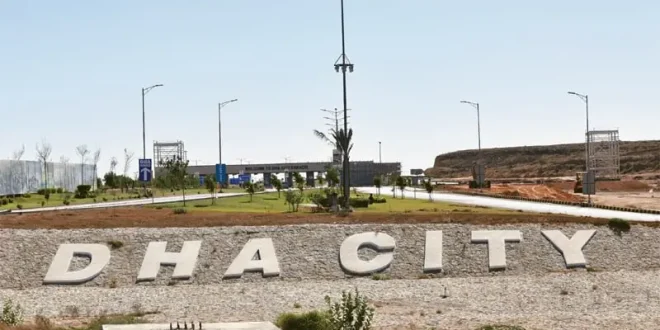
The approved jurisdiction for Desco’s operations is DHA City Karachi, strategically located about 56 kilometers from the main city on the M-9 motorway in District Malir. Initially, Desco plans to procure 6 megawatts (MW) of electricity from Lucky Cement Limited, with an arrangement for supply to residential and commercial consumers within DHACK. This unique arrangement underscores the project’s initial self-sufficiency, bypassing direct reliance on the national grid or K-Electric’s network.
Despite objections raised by key players such as the Central Power Purchasing Agency (CPPA), Gujranwala Electric Supply Company (Gepco), and K-Electric—who questioned Desco’s financial health, technical capabilities, and track record—NEPRA decisively overruled these concerns. The regulatory body emphasized the amendments to its Act, which explicitly aim to liberalize various segments of the power sector, including fostering competition in distribution and supply. NEPRA recognized DHA Karachi’s strong financial backing as sufficient support for its new energy venture, clearing the path for Desco to commence operations.
Background: Understanding Pakistan’s Evolving Power Landscape
To fully grasp the magnitude of Desco’s achievement, it’s crucial to understand the context of Pakistan’s electricity sector. Historically, the sector has been dominated by a vertically integrated state-owned monopoly, later unbundled into generation companies (GENCOs), the National Transmission and Despatch Company (NTDC), and the provincial DISCOs (like Gepco). K-Electric holds a unique position as a privatized, integrated utility serving Karachi.
- NEPRA’s Role: As the primary regulator, NEPRA is tasked with ensuring efficient, reliable, and sustainable electricity supply across Pakistan. Its mandate includes licensing, tariff determination, and enforcing market rules.
- Competitive Trading Bilateral Contract Market (CTBCM): This regime is a cornerstone of NEPRA’s reform agenda. Introduced to foster competition, CTBCM aims to transform Pakistan’s power market from a single-buyer model (where CPPA procures all power) to one where generation companies can directly sell to bulk consumers or distributors. This encourages efficiency, innovation, and potentially lower costs for consumers.
- Supplier of Last Resort (SoLR): An SoLR ensures that consumers continue to receive electricity even if their primary supplier defaults or fails. This is a critical safety net in a liberalizing market, guaranteeing continuity of service and consumer protection.
- Legacy Utilities and Market Transition: Entities like K-Electric and the ex-WAPDA DISCOs have historically held exclusive (or, more recently, non-exclusive) rights for distribution and supply in their respective areas. NEPRA’s latest rulings, particularly the end of K-Electric’s exclusivity in 2023, signal a deliberate move towards opening up the market to new players and greater competition, aligning with global trends in power market liberalization.
Pakistan’s energy sector faces chronic challenges, including circular debt, transmission and distribution losses, and a growing demand-supply gap. Introducing private entities and promoting competition under CTBCM is seen as a vital strategy to inject efficiency, attract investment, and ultimately stabilize and modernize the power infrastructure.
Impact on Pakistan: A Paradigm Shift for Energy Distribution
The NEPRA decision to license Desco is not merely an administrative formality; it carries profound implications for Pakistan’s energy future:
- Accelerating Liberalization: This move firmly reinforces NEPRA’s commitment to the CTBCM framework, demonstrating that the regulator is serious about breaking traditional monopolies and introducing genuine competition. It sends a strong signal to potential investors that the market is indeed opening up.
- Paving the Way for Private Investment: Desco’s success could serve as a blueprint for other large-scale private developments, industrial zones, or even Special Economic Zones (SEZs) to establish their own independent power distribution and supply systems. This has the potential to unlock significant private investment in infrastructure, reducing the burden on an already stretched national grid.
- Enhanced Consumer Services: For residents and businesses within DHACK, this could translate into more reliable power supply, potentially better customer service, and innovative energy solutions tailored to their specific needs. It introduces a direct accountability mechanism that might be lacking in larger, monopolistic utilities.
- Decentralization and Resilience: Allowing localized power distribution promotes decentralization. For new, isolated developments like DHACK, it means a more resilient power system less vulnerable to disruptions in the wider national grid. This can be particularly beneficial for urban planning and smart city initiatives.
- Setting a Precedent: While Desco’s current scope is limited to DHACK, the precedent set by NEPRA’s ruling could inspire similar applications from other large housing societies or industrial parks across the country, fundamentally reshaping how electricity is delivered in various localized pockets.
Analysis: NEPRA’s Resolve and the Future of Energy
NEPRA’s firm stance in rejecting objections from established utilities underscores its determination to push forward with its reform agenda. The regulator’s justification for granting licenses to a relatively new entity like Desco, by leveraging the strong financial credentials of its parent company, DHA Karachi, is particularly insightful. This pragmatic approach acknowledges the initial capital challenges faced by new entrants while prioritizing the strategic goal of market liberalization.
The decision explicitly addresses the erosion of K-Electric’s non-exclusive monopoly, affirming that even within Karachi’s defined territory, new players can emerge under the revised regulatory regime. This is a significant challenge to the status quo and a testament to NEPRA’s commitment to creating a level playing field.
From an analytical perspective, this development is a critical step towards creating a truly competitive and efficient electricity market in Pakistan. It validates the vision behind CTBCM and offers a tangible example of its implementation. However, the path ahead is not without its complexities:
- Regulatory Oversight: NEPRA will need robust mechanisms to ensure that Desco, and any future similar entities, adhere to all technical, safety, and service quality standards. Fair tariff setting and consumer protection will remain paramount.
- Integration Challenges: As more private entities enter the market, the complexities of managing interconnection points, ensuring grid stability, and standardizing operational protocols will require careful planning and continuous regulatory refinement.
- Scalability: While successful in isolated pockets, scaling this model to integrate with the broader national grid effectively will be the ultimate test of CTBCM’s long-term success.
- Fair Competition: Preventing the creation of new localized monopolies or ensuring that such entities do not cherry-pick high-value customers while leaving less profitable areas to legacy utilities will be an ongoing regulatory challenge.
In conclusion, DHA City Karachi’s venture into independent electricity distribution, empowered by NEPRA’s bold decision, represents a pivotal moment for Pakistan’s energy sector. It signals a decisive move towards a more competitive, decentralized, and ultimately, a more resilient energy future. This landmark ruling is poised to stimulate private investment, enhance service delivery, and fundamentally reshape the dynamics of power supply across the nation.