Dost Pakistan Journeys Tours and safaris in the North & South Pakistsn
Related Articles



“`html
Karachi Port’s $100M Boost: Turning Geopolitical Shifts into Pakistan’s Maritime Opportunity

Khurram Aziz Khan, CEO of Karachi Gateway Terminal Limited (KGTL) and Karachi Gateway Terminal Multipurpose Limited (KGTML), speaks during a Reuters interview in Karachi on June 23, 2026. — Reuters
The News: A Surge of Investment for Karachi Gateway Terminal
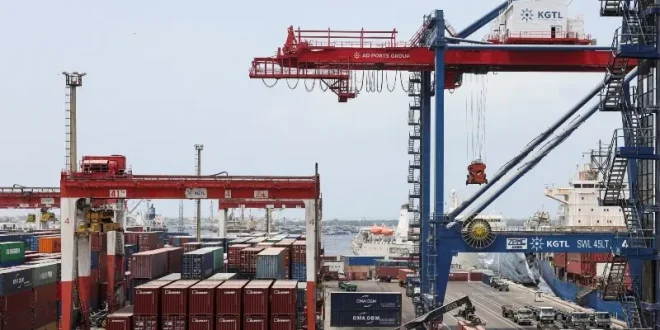
In a significant development for Pakistan’s maritime sector, Karachi Gateway Terminal Ltd (KGTL) has announced plans for an additional investment of up to $100 million over the next five years. This strategic move follows a notable surge in cargo traffic at Karachi Port, primarily triggered by the ongoing geopolitical disruptions related to the Iran conflict. Backed by the robust Abu Dhabi Ports Group, KGTL aims to capitalize on this increased activity, transforming a temporary crisis-induced surge into a sustained advantage for Pakistan’s regional shipping ambitions.
The new investment phase, as detailed by KGTL CEO Khurram Aziz Khan, will focus on enhancing the container terminal, expanding yard capacity, acquiring larger ship and yard cranes, and developing dedicated bulk export infrastructure, including silos and warehouses. This builds upon an already completed $60 million dredging project, which significantly improved the port’s capacity to handle larger vessels, now capable of accommodating bulk carriers of up to 120,000 metric tonnes, a substantial increase from the previous 60,000 tonnes.
Furthermore, KGTL is exploring significant investments in rail freight, including locomotives and rolling stock, to establish a comprehensive transport solution linking agricultural areas to the ports. This integrated approach is critical for Pakistan to competitively export products like corn and rice, and to realize its potential as a pivotal transit and transshipment hub.
Background: Geopolitical Tides and Pakistan’s Strategic Position
The recent disruption in maritime traffic, stemming from the US-Israel war on Iran and its wider implications for shipping routes, has inadvertently presented Pakistan with a unique opportunity. As traditional shipping lanes through the Red Sea and Gulf region faced heightened risks and rerouting challenges, Karachi Port emerged as an alternative, drawing a significant volume of cargo seeking onward shipment to various destinations. This surge is particularly noteworthy given that Pakistan has historically not been a major player in transshipment, a role often dominated by other regional ports.
Pakistan’s strategic geographic location, at the crossroads of South Asia, the Middle East, and Central Asia, has long been recognized for its potential. Karachi Port, as the country’s largest and busiest seaport, is a critical artery for Pakistan’s trade and economic activity. However, its full potential as a regional transit and transshipment hub has remained largely untapped due to various factors, including infrastructure limitations and logistical bottlenecks.
The involvement of the Abu Dhabi Ports Group (ADPG) through KGTL brings not only substantial foreign investment but also international expertise in port management, logistics, and technology. This partnership is crucial for modernizing Karachi Port and aligning its operations with global best practices, which are essential for attracting and retaining international shipping lines.
Moreover, the planned upgrades are not solely about maximizing profit from transshipment. They are deeply intertwined with Pakistan’s national economic objectives. Reducing freight costs is vital for making Pakistani exports more competitive on the global stage. Simultaneously, the focus on developing silos with an annual capacity of 8.5 million tonnes for clean bulk cargo and improving systems for fertilizer imports directly addresses critical issues of national food security and agricultural productivity.
Impact on Pakistan: Towards a New Maritime Future
The investments by KGTL are poised to have a multifaceted impact on Pakistan’s economy and its regional standing:
- Emergence as a Transshipment Hub: The most immediate impact is Pakistan’s potential to establish itself as a viable transshipment hub. By offering an alternative, efficient, and cost-effective route, Karachi Port could attract long-term shipping traffic that might otherwise bypass the country. This positions Pakistan as a crucial logistical link for landlocked Central Asian republics and Afghanistan.
- Enhanced Trade Competitiveness: The improved capacity to handle larger vessels and the drastic reduction in vessel handling times (from 12-15 days to 2.5-3 days for a 60,000-tonne vessel) will significantly cut down costs and turnaround times. This operational efficiency is paramount for making Pakistan’s exports, particularly agricultural commodities like corn and rice, more competitive in international markets.
- Boost to National Food Security: The construction of massive silos for clean bulk cargo and upgraded facilities for fertilizer imports directly contributes to Pakistan’s food security agenda. Efficient bulk handling ensures reliable supply chains for essential commodities, stabilizing prices and supporting agricultural growth.
- Economic Growth and Job Creation: Such large-scale infrastructure projects and the subsequent increase in trade activity invariably lead to economic growth, creating direct and indirect employment opportunities across the logistics, transport, and ancillary sectors.
- Integrated Logistics Network: KGTL’s vision extends beyond the port gates, with plans to invest in rail freight and storage hubs near agricultural areas. This commitment to developing a “complete solution” for transit is crucial for creating an efficient, multimodal logistics network that can support both domestic and international trade flows effectively.
However, the sustainability of these gains hinges significantly on parallel improvements in Pakistan’s broader transport infrastructure. As CEO Khurram Aziz Khan rightly emphasizes, “sustaining the gains will depend on better road and rail links.” Without robust hinterland connectivity, the efficiencies gained at the port itself will be bottlenecked, limiting the overall impact.
Analysis: Capitalizing on Crisis for Enduring Strategic Advantage
KGTL’s proactive investment strategy at Karachi Port exemplifies how a geopolitical crisis can be leveraged into a long-term strategic advantage. The “Iran war” disruption, while unfortunate, provided a stress test and a unique window of opportunity, revealing Karachi’s potential as a resilient alternative in global supply chains. The planned $75-$100 million investment, building on the initial $60 million dredging, is not merely a reaction to current events but a calculated move to solidify Pakistan’s position on the global maritime map.
The depth and breadth of the planned investments – from container terminal expansion and state-of-the-art cranes to specialized bulk infrastructure and rail logistics – indicate a holistic approach to port development. This integrated strategy, encompassing both sea-side and land-side operations, is critical for transforming Karachi from a conventional import/export gateway into a dynamic transshipment hub capable of handling diverse cargo types with speed and efficiency. The commitment to acquiring dedicated rolling stock and locomotives for freight trains underscores a forward-thinking approach to solve the perennial challenge of last-mile connectivity and efficient cargo evacuation from ports.
This initiative also highlights the vital role of public-private partnerships, especially with international entities like Abu Dhabi Ports Group. Such collaborations bring not only capital but also technology, management expertise, and access to global networks that are indispensable for developing world-class infrastructure. For Pakistan, this represents a significant step towards improving its overall logistics performance index, attracting further foreign direct investment, and diversifying its economic base.
However, the real test lies in the execution and the broader policy environment. While KGTL is making substantial commitments, the long-term success of Karachi as a transshipment hub will necessitate continued governmental support in areas such as customs clearance efficiencies, security, and sustained investment in national road and rail networks. Ensuring policy stability and a predictable regulatory framework will be key to converting the current cargo surge into enduring regional shipping gains, cementing Pakistan’s role as a vital link in the future of global trade.
“`