Dost Pakistan Journeys Tours and safaris in the North & South Pakistsn
Related Articles


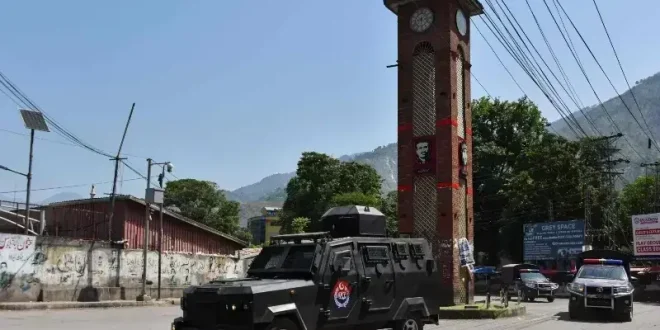
AJK Unrest: Government Rejects Blanket Amnesty Amidst Deepening Standoff with JAAC
The Unfolding Crisis in Azad Jammu and Kashmir
The Azad Jammu and Kashmir (AJK) government has drawn a definitive line in its confrontation with the proscribed Joint Awami Action Committee (JAAC), unequivocally ruling out any “blanket amnesty” for leaders held responsible for recent deaths and widespread violence. This firm declaration, conveyed by Chief Secretary Khushal Khan and Inspector General of Police (IGP) Liaqat Ali Malik, underscores the administration’s resolve to pursue legal action and maintain order in the self-governing territory.
At the core of the protracted standoff lies a complex mix of economic grievances and profound political demands. While initial JAAC demands focused on reducing electricity tariffs and flour subsidies—costly measures that the government claims impose a significant financial burden—the committee’s agenda has reportedly expanded to over thirty-eight points. A particularly contentious issue is the JAAC’s call for the abolition of 12 seats in the AJK Legislative Assembly, which are historically reserved for refugees from Indian-occupied Jammu and Kashmir (IOK) who settled in mainland Pakistan after the 1947 partition.
The region continues to experience the fallout of the protest movement. Muzaffarabad and Poonch divisions have observed partial strikes, disrupting daily routines, public transport, and internet connectivity. Government officials accuse JAAC activists of actively creating chaos, citing instances of road blockades, the burning of goods trucks, and even an attempt to hijack relief supplies. More severe allegations include claims of JAAC activists firing on police, which allegedly resulted in the death of one activist (with conflicting reports on the source of the fatal shot), and a deadly attack on the Rawalakot Combined Military Hospital, where three policemen lost their lives.
Amidst this volatile environment, AJK Prime Minister Faisal Mumtaz Rathore has criticized the JAAC’s “zero flexibility” in negotiations, despite his government’s repeated appeals for dialogue. Significantly, the JAAC has recently sought mediation from Jamiat Ulema-i-Islam-Fazl (JUI-F) chief Maulana Fazlur Rehman. While this move offers a potential pathway for de-escalation, it also highlights a shift in the JAAC’s strategy, especially after their prior criticism of “political interference.” Rathore has sternly warned that any further attempts to escalate the situation would be met with the “full force of law,” signaling the government’s commitment to restoring stability.
Contextualizing the Conflict: AJK’s Unique Status and Core Demands
Understanding the current crisis necessitates a look into Azad Jammu and Kashmir’s distinct constitutional and political framework. Administered by Pakistan, AJK operates as a self-governing entity with its own Legislative Assembly. Its unique status is deeply intertwined with the broader Kashmir dispute. A crucial aspect of its governance is the allocation of 12 seats in its 49-member assembly specifically for refugees from Indian-occupied Kashmir who have settled across various parts of Pakistan. These seats, intended to ensure the representation of a displaced population, have historically been a source of political debate concerning voter lists, delimitation, and constitutional adjustments. The upcoming July 27 elections have brought this particular demand by the JAAC—for their abolition—into sharp focus.
The Joint Awami Action Committee emerged as a significant voice for public grievances, particularly regarding essential services like electricity and flour. While the government claims to have fulfilled 35 out of 38 demands agreed upon in October, the breakdown of trust and the alleged expansion of JAAC’s demands underscore a deeper discontent. The government’s decision on June 5 to declare JAAC a proscribed organization under the region’s anti-terrorism act, followed by subsequent crackdowns and arrests of its leaders and activists, significantly escalated the conflict from a protest movement to a legal and security challenge.
The economic underpinnings of the crisis are also critical. AJK, like many regions, relies on federal government support and grapples with budgetary constraints. Subsidies on electricity and flour, while addressing public needs, exert an annual burden of billions of rupees on the collective resources of the federal and AJK governments. The administration argues these subsidies are financially unsustainable, while the JAAC and its supporters view their reduction as an unjust economic burden on ordinary citizens.
Broader Implications: The Crisis’s Ripple Effect on Pakistan
The escalating unrest in Azad Jammu and Kashmir carries significant implications that extend beyond its regional borders, impacting Pakistan’s national stability and international standing. Given AJK’s strategic importance and its shared Line of Control (LoC) with India, prolonged instability and violence could be exploited by external elements, further complicating the already sensitive Kashmir issue on international diplomatic platforms. A stable AJK is vital for regional peace and Pakistan’s geopolitical interests.
Economically, the crisis places an additional strain on Pakistan’s federal budget. The substantial financial support and subsidies provided to AJK represent a considerable allocation of national resources. Disruptions to trade, transportation, and routine economic activities within AJK not only impede local development but also have indirect consequences for Pakistan’s broader economic stability. As the federal government often plays a crucial role in AJK’s financial management and security, the current unrest becomes a national fiscal and governance concern.
Politically, the situation in AJK tests Pakistan’s capacity to effectively manage internal dissent within a semi-autonomous region. Accusations of human rights violations, whether against protestors or state security forces, if substantiated, could attract international scrutiny and potentially tarnish Pakistan’s image. Furthermore, the manner in which the state addresses the JAAC movement sets a vital precedent for future interactions with popular grievances and political demands in other sensitive areas. The involvement of a prominent federal political figure, Maulana Fazlur Rehman, underscores the deep connections between AJK’s political dynamics and the broader Pakistani political landscape, highlighting Islamabad’s enduring influence and potential role in mediation efforts.
Navigating the Precipice: An Analysis of the Standoff
The AJK government’s resolute rejection of a “blanket amnesty” signals a strategic imperative to uphold the rule of law and maintain state writ. By holding JAAC leaders accountable for violence and fatalities, the administration aims to delegitimize the protest’s more aggressive elements and deter future unlawful acts. This firm stance, encapsulated by the Chief Secretary’s assertion that “negotiations will never be held at gunpoint,” reflects a commitment to resolve disputes through established constitutional means rather than under duress. However, such an uncompromising approach risks further alienating a segment of the population whose grievances, even if entangled with the actions of some, may be legitimate.
The government’s grave allegations—particularly concerning the use of women and children as “human shields” and the alleged concealment of weapons—serve to discredit the movement and justify a robust security response. These are serious claims that, without immediate corroborating evidence, can be deeply polarizing and influence public perception and international scrutiny. Simultaneously, the claims of JAAC expanding its demands present a complex challenge for the government: how to engage meaningfully when the goalposts appear to be shifting.
The JAAC’s central demand regarding the abolition of the 12 reserved seats transcends mere administrative reform; it delves into fundamental questions of identity, representation, and the future political fabric of AJK. These seats, designated for IOK refugees, symbolize a historical and political connection to the larger Kashmir dispute. Their potential removal would undoubtedly be viewed differently by various stakeholders—some seeing it as a move towards greater local autonomy and others as an erosion of the rights of displaced communities. This particular demand, more so than economic subsidies, underscores a deeper political struggle for power and influence within AJK.
The intervention of Maulana Fazlur Rehman, a seasoned and influential figure in Pakistani politics, offers a crucial avenue for de-escalation. His call for the JAAC to postpone its protest, while seeking time to engage the government, is a vital step towards creating space for dialogue and finding a political solution. This mediation, however, also brings to light a subtle paradox: the JAAC, which previously expressed reservations about “political interference,” has now actively sought external political intervention. This highlights the limitations of a purely regional resolution and the inherent, enduring links between AJK’s internal politics and the broader Pakistani federal system.
Ultimately, the crisis in AJK represents a multifaceted challenge that demands a nuanced and balanced approach. While the government’s commitment to maintaining law and order is crucial, a sustainable resolution will necessitate genuine efforts to understand and address the underlying grievances that fuel public discontent. The path forward involves a delicate equilibrium between asserting state authority and fostering an environment conducive to meaningful, peaceful dialogue, ensuring that legitimate concerns are heard and addressed without condoning violence or unlawful disruption. The future stability of AJK, and by extension, its relationship with Pakistan, critically hinges on finding this equilibrium.