Dost Pakistan Journeys Tours and safaris in the North & South Pakistsn
Related Articles



“`html
Pakistan & China Drive UNSC Resolution Accountability: A Deep Dive into Global Governance
In a significant diplomatic move, Pakistan and China recently co-organised an informal meeting of the United Nations Security Council (UNSC) to address one of the most persistent challenges facing global governance: the inconsistent and often selective implementation of its resolutions. This initiative, hailed by participating member states, underscores a shared commitment to revitalising multilateralism and reinforcing the credibility of international law.
The News: A Call for UN Accountability
The core of the discussion, as reported by the Foreign Office (FO), revolved around how the UNSC can ensure the “full, effective and non-selective implementation of its resolutions.” High-profile briefers, including UN Assistant Secretary-General Khaled Khiari and International Crisis Group’s Richard Gowan, collectively emphasized that the Council’s authority, credibility, and effectiveness hinge entirely on its ability to see its decisions translated into action on the ground. They outlined crucial prerequisites for successful implementation: realistic mandates, clear pathways, sustained reporting, adequate resources, political will, and robust follow-up mechanisms.
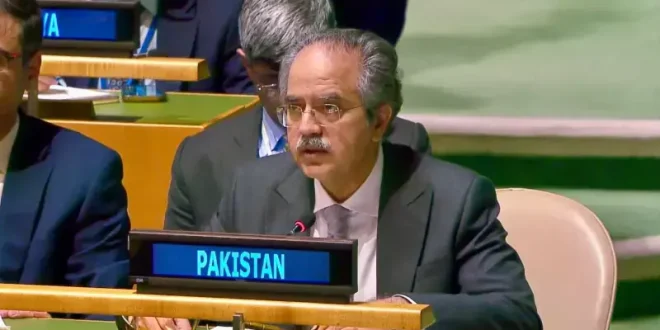
Pakistan’s Permanent Representative to the UN, Ambassador Asim Iftikhar Ahmad, powerfully articulated that UNSC resolutions are not merely recommendations but legal obligations under the UN Charter. He starkly warned that “selective or prolonged non-implementation weakens the Council’s authority, prolongs unresolved disputes and deepens human suffering,” pointedly citing Indian Illegally Occupied Jammu and Kashmir (IIOJK) and Palestine as prime examples. Pakistan also proposed practical measures, including annual reviews of unimplemented resolutions and stronger follow-up mechanisms, signaling a concrete desire for reform.
Background: The Credibility Crisis of UNSC Resolutions
The United Nations Security Council holds the primary responsibility for maintaining international peace and security. Its resolutions, particularly those adopted under Chapter VII of the UN Charter, are legally binding on all member states. However, the UN’s history is replete with instances where resolutions have been ignored, circumvented, or selectively enforced, often due to the geopolitical interests of powerful member states, particularly the P5 (China, France, Russia, United Kingdom, United States) with their veto power.
This persistent gap between resolution adoption and actual implementation has led to a perceived “credibility crisis.” When decisions of the world’s highest security body are not universally respected or enforced, it erodes trust in international law, emboldens non-compliant actors, and prolongs human suffering in conflict zones. The current global landscape, marked by escalating conflicts and rising geopolitical tensions, makes the call for strengthened multilateral institutions more urgent than ever. It is against this backdrop that the Pakistan-China initiative emerges, seeking to address a systemic weakness at the heart of the UN system.
The deep strategic partnership between Pakistan and China, often described as “all-weather friends,” extends significantly into the diplomatic realm. Both nations consistently advocate for a multipolar world order, the sovereignty of states, and the principles of the UN Charter. This co-convened meeting is a natural extension of their aligned foreign policy objectives, aimed at promoting a more equitable and rule-based international system, rather than one dictated by unilateral power.
Pakistan’s Strategic Vision: Elevating Grievances and Diplomacy
For Pakistan, co-hosting this high-level discussion is a significant diplomatic achievement with multifaceted implications. Firstly, it positions Pakistan as a responsible global actor and a strong proponent of international law and multilateralism. By collaborating with China, a permanent member of the Security Council, Pakistan elevates its voice and influence within the UN system, demonstrating leadership on a critical global issue.
Crucially, the platform allowed Pakistan to directly link the issue of non-implementation to its long-standing foreign policy priorities: the disputes over Jammu and Kashmir and Palestine. Ambassador Ahmad’s explicit mention of IIOJK and Palestine was a powerful and strategic move to underscore how the failure to implement UNSC resolutions has perpetuated conflicts and human rights abuses in these regions. For Pakistan, the resolutions calling for a plebiscite in Kashmir remain foundational, and their non-implementation by India is a persistent grievance. Similarly, the international community’s inability to enforce resolutions pertaining to the rights of Palestinians reflects a broader systemic failure.
By proposing concrete measures like annual reviews of unimplemented resolutions, Pakistan is not merely highlighting a problem but actively offering solutions to make the UNSC more accountable and effective. This proactive approach strengthens its diplomatic standing and provides a framework for future engagement on these critical issues.
Analysis: Navigating Geopolitics and the Quest for Equitable Enforcement
The joint initiative by Pakistan and China is a profound statement on the current state of global governance and the future of the UN. Their shared commitment to enhancing the authority of the Security Council and the principles of the UN Charter is both principled and strategically motivated.
Challenges to Effective Implementation
Despite the strong rhetoric and shared desire for change, the path to genuinely “full, effective and non-selective implementation” of UNSC resolutions remains fraught with challenges:
- Geopolitical Realities: The primary obstacle is often the lack of political will among powerful member states, particularly the P5. National interests frequently trump collective security objectives, leading to vetoes or political maneuvering that prevents enforcement against allies or in areas of strategic importance.
- Sovereignty vs. Intervention: There’s a perpetual tension between the principle of national sovereignty and the UNSC’s right to intervene for international peace and security. States often resist external pressure, citing internal affairs.
- Resource Constraints: Implementing complex resolutions, especially those requiring peacekeeping missions or extensive monitoring, demands significant financial and human resources, which are not always readily available or forthcoming from member states.
- Vague Mandates: Sometimes, resolutions themselves are the product of complex negotiations, resulting in deliberately vague or ambiguous mandates that make effective implementation difficult to monitor or enforce.
Potential Impact and Broader Implications
While fundamental reform of the UNSC’s enforcement mechanisms is a long-term goal, this initiative carries significant potential:
- Increased Scrutiny: The discussion itself brings heightened attention to the issue of non-compliance, putting pressure on member states to justify their positions and potentially fostering greater accountability.
- Catalyst for Reform: Pakistan’s practical proposals, such as annual reviews, could serve as a blueprint for procedural reforms within the UNSC, making it more difficult for resolutions to simply gather dust.
- Reinforcing Multilateralism: At a time when multilateral institutions are under strain, this initiative reaffirms the enduring importance of the UN as the primary forum for addressing global challenges. It signals a pushback against unilateralism and power politics.
- Shifting Dynamics: This collaboration highlights a growing desire among non-Western powers and developing nations to reform global governance structures, ensuring they are more representative, equitable, and effective in upholding international law. It underscores a collective aspiration for a more just and rule-based international order, rather than one dictated by a few.
The Path Forward
The co-convened meeting by Pakistan and China represents a crucial step in an ongoing, complex diplomatic journey. It’s a clear signal that the status quo of selective implementation is increasingly untenable and detrimental to global peace and security. While immediate, radical changes may not materialize, the consistent articulation of this concern, coupled with practical proposals, could gradually build momentum for greater accountability and transparency within the UN Security Council. The true measure of its success will lie in whether these discussions translate into concrete policy changes, ultimately ensuring that the resolutions adopted by the world’s most powerful body truly serve their intended purpose: the maintenance of international peace and justice for all.
“`