Dost Pakistan Journeys Tours and safaris in the North & South Pakistsn
Related Articles



“`html
Pakistan Army’s Firm Stance: Safeguarding Water Rights and National Security Amidst Regional Volatility
In a significant development reflecting heightened regional tensions, Pakistan’s military leadership has issued a clear and unequivocal statement affirming its commitment to securing the nation’s vital interests. This includes ensuring Pakistan’s rightful share of water under the Indus Waters Treaty, countering a perceived surge in hybrid warfare, and addressing persistent cross-border terrorism. The pronouncements from the recent Corps Commanders’ Conference underscore a comprehensive approach to national security in a complex geopolitical landscape.
The Latest: Army Chiefs Affirm Resolve on Water and Security
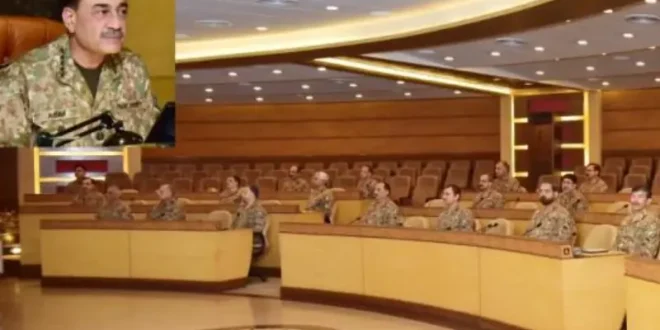
The 276th Corps Commanders’ Conference (CCC), presided over by Chief of Defence Forces and Chief of the Army Staff Field Marshal Asim Munir at General Headquarters (GHQ) in Rawalpindi, concluded with powerful declarations on a range of critical national security issues. Foremost among them was a “resolute commitment” to “undertake all measures necessary” to ensure the availability of Pakistan’s rightful share of water. This affirmation comes in the wake of India’s recent unilateral decision to put the Indus Waters Treaty (IWT) in abeyance, a move that Pakistan views as a serious violation of international agreements.
Beyond water security, the forum also addressed the evolving security environment, specifically condemning an “increased reliance on an evolving pattern of externally supported hybrid warfare and disinformation campaigns.” This includes alleged “state-supported financing, facilitation or sponsorship of proxies” aimed at destabilizing Pakistan. Furthermore, the military leadership expressed “serious concerns” over the continued use of Afghan Taliban-controlled territory by “Indian-sponsored terrorist groups,” reiterating Pakistan’s right to self-defense through ongoing intelligence-based operations (IBOs) under Operation Ghazab-lil-Haq.
Other key topics included Pakistan’s constructive role in regional de-escalation (such as mediating between the US and Iran), a strong condemnation of human rights violations and demographic changes in Indian Illegally Occupied Jammu and Kashmir (IIOJK), and a reaffirmation of the Kashmir cause as Pakistan’s “jugular vein.”
Background: A Confluence of Complex Challenges
The Indus Waters Treaty: A Lifeline Under Threat
The Indus Waters Treaty (IWT), signed in 1960 and brokered by the World Bank, is a landmark agreement governing the sharing of the Indus River system’s waters between India and Pakistan. It allocates the waters of the eastern rivers (Ravi, Beas, Sutlej) to India and the western rivers (Indus, Jhelum, Chenab) to Pakistan. For an agrarian economy like Pakistan, heavily dependent on the Indus basin, the IWT is not merely a legal document but an existential lifeline, crucial for agriculture, energy, and overall economic stability. India’s recent unilateral suspension of the treaty and historical disputes over water projects have consistently raised alarms in Pakistan, elevating water security to a paramount national interest issue.
Persistent Rivalry and the Shadow of Hybrid Warfare
Relations between nuclear-armed neighbors Pakistan and India have been historically fraught with tension, marked by several wars and ongoing disputes, most notably over Kashmir. The recent mention of “Marka-i-Haq” and “comprehensive defeat inflicted” points to a past conflict (presumably the one referred to as ‘last year’ in the news source) that has further strained ties. In this context, Pakistan’s accusation of “hybrid warfare“—a blend of conventional, unconventional, and cyber tactics, including disinformation campaigns and proxy support—suggests a belief that India is engaged in covert efforts to destabilize Pakistan internally, especially after direct military confrontation.
The Afghan Border: A Hotbed of Terrorism
Since the Taliban’s takeover of Afghanistan in 2021, Pakistan has faced a renewed and intensified wave of cross-border terrorism. Groups like the Tehreek-i-Taliban Pakistan (TTP), referred to by Pakistan as “Fitna al Khawarij,” have found sanctuary and operational space in Afghanistan, launching attacks into Pakistani territory. Islamabad has repeatedly urged the Afghan Taliban to dismantle these safe havens, but these appeals have largely gone unheeded. The military’s mention of “Fitna al Hindustan” suggests an alleged nexus where Indian-backed elements are exploiting Afghan soil to sponsor terrorism against Pakistan, further complicating border security. Operations like Ghazab-lil-Haq are kinetic responses to these perceived threats.
Impact on Pakistan: Navigating a Multi-Front Security Landscape
The issues highlighted by the Corps Commanders’ Conference collectively present a multi-faceted security challenge for Pakistan, impacting its stability, economy, and regional standing:
- Water Scarcity and Economic Vulnerability: The potential disruption of water flows from the Indus system directly threatens Pakistan’s agricultural backbone, exacerbating existing water stress and posing significant economic and food security risks.
- Internal Instability and Counter-Terrorism Costs: Cross-border terrorism, especially from groups like the TTP, fuels internal instability in border regions, causes human casualties, and diverts substantial military and financial resources towards counter-terrorism operations. The alleged hybrid warfare further complicates internal cohesion.
- Diplomatic Strain: India’s IWT stance and the unresolved Kashmir issue continue to be major points of friction, hindering regional cooperation and diverting diplomatic energy. The lack of cooperation from the Afghan Taliban on border security also strains bilateral relations.
- Resource Allocation: Addressing these diverse threats – from water management to counter-terrorism and military modernization – places immense pressure on Pakistan’s already constrained national budget, potentially impacting development goals.
Analysis: Pakistan’s Assertive Stance in a Volatile Region
The Pakistan Army’s recent declarations are more than just routine statements; they represent a significant strategic signaling to various actors in the region, underlining a comprehensive and assertive approach to national security.
Strategic Signaling to India: Water as a Red Line
The firm commitment to ensuring Pakistan’s “rightful share of water” and the promise of “all measures necessary” should be interpreted as a potent warning to India. For Pakistan, water security is an existential issue, a matter of survival, not merely a diplomatic dispute. By linking it directly to national security, the military leadership is signaling that any significant unilateral alteration of the IWT by India would be met with a robust and potentially non-conventional response. This elevates the water dispute to a critical threshold in India-Pakistan relations, a potential flashpoint that could have severe consequences.
Confronting Hybrid Threats and Proxy Warfare
Pakistan’s emphasis on countering “externally supported hybrid warfare” and “disinformation campaigns” reflects a growing awareness of the evolving nature of conflict. By framing internal unrest and subversive activities within this narrative, the military is not only attributing blame but also justifying a comprehensive counter-strategy that integrates intelligence, kinetic operations, and robust governance. The condemnation of state-sponsored proxies implicitly points towards India, indicating a perception that India is using non-traditional means to perpetuate instability within Pakistan.
Unilateral Action Against Cross-Border Terrorism
The explicit mention of “Indian-sponsored terrorist groups” operating from Afghan territory, coupled with the continuation of Operation Ghazab-lil-Haq, sends an unambiguous message to both the Afghan Taliban and India. To Kabul, it’s a reiteration of direct responsibility for preventing the use of their soil for attacks on Pakistan. Crucially, the declaration of Pakistan’s “unequivocal right” to defend its people and the continuation of IBOs under Operation Ghazab-lil-Haq signal a readiness for unilateral cross-border strikes if the Afghan Taliban fails to act. This demonstrates a shift towards a more proactive and less tolerant approach to the persistent militant threat emanating from Afghanistan.
Kashmir: An Unchanging Core Principle
The reaffirmation of Kashmir as the “jugular vein of Pakistan” and the strong condemnation of actions in IIOJK highlight that despite other pressing concerns, the Kashmir dispute remains central to Pakistan’s foreign policy and national identity. The military’s stance underscores that true regional stability cannot be achieved without addressing the long-standing issue in accordance with UN resolutions, reinforcing Pakistan’s diplomatic, political, and moral support for the Kashmiri people.
Modernizing for Multi-Domain Threats
Finally, the directives for a “multi-domain transformation plan” and “integrated responses to conventional, sub-conventional and hybrid threats” underscore the Pakistani military’s awareness of the need to adapt to a complex and dynamic security environment. This commitment to maintaining high standards of vigilance and operational readiness ensures that the armed forces are prepared for a spectrum of challenges, from traditional warfare to modern hybrid tactics.
In essence, the Pakistan Army’s latest pronouncements reflect a comprehensive and assertive posture, signaling a determination to protect core national interests—especially water security—while simultaneously addressing immediate threats from terrorism and perceived hybrid warfare. This firm stance aims to project strength and resolve in a volatile region, where strategic patience appears to be giving way to more decisive action.
“`