Dost Pakistan Journeys Tours and safaris in the North & South Pakistsn
Related Articles


“`html
Baldia Town Fire: Pakistan SC Upholds Rule of Law Amidst Unresolved Tragedy
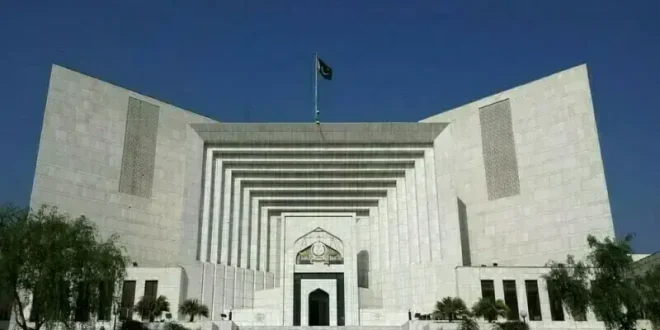
The Supreme Court of Pakistan’s recent detailed judgment on the horrific Baldia Town factory fire of 2012 has reignited national discussions on justice, accountability, and the state’s fundamental duty to protect its citizens. Described by Justice Malik Shahzad Ahmad Khan as one of Pakistan’s most tragic disasters, the blaze claimed 260 lives, primarily ordinary factory workers seeking a livelihood.
The News: Judicial Scrutiny of a Complex Case
On June 10, a three-member Supreme Court bench, comprising Justice Malik Shahzad Ahmad Khan, Justice Aqeel Ahmed Abbasi, and Justice Shakeel Ahmad, overturned the death sentences previously awarded to Muttahida Qaumi Movement (MQM) workers Abdul Rehman alias Bhola and Zubair alias Chariya. They had been convicted on charges including murder, extortion, arson, and terrorism in connection with the Karachi garment factory fire. The court also upheld the acquittals of co-accused Muhammad Abdul Rauf Siddiqui, Umar Hassan, Dr Abdul Sattar Khan, and Iqbal Adeeb Khanum.
The detailed 39-page verdict critically highlighted that the prosecution had failed to establish its case against the petitioners beyond a reasonable doubt. It noted the original FIR (First Information Report) had targeted factory owners and management for inadequate safety measures. However, nearly two-and-a-half years later, the prosecution dramatically shifted its stance, alleging that the MQM workers had deliberately set the factory ablaze after owners refused a Rs250 million extortion demand. The Supreme Court found the evidence supporting this revised narrative to be weak, unreliable, or hearsay, underscoring that probabilities or presumptions cannot substitute for conclusive proof in the criminal justice system.
“The right to life imposed a corresponding duty on the state to protect human life, enforce safety obligations and conduct a prompt, scientific, impartial and effective investigation so that the real cause of the tragedy could be determined and those actually responsible brought to justice.”
— Justice Malik Shahzad Ahmad Khan
The SC also made significant observations regarding the Muhajir community, affirming their esteemed place in the Pakistani nation, and stressing that alleged criminal acts by individuals should not be used to attribute guilt to an entire community or its representative political party without compelling evidence.
Background: A Deep Dive into Pakistan’s Industrial Tragedies and Political Landscape
The Baldia Town factory fire of September 2012 wasn’t merely an accident; it became a symbol of systemic failures in industrial safety and governance in Pakistan. Initially, the focus was on the horrifying lack of emergency exits, locked gates, and the absence of adequate fire safety equipment, making it a stark example of worker exploitation and regulatory negligence. This put a spotlight on the often-hazardous working conditions prevalent in many informal and poorly regulated industries across the country.
The subsequent shift in the investigative narrative, introducing elements of political extortion and terrorism linked to the MQM, added a complex and highly charged dimension. Karachi, Pakistan’s economic lifeline, has historically been a hotbed of political rivalries, ethnic tensions, and allegations of criminal activity tied to political factions. The MQM, once a dominant political force in the city representing the Muhajir community, has frequently been subject to accusations of operating militant wings and engaging in various illicit activities. This political context is crucial to understanding why the “scapegoat” argument resonated strongly with the defense and was thoroughly examined by the highest court.
This case also broadly reflects the challenges faced by Pakistan’s criminal justice system, which often contends with prolonged legal battles, a backlog of cases, forensic deficiencies, and allegations of politically motivated investigations. The Supreme Court’s meticulous review, therefore, serves as a crucial reminder of the judiciary’s role in upholding foundational legal principles, even when facing immense public and political pressure.
Impact on Pakistan: Justice, Accountability, and State Responsibility
The Supreme Court’s verdict, while a legal affirmation of the presumption of innocence for the acquitted, leaves an undeniable void for the hundreds of victims and their families. For many, the core question of who is truly responsible for the mass casualties remains elusive, underscoring the enduring struggle for genuine accountability in major disasters in Pakistan. The shifting narratives, from industrial negligence to political arson, have only complicated the pursuit of closure for those who lost their loved ones.
Significantly, the judgment powerfully reiterates the state’s fundamental obligation to protect human life. This encompasses not only ensuring industrial safety through robust regulatory oversight but also conducting prompt, scientific, and impartial investigations when tragedies occur. The Baldia case highlights a profound systemic failure on both fronts: inadequate pre-emptive safety measures and a compromised investigative process that allowed for crucial delays and questionable evidence shifts. This impacts public trust in law enforcement and prosecution agencies, raising concerns about their capacity to deliver justice impartially and efficiently.
From a legal perspective, the ruling reinforces the judiciary’s vital role in upholding the rule of law. By strictly adhering to the “beyond reasonable doubt” standard and rejecting convictions based on insufficient or manipulated evidence, the Supreme Court has demonstrated its commitment to preventing wrongful convictions and safeguarding civil liberties. This judicial rigor, while potentially prolonging justice, is essential for a credible legal system.
Politically, the verdict offers a degree of vindication for the MQM, which consistently argued its workers were falsely implicated. However, it simultaneously re-opens broader societal discussions about the pervasive issues of political violence and extortion that have plagued Karachi. The challenge for the state remains how to improve its investigative capabilities to prosecute complex crimes effectively, irrespective of political affiliations, and ensure that such devastating industrial accidents never recur.
Analysis: Unraveling the Threads of Investigative Failure
The Supreme Court’s detailed analysis of the Baldia Town case offers a critical look into the prosecution’s journey, revealing a deeply flawed investigative process. The most glaring issue was the two-and-a-half-year delay in changing the core premise of the case from factory owners’ negligence to politically motivated arson and extortion. This substantial gap provided ample room for manipulation or fabrication of evidence.
The court’s scrutiny of key witnesses was particularly insightful. It noted that Muhammad Arshad (PW-374) and factory owner Arshad Bhaila (PW-397), who eventually provided crucial testimony on arson and extortion respectively, were initially accused in the case. Their conversion into prosecution witnesses after a significant delay created a strong inference of motive to implicate others to save themselves. The fact that these witnesses did not immediately report the revised narrative to authorities further eroded their credibility.
Furthermore, the entire revised prosecution theory was reportedly based on disclosures by Rizwan Qureshi, an individual arrested in an unrelated case. Yet, Qureshi was neither charged in the Baldia case nor produced in court as an accused, approver, or witness. This left the “very foundation” of the prosecution’s new narrative missing, a critical evidentiary gap that the Supreme Court could not overlook. This highlights fundamental deficiencies in evidence collection, corroboration, and presentation.
The SC’s unwavering commitment to the principle of “proof beyond reasonable doubt” served as the ultimate arbiter. Even in the face of a national tragedy and widespread demand for justice, the court refused to compromise on evidentiary standards. This decision underscores that legal justice must be founded on irrefutable facts, not on strong suspicions or public sentiment, however compelling. As the judgment articulated, “even a single circumstance creating doubt entitled an accused to acquittal,” and the Baldia case was “replete with circumstances” raising serious doubts.
Ultimately, while the Supreme Court’s verdict has provided a legal resolution for the accused individuals, it concurrently shines a harsh light on the persistent systemic weaknesses in Pakistan’s investigative and judicial processes. It calls for a renewed focus on strengthening institutions, ensuring truly impartial investigations, and upholding the state’s paramount duty to protect its citizens from both criminal acts and avoidable industrial hazards. The question of who bears the ultimate criminal responsibility for the 260 lives lost, unfortunately, remains largely unanswered within the legal framework.
“`