 Dost Pakistan Journeys Tours and safaris in the North & South Pakistsn
“`html
Balochistan’s Cry for Justice: Decoding Mengal’s Stand on Ziarat Killings
The News: A Demand for Accountability Amidst Growing Discontent
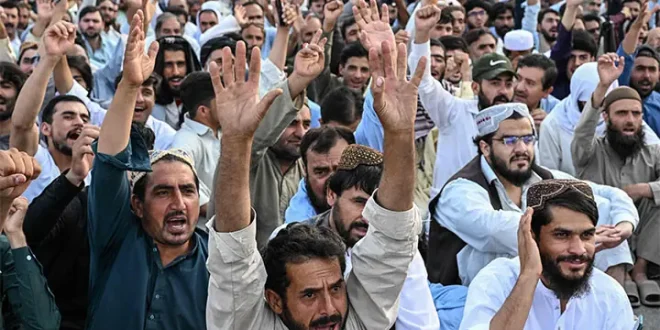
The recent sit-in in Quetta, led by families of police officials martyred in a brutal attack in Ziarat, has brought Balochistan’s persistent security and governance crisis into sharp focus. Akhtar Mengal, chief of the Balochistan National Party-Mengal (BNP-M), emerged as a strong voice for the protestors, demanding a transparent and independent inquiry into the killings. His address during the third day of the sit-in was a scathing critique of the state’s handling of the province’s deeply rooted issues. Mengal lambasted the government for failing to provide enduring solutions, instead resorting to superficial “experiments” like the controversial merger of the traditional Levies force with the police, which he deemed ineffective. He highlighted a profound “justice deficit,” questioning why, despite numerous tragedies in Balochistan, no one is held accountable.
Mengal’s rhetoric extended beyond the immediate incident, touching upon the perceived exploitation of Balochistan’s rich natural resources – gas and minerals – while its people, both Baloch and Pashtun, are neglected and subjected to oppression. He alleged past use of armed groups to suppress local populations. The protests, which included blocking major roads in Quetta, underscore the community’s desperation, while a human rights activist, Sakina Abdullah Khan, further condemned the surge in violence across various districts, calling for impartial action from both federal and provincial authorities. Negotiations with a government delegation were underway, but the protestors’ resolve remained firm, emblematic of the deep mistrust between the state and its citizens in the province.
Background: A Legacy of Conflict and Neglect in Balochistan
To understand Mengal’s powerful statements and the ongoing protests, one must delve into Balochistan’s complex and often tragic history. The largest province by area but the least populated, Balochistan is strategically vital, bordering Iran and Afghanistan, and boasting significant mineral wealth and a long coastline with the crucial Gwadar Port. Despite its riches, it remains Pakistan’s most underdeveloped province, a disparity that fuels a long-standing nationalist insurgency.
The region has been a hotbed of ethno-nationalist and separatist movements since the country’s inception, characterized by cycles of insurgency, state crackdowns, and a pervasive sense of alienation among the local population. Grievances range from perceived political marginalization and economic exploitation of its resources without equitable returns for its people, to allegations of human rights abuses, including enforced disappearances and extrajudicial killings. The Ziarat attack and other incidents like those in Hanna, Harnai, and Chaman are not isolated events but rather symptoms of a deeper, systemic breakdown of law and order and a crisis of governance.
The debate around the Levies force, a traditional tribal police system, is a microcosm of these issues. Revered by some for its local understanding and effectiveness in rural areas, and criticized by others for its perceived inefficiency, attempts to merge it with the mainstream police have often been met with resistance, symbolizing a federal imposition on local institutions rather than empowering them. This historical context of unaddressed grievances, a lack of trust in state institutions, and a recurring cycle of violence provides the fertile ground for the current protests and Mengal’s scathing critique.
Impact on Pakistan: A Looming Shadow Over National Stability
The persistent instability in Balochistan casts a long, detrimental shadow over Pakistan’s national stability, economy, and international standing. From a national security perspective, the ongoing conflict provides fertile ground for both nationalist insurgents and religiously motivated militant groups, posing a constant threat to law enforcement, civilians, and critical infrastructure, including projects under the China-Pakistan Economic Corridor (CPEC). The Ziarat attack, targeting police personnel, directly undermines the state’s authority and ability to maintain peace.
Economically, the unrest deters much-needed local and foreign investment in Balochistan’s vast untapped resources. The province, a potential hub for regional trade and energy, remains constrained by security concerns, impeding national development and economic growth. Furthermore, the continuous need for large-scale security operations diverts significant national resources that could otherwise be allocated to education, health, or poverty alleviation across the country.
Beyond security and economics, the crisis in Balochistan significantly impacts governance and the rule of law across Pakistan. The perceived lack of accountability for incidents like the Ziarat killings erodes public trust in the justice system and state institutions, fostering a sense of impunity and hopelessness. This erosion of trust, eloquently articulated by Mengal, is not confined to Balochistan but resonates nationally, challenging the very legitimacy and efficacy of democratic governance. Internationally, persistent reports of human rights abuses and the failure to resolve the conflict raise concerns, drawing scrutiny and potentially affecting Pakistan’s diplomatic relations and global image. Ultimately, the unresolved issues in Balochistan serve as a critical test for Pakistan’s ability to ensure equitable development, uphold justice, and integrate all its provinces into a truly cohesive and secure federation.
Analysis: Mengal’s Call for Systemic Change Beyond the Immediate Crisis
Akhtar Mengal’s impassioned address at the Quetta sit-in transcends a mere demand for justice for the Ziarat victims; it represents a powerful articulation of Balochistan’s decades-old political, economic, and security grievances. His criticism of “experiments” and “misleading committees” underscores a profound frustration with superficial remedies that fail to address the systemic issues plaguing the province. This isn’t just about a lack of will, but a perceived failure of imagination and commitment on the part of successive governments to genuinely engage with Balochistan’s complex realities.
The “justice deficit” highlighted by Mengal is arguably the core of the problem. When severe incidents like the Ziarat attack occur, and investigations are seen as opaque or non-existent, it deepens the alienation and reinforces the narrative that the lives of Balochistan’s people hold less value in the national consciousness. This lack of accountability creates a vicious cycle: impunity fuels further violence, which in turn breeds more mistrust and disengagement from state institutions. Mengal’s call for accountability, even if for a single life, is a direct challenge to the culture of indifference he perceives.
Furthermore, his emphasis on resource exploitation versus human development encapsulates the heart of Baloch nationalism. The province’s rich gas and mineral reserves are often viewed as a national asset to be extracted, with little perceived benefit flowing back to the local populace. This imbalance not only stokes economic injustice but also fuels identity politics, making the Baloch and Pashtun people feel like second-class citizens in their own land. Mengal’s refusal to back down, urging protestors to remain steadfast, is a strategic move to leverage public outrage into sustained pressure for meaningful policy shifts rather than temporary appeasement.
In essence, Mengal is advocating for a paradigm shift: from a security-centric, resource-extraction model to one centered on genuine political engagement, equitable development, and, critically, the establishment of an impartial and effective justice system. The sit-ins, therefore, are not just about a specific incident; they are a potent symbol of a society demanding its fundamental rights and dignity, and a state grappling with the profound challenge of integrating its most restive province through trust-building and genuine partnership, rather than through force or token gestures.
“`
